List of countries most in danger of running out of oil as US-Iran war rages on
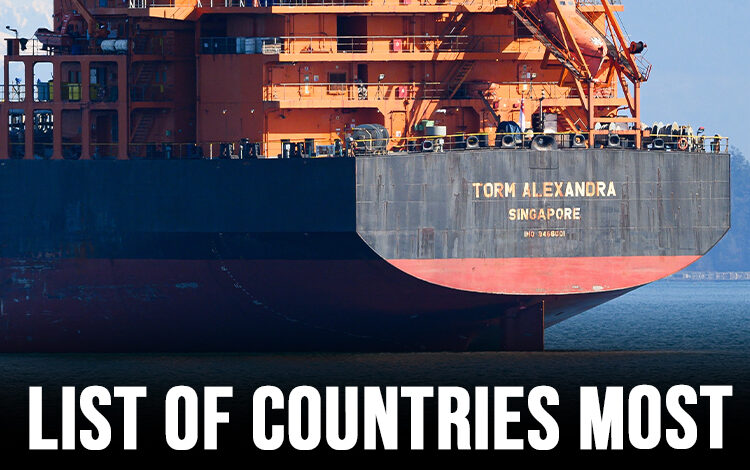
The global economy is currently facing its most severe energy shock in modern history as the military conflict between the United States and Iran enters its third week. Since the initial joint U.S.-Israeli strikes on February 28, the fallout has extended far beyond the battlefield, effectively severing one of the world’s most vital economic arteries: the Strait of Hormuz.
With Iran officially declaring the waterway closed and retaliatory strikes targeting regional energy infrastructure, oil prices have surged to heights not seen in years. Brent crude, which sat at roughly $73 per barrel before the outbreak of hostilities, has consistently traded above $100, peaking as high as $126 as markets react to the near-total cessation of traffic through the chokepoint.
The Hormuz Bottleneck: A 20-Million-Barrel Deficit
Under normal conditions, the Strait of Hormuz facilitates the transit of approximately 20 million barrels of oil per day (bpd)—roughly 20% of the world’s seaborne petroleum. Today, that flow has slowed to a trickle. While some oil is being rerouted through regional pipelines, analysts estimate that nearly 17 million bpd remains stranded.
A recent, high-alert report from Societe Generale (SocGen), highlighted by Forbes, warns that several nations are now operating on a ticking clock, with strategic reserves and commercial inventories depleting at an unsustainable rate.
The “Danger Zone”: Countries on the Brink of Exhaustion
The SocGen report identifies a tier of nations particularly vulnerable due to their high dependency on Middle Eastern crude and limited storage capacity:
| Country | Status & Dependency | Estimated Inventory “Coverage” |
| Vietnam | Sources up to 80% of oil via Hormuz | ~30 Days |
| Myanmar | Sources up to 80% of oil via Hormuz | ~30 Days |
| Philippines | Sources up to 80% of oil via Hormuz | ~30 Days |
| Singapore | Imports ~680,000 bpd via the Strait | ~40 Days |
| South Korea | Imports ~2 million bpd via the Strait | ~50 Days (Hormuz-specific) |
| Thailand | Imports ~400,000 bpd via the Strait | ~50 Days |
Other nations are feeling the squeeze but possess slightly more robust buffers. Taiwan and Bangladesh are estimated to have roughly 100 days of supply, though Bangladesh has already initiated pre-emptive fuel rationing to stretch its remaining stocks.
The “Shock Absorbers”: How Global Giants are Bracing
While the situation is dire for Southeast Asia, larger economies have spent years preparing for such a contingency. India maintains a massive 175-million-barrel strategic petroleum reserve, while Indonesia and Japan are projected to hold out for 160 and 200 days, respectively.
China appears the most insulated, with a projected 300-day buffer. “China has intentionally capped Middle Eastern dependence near 50% and built substantial shock absorbers through diversified oil sourcing, pipeline gas, domestic production, and large inventories,” Lloyd Byrne, an analyst at Jefferies, told Forbes.
The U.S. Response: Record Production Amidst Political Pressure
Inside the United States, the Biden-Trump transition era has seen a dramatic shift in energy policy to combat the domestic “pain at the pump,” where average gas prices have jumped by more than 20%.
To stabilize global supply, the U.S. has begun aggressively reactivating drilling rigs. Data from Baker Hughes shows the total active rig count has nudged up to 553. While this is still 39 rigs fewer than the same period last year, the efficiency of these operations is unprecedented.
American rigs are currently pumping a record-breaking 13.6 million barrels per day. Government forecasts suggest this figure will climb toward 14 million bpd by the end of 2026 as the U.S. seeks to fill the vacuum left by the Middle Eastern blockade.
The conflict has ignited a fierce domestic debate over the human and economic costs of the intervention. Do you believe the U.S. should seek an immediate diplomatic end to the war in Iran, or is military action necessary for long-term stability? Share your thoughts in the comments section below.