One Car Per House? Neighbor’s Plan Backfires Big Time
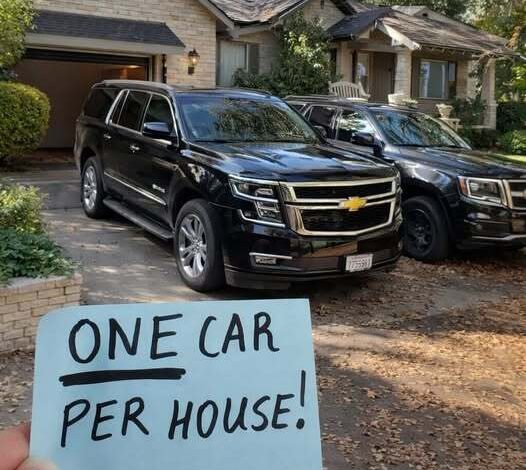
In the quiet, manicured ecosystem of a new residential development, the arrival of a new family usually signals a time for welcome baskets and polite introductions. However, for one household, the move-in process served as the opening act of a high-stakes territorial dispute. The antagonist appeared in the form of a neighbor clad in a pastel pink cardigan and a matching headband—a visual personification of “suburban order” who had decided, unilaterally, that the neighborhood’s unspoken aesthetic required a strict one-car-per-driveway policy.
The conflict began with a blunt, handwritten note left on a windshield: “One car per house!” When that failed to trigger an immediate surrender, the neighbor escalated to a face-to-face confrontation. Citing a supposed Homeowners Association (HOA) mandate that was “friendly but firm,” she insisted that even if vehicles fit perfectly within a private driveway, a second car was a violation of the community’s collective “order.”
Despite the homeowner’s partner, Jack, pointing out that both vehicles were legally parked on their own property and off the public street, the neighbor remained undeterred. “One house, one driveway, one car,” she stated with a practiced tilt of her head before departing.
From Threats to Tow Trucks
The homeowners, confident in the legality of their parking, initially dismissed the exchange as a harmless display of neighborly eccentricity. That illusion was shattered three days later. The household was jolted awake by the mechanical symphony of idling diesel engines and the unmistakable clatter of heavy metal chains. Rushing outside, they found both of their vehicles already hooked up to tow trucks.
Standing on the sidewalk, watching the operation with a self-satisfied grin and arms folded smugly across her pink cardigan, was the neighbor.
“Maybe now you’ll listen when someone tells you the rules,” she remarked, clearly relishing her perceived victory.
The $25,000 Miscalculation
The expected reaction was anger or desperation. Instead, the neighbor was met with laughter—a response that visibly caught her off guard. When she nervously demanded to know what was so funny, the homeowners delivered a reality check that shifted the power dynamic instantly.
The vehicles being hoisted weren’t just standard commuters; they were equipped with specific, specialized permit tags. These markings indicated the cars were part of a protected government program for classic and specialty vehicles. Under strict legal statutes, the unauthorized or illegal towing of such registered property carries severe penalties—up to $25,000 per incident. Because the neighbor had personally initiated the report and orchestrated the removal, the financial liability for the error rested squarely on her shoulders.
The scene shifted from a triumph to a legal nightmare in seconds. As the homeowner pointed out the symbol on the tags that she had overlooked, the color drained from her face. The “smug enforcer” persona vanished, replaced by a visible state of shock and embarrassment. The towing operators, recognizing the legal minefield they had been led into, immediately unhooked the vehicles and departed the scene.
Silence in the Suburbs
In the wake of the incident, the neighborhood has returned to a state of quiet—though not the kind the neighbor originally envisioned. The self-appointed parking warden has not uttered a word about “rules” or “order” since that morning. In fact, she has opted for a policy of total avoidance, steering clear of the family she once tried to intimidate.
It serves as a stark journalistic reminder that in the world of residential disputes, the most effective “revenge” isn’t found in a shouting match. Sometimes, the most profound justice is simply stepping back and letting an arrogant actor walk directly into a trap of their own making.