Pete Hegseth’s 5-Word Attack on European Allies Sparks Global Tension
The ongoing conflict involving Iran has created a growing divide between the United States and several of its long-standing European allies. As tensions rise, disagreements over military involvement have pushed diplomatic relations into uncertain territory.
Several major European nations, including France, Germany, the United Kingdom, Spain, and the Netherlands, have chosen not to participate in the current U.S. military operations. Their decision reflects concerns about escalation and the long-term consequences of the conflict.
This lack of support has not gone unnoticed in Washington.
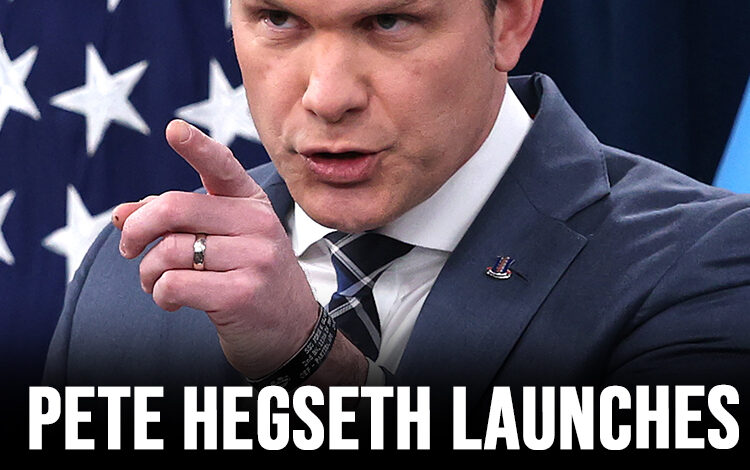
During a tense press briefing at the Pentagon, U.S. Secretary Pete Hegseth addressed the situation directly. His remarks quickly drew attention, as he openly criticized European leaders for refusing to align with the U.S. position.
According to Hegseth, the United States is taking on a significant burden while facing resistance from allies who have historically stood alongside it. His tone suggested growing frustration within the administration.
The situation has highlighted a widening gap in how both sides view the conflict. While the U.S. continues to push forward with its strategy, European leaders remain cautious, warning that further escalation could destabilize the region.
Hegseth, however, dismissed those concerns, framing the issue as one that goes beyond regional politics. He emphasized that the threat posed by Iran is not limited to one area, but could have broader global implications.
His comments included a sharp remark directed at European allies, referring to them in a way that quickly became the headline of the briefing. The statement added fuel to an already tense situation.
He also took aim at critics within the United States, suggesting that more recognition should be given to the administration’s actions. His message reflected a broader frustration not only internationally, but domestically as well.
Despite the lack of unified support, Hegseth made it clear that the U.S. does not plan to change course. The administration remains committed to its objectives, regardless of the position taken by its allies.
Officials have stated that the mission is focused on limiting potential threats and maintaining security interests. However, questions continue to arise about how sustainable this approach will be without broader international backing.
The current situation raises concerns about the future of alliances that have shaped global politics for decades. A divide of this scale could have long-term implications beyond the current conflict.
Observers note that disagreements like this can reshape relationships between nations, especially when trust and cooperation begin to weaken.
At the same time, European leaders continue to emphasize caution, highlighting the risks of further escalation and the importance of diplomatic solutions.
The contrast in approaches has created a moment of uncertainty, with both sides standing firm in their positions.
As events continue to unfold, the outcome of this disagreement could influence not only the conflict itself but also the structure of international cooperation moving forward.
For now, the divide remains clear—and the world is watching closely.