Smallpox vaccine scars: What they look like and why
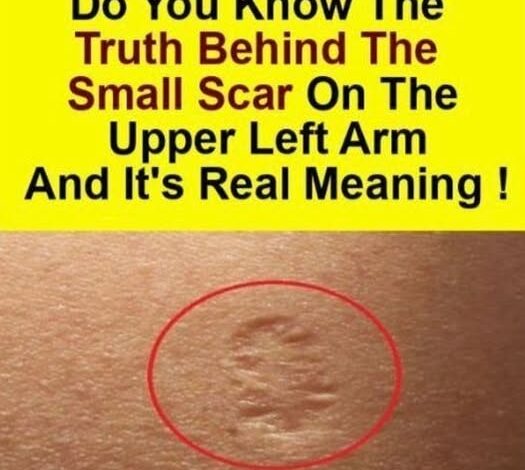
I have a visceral memory from my childhood: noticing a distinct, peculiar scar high on my mother’s arm, just below the shoulder. It was a singular mark—a ring of small, waxy indents encircling a larger central crater in her skin.
At the time, it fascinated me, though I can’t quite pinpoint why that specific detail captured my young imagination. As the years rolled by, that curiosity faded into the background of daily life. The scar was still there, of course, but the question of its origin had been relegated to the forgotten corners of my mind. If my mother had ever explained it to me back then, the answer simply failed to stick.
A Chance Encounter on a Train
That changed a few summers ago. While helping an elderly woman disembark from a train, I caught a glimpse of her upper arm. There it was: the exact same mark, in the exact same location as my mother’s. My interest was instantly piqued, but with the train already preparing to rumble toward my destination, there was no time for an interview.
Instead, I called my mother. She laughed, revealing that she had actually explained the origin of the mark to me several times over the years. Apparently, my brain hadn’t deemed it “essential information” until that moment. The answer? That scar was a permanent souvenir of the famous smallpox vaccine.
A Virus That Terrorized Humanity
To understand the scar, one must understand the threat it countered. Smallpox was a devastating viral infection that once held the human race in a grip of terror. Characterized by high fevers and a catastrophic skin rash, the disease was lethal. According to data from the Centers for Disease Control and Prevention (CDC), during the most rampant 20th-century outbreaks, smallpox claimed the lives of approximately 3 out of every 10 victims. Those who survived were often left with permanent, disfiguring scars.
The tide turned thanks to a massive, coordinated global vaccination effort. In the United States, the virus was effectively declared extinct by 1952. By 1972, the vaccine was so successful that it was removed from the schedule of routine childhood immunizations.
However, prior to the early ’70s, almost every child underwent the procedure. The resulting mark became a sort of universal “vaccine passport” long before the term entered the modern lexicon—a physical signifier that the wearer was protected against one of history’s greatest killers.
The Science Behind the Scar: The Two-Pronged Approach
Why did this specific vaccine leave such a lasting signature when modern flu or tetanus shots do not? The answer lies in the delivery method. Unlike the single-needle injections we receive today, the smallpox vaccine was administered using a specialized bifurcated (two-pronged) needle.
Rather than a deep intramuscular jab, the practitioner would make multiple rapid punctures into the skin to deliver the vaccine into the dermis—the layer just beneath the surface. This triggered a localized reaction:
- The Bump: The live virus in the vaccine would multiply, causing a firm, round bump.
- The Vesicle: This bump evolved into a small, fluid-filled blister.
- The Scab: Eventually, the blister would burst and form a crust.
As the site healed, the body’s inflammatory response created that iconic ring of indents. It is a scar born from the body’s own successful defense mechanism.
Today, these marks are a dwindling sight, found primarily on the arms of those born before the mid-1970s. They are silent witnesses to a time when public health triumphed over a global plague.