People Who Help Waiters Often Share This Surprising Psychological Trait
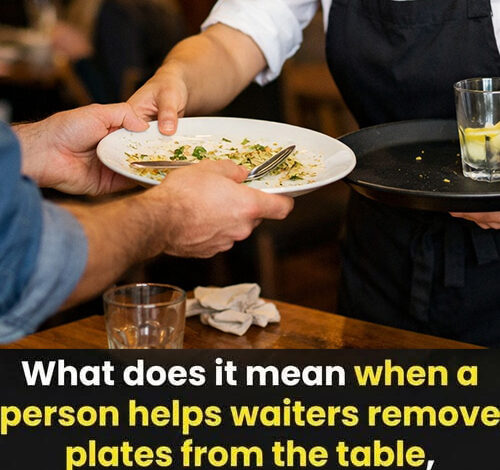
If you’ve ever caught yourself stacking plates or clearing the table before a waiter arrives, you might think it’s just good manners. But according to psychology, that small habit can reveal much more about a person.
What seems like a simple gesture is often linked to deeper personality traits.
People who do this tend to show higher levels of empathy. They naturally notice when someone is busy, stressed, or overwhelmed—and they act on it without thinking twice.
It’s not about attention.
Most of the time, they don’t even realize they’re doing it.
Psychologists describe this behavior as a form of “prosocial behavior,” which means helping others without expecting anything in return. It’s one of the clearest signs of emotional awareness.
These individuals are often very observant.
They pick up on small details—body language, tone, movement—and respond instinctively. In a busy restaurant, they can sense when a server is under pressure.
And instead of ignoring it, they help.
For some, this habit comes from personal experience.
People who have worked in service jobs often understand how demanding it can be. They remember what it feels like, so helping becomes second nature.
But even those without that background may still do it.
Why?
Because they have a strong sense of consideration for others.
They don’t see themselves as above small acts of help. In fact, they often believe that respect is shown through actions, not words.
These small gestures also reflect humility.
Helping a waiter, even in a small way, shows a person doesn’t rely on status or roles to define how they treat others.
It’s about mindset.
Interestingly, research shows that people who regularly perform small acts of kindness tend to feel better emotionally. Helping others can actually improve mood and overall well-being.
So it’s not just beneficial for others—it also benefits them.
At the same time, not everyone sees it the same way.
In some cultures, helping a waiter might be viewed as unnecessary or even intrusive. But the intention behind the action remains the key factor.
It’s about awareness.
About noticing.
About caring enough to do something, even if it’s small.
In today’s world, where most interactions are fast and impersonal, these quiet gestures stand out.
They reveal something important—
Who someone is when no one is watching.
Because sometimes, the smallest actions say the most.