First man in the world to give birth – here he is, 16 years later
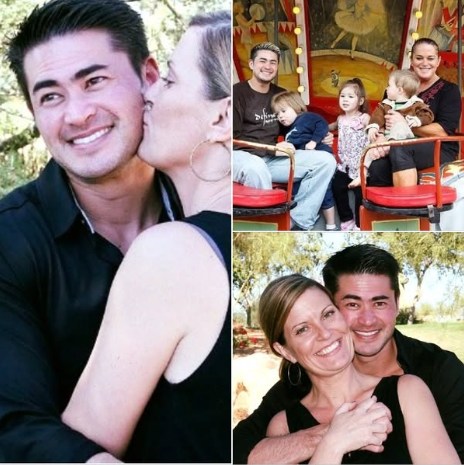
Sixteen years ago, the global media landscape was upended by a single, striking image that challenged the world’s fundamental understanding of gender and biology. Thomas Beatie, then a 34-year-old from Oregon, became an overnight household name as the world’s first legal man to document his journey through pregnancy and childbirth.
Born female, Beatie had undergone a gender transition years prior to live authentically as a man. However, he chose to maintain his female reproductive organs—a decision that would later allow him to carry his and his then-wife’s children when she was unable to conceive. The birth of his first daughter, Susan, wasn’t just a private family milestone; it was a geopolitical lightning rod that thrust the transgender experience into the living rooms of millions.
A Journey Met with Fire
The “groundbreaking” nature of Beatie’s path to fatherhood came at a significant personal cost. As a journalist covering the social shifts of the mid-2000s, I recall the vitriol that shadowed his story. Beatie didn’t just face “criticism”; he navigated a relentless barrage of death threats and public condemnation from those who viewed his pregnancy as an affront to traditional values.
Despite the intense scrutiny and the safety risks to his growing family, Beatie remained remarkably steadfast. He refused to retreat into the shadows, choosing instead to champion the right of transgender individuals to build families and exist openly. His composure in the face of such hostility turned a “taboo” medical curiosity into a profound conversation about the evolution of the modern family.
Beyond the Headlines: The Family Today
Today, the sensationalism of the “Pregnant Man” headlines has faded, replaced by the quiet, everyday reality of a father raising his children. Beatie’s family has since expanded; Susan was eventually joined by two younger brothers.
With three children now navigating their own lives, Beatie’s story has shifted from one of biological defiance to one of paternal devotion. His journey serves as a living timeline of how much—and sometimes, how little—the world has moved in its acceptance of non-traditional parenthood.
Thomas Beatie’s legacy is no longer just about the mechanics of how his children were born, but about the endurance of a man who insisted on his right to be both a father and his authentic self. His story continues to evolve, proving that while the initial “shock” may have made him famous, it is his commitment to his family that has made him a pioneer.
Long before he became a global symbol of modern fatherhood, Thomas Beatie’s life was defined by a quiet, determined transformation in the heart of Hawaii. Born in 1974 as Tracy Lehuanani LaGondino, the trajectory of his early years suggests a person who was never content with the status quo—a trait that would later allow him to navigate one of the most publicized gender transitions in history.
To understand the “Pregnant Man” headlines of the 2000s, one must look back to 1984. At just ten years old, Thomas began the internal process of identifying as a boy. It was a conviction that remained steady throughout his youth, even as he navigated the high-pressure world of teen pageantry and competitive athletics.
A Study in Contrast: From Pageants to Martial Arts
Beatie’s teenage years were a remarkable study in versatility and drive. He possessed a level of discipline that saw him excel in seemingly opposite arenas. On one hand, his striking features led to a career as a model and a place as a finalist in the Miss Hawaii Teen USA pageant—an experience that, in hindsight, highlights the complex public-facing role he would eventually play.
On the other hand, Beatie was a formidable athlete. He threw himself into the rigorous world of martial arts, specifically Karate and Taekwondo. His physical and mental toughness were undeniable; by 1992, he had secured a junior championship in Taekwondo at the Aloha State Games. This foundation of discipline would prove essential for the medical and social hurdles awaiting him in adulthood.
The Architect of His Own Identity
By the age of 23, Beatie began the clinical phases of his transition, initiating testosterone therapy to align his physical presence with his identity. In 2002, he took further definitive steps, undergoing gender-affirming chest surgery and successfully petitioning state and federal agencies to recognize him legally as male.
However, it was a singular, pragmatic choice during this period that would change the course of his life: Beatie chose to retain his female reproductive organs. At the time, it was a personal medical decision, but by 2006, it became a strategic necessity.
The Pivot to Parenthood
The shift from transition to procreation began when Beatie and his then-wife, Nancy, faced the painful reality of fertility challenges. In a move that was as courageous as it was unconventional, Thomas made the decision to pause his testosterone treatments in 2006.
His goal was clear: if his wife could not carry a child, he would. It was a pivot that moved Beatie from the private sphere of identity into the vanguard of a biological and social revolution. He wasn’t just planning to become a father; he was preparing to rewrite the rulebook on what a “traditional” pregnancy looked like.
In 2008, a single photograph fundamentally recalibrated the global conversation on gender, biology, and the definition of a “traditional” family. It was an image of Thomas Beatie—bearded, masculine, and sporting a heavily pregnant belly. Almost instantly, the media-coined moniker “The Pregnant Man” began to ripple across every major news cycle, turning a private medical journey into a worldwide phenomenon.
Yet, behind the viral curiosity lay a harrowing reality of prejudice and systemic hostility. While the public consumed the headlines, Beatie and his then-wife, Nancy, were navigating a gauntlet of “hate emails and death threats” that poured in from every corner of the globe—including, remarkably, from established media outlets that struggled to frame the story with any semblance of neutrality.
A Medical System in Conflict
The resistance wasn’t just digital; it was deeply personal and clinical. Beatie later detailed a pattern of systemic discrimination that turned their path to parenthood into a battle for basic dignity.
”Doctors have discriminated against us, turning us away due to their religious beliefs,” Beatie recounted. “Health care professionals have refused to call me by a male pronoun or recognize Nancy as my wife. Receptionists have laughed at us.”
The isolation was compounded by a lack of familial support. While the couple fought for recognition in the delivery room, they were simultaneously managing a fractured private life; Beatie revealed that most of Nancy’s family was entirely unaware of his transgender identity at the time.
48 Hours That Changed History
Despite the external noise and the skepticism of the medical establishment, the focus remained on the health of the child. Beatie was adamant about his choice for a natural birth, a decision that challenged the expectations of many who assumed such a unique pregnancy would require surgical intervention.
After an grueling 48-hour labor, the couple welcomed their daughter, Susan, into the world. She was born healthy and happy—a simple biological success that stood in stark contrast to the complex legal and social storm surrounding her arrival.
Susan’s birth was a landmark event: it represented the first documented instance of a legally recognized male giving birth within a marital union to a woman. It was a moment that defied the limits of then-contemporary law and medicine, proving that while society was still debating the ethics of his journey, Thomas Beatie was already living the reality of it.
The half-decade following Thomas Beatie’s initial rise to fame was defined by a relentless commitment to a singular vision: the creation of a biological family that mirrored the “traditional” values he held dear. For five years, Beatie remained off testosterone, navigating the complex physiological and emotional landscape of four subsequent pregnancies.
The road was not without its grief. Amidst the successful births, Beatie experienced the trauma of an ectopic pregnancy—a life-threatening complication where a fertilized egg implants outside the uterus, typically in a fallopian tube.
Despite the physical toll, Beatie and his then-wife, Nancy, successfully expanded their household. Together, they raised their daughter, Susan, and two sons, Austin and Jensen. To the outside world, they presented as a cohesive unit defined by stability and “strong values,” even as the internal mechanics of their family remained a point of intense global debate.
The Oprah Interview: A Manifestation of Rights
The conversation reached its zenith in April 2008, when Beatie sat down for an exclusive, hour-long interview on The Oprah Winfrey Show. For a journalist covering the intersection of policy and personhood, this was a watershed moment. It moved the “pregnant man” narrative away from tabloid curiosity and into the realm of fundamental human rights.
Speaking to a global audience of millions, Beatie dismantled the gendered gatekeeping of parenthood. He framed his journey not as a subversion of manhood, but as an exercise in reproductive autonomy.
“It’s not a male or female desire to want to have a child; it’s a human desire,” Beatie emphasized during the broadcast. “I’m a person, and I have the right to have my own biological child.”
Challenging the Conventional
Beatie’s appearance on Oprah served as a powerful assertion of personal agency. He challenged the deeply ingrained perception that a male identity and the biological act of gestation were mutually exclusive. By articulating his experience as a “human desire” rather than a gendered one, he forced a shift in the cultural lexicon.
His words provided a blueprint for future conversations regarding the rights of transgender individuals to access reproductive healthcare. Sixteen years later, that hour of television remains a foundational text in the history of LGBTQ+ visibility, proving that the most radical act Beatie ever performed was simply insisting on his right to be a father.
Sixteen years after he became a global fixture on the front pages of every major newspaper, the man once known as the “world’s first pregnant father” has traded the intense glare of the paparazzi for the steady rhythm of a professional life in the desert. In a revealing update with USA Today, Thomas Beatie provided a glimpse into a life that is, by design, remarkably ordinary.
Today, Beatie resides in Phoenix, Arizona, where he has successfully transitioned into a career as a stockbroker. The man who once navigated the complex biological terrain of multiple pregnancies now spends his days navigating the complexities of the financial markets. It is a transformation that speaks to a desire for a stability that was once impossible to find amidst the media storms of 2008.
A New Chapter in Family Life
Beatie’s personal life has also evolved into a settled, blended-family dynamic. He lives with his wife, Amber, whom he met in a quintessentially “dad” fashion: at the daycare where his children were enrolled. This meeting at the heart of daily parenting underscores just how much Beatie’s identity is anchored in fatherhood.
The logistical reality of his family life reflects the modern American experience. His older children—Susan, Austin, and Jensen—now split their time between two households. They divide their weeks between Thomas and Amber’s residence and their mother’s home, located just ten miles away. It is a co-parenting arrangement that prioritizes proximity and consistency for the children who were once the most famous infants on the planet.
The Balancing Act: Privacy vs. Platform
Despite his shift toward a “quiet life,” Beatie has not entirely retreated from the public eye. He continues to engage in occasional public-speaking engagements, using his unique platform to advocate for reproductive rights and the transgender community. He also takes on modest acting opportunities, maintaining a foot in the creative world that first introduced him to the public during his teenage modeling days.
Reflecting on the whirlwind of 2008, Beatie remains acutely aware of the historical weight he carries. While he no longer seeks the front-page spotlight, he acknowledges the lasting impact of those years. His journey didn’t just change his own life; it paved the way for a generation of non-traditional families to exist with a little more breathing room.
Sixteen years later, the “Pregnant Man” has become something much more enduring: a man who fought for a family and won the right to raise them in peace.
Reaching the milestone of 50 is a moment of reflection for anyone, but for Thomas Beatie, it marks a half-century of life lived at the absolute vanguard of social change. Looking back from the vantage point of five decades, Beatie recognizes that he wasn’t just a headline; he was a pioneer in a world that lacked the vocabulary to even describe him.
“When my story came out, there wasn’t a single person in the public eye as a transgender man—most people had never heard of it,” Beatie remarked in a recent retrospective.
To understand the magnitude of his impact, one must remember the cultural landscape of 2008. This was a pre-digital-boom era where transgender visibility was virtually non-existent in the mainstream. As Beatie correctly identifies, his journey predated the high-profile transitions of figures like Chaz Bono or Caitlyn Jenner. He was the world’s “first exposure” to the reality of transgender masculinity, and he delivered that lesson through the most visceral human experience possible: childbirth.
The Legacy of Fertility
Beyond the initial shock value that the media fixated on, Beatie’s enduring contribution was his unapologetic stance on reproductive rights. By choosing to carry his own children, he forced the medical community and the public to confront the intersection of gender identity and biological potential.
“Exposing the importance of fertility for trans people was a huge eye-opener,” he noted. His story shifted the medical narrative, suggesting that transition didn’t have to mean the end of biological legacy. It opened a door for countless individuals to consider family planning as a viable part of their transition journey.
No Regrets in the Whirlwind
The “whirlwind” Beatie describes—the death threats, the Oprah interviews, the legal battles, and the relentless paparazzi—would have broken many. Yet, 16 years after the birth of his first daughter and 50 years into his life, Beatie’s resolve remains unshaken.
“Everything was a whirlwind,” he admitted, reflecting on the chaos that once defined his daily existence. ”But I still don’t regret it.”
For Beatie, the noise of the past is eclipsed by the reality of the present. He isn’t just a historical footnote or a trivia answer; he is a man who saw a future for himself that no one else thought possible and had the courage to build it. His legacy is not just in the “firsts” he achieved, but in the quiet, ordinary lives now led by transgender parents who followed the path he carved out through sheer will.