Chilling audio from LaGuardia captures tower panic during Air Canada crash
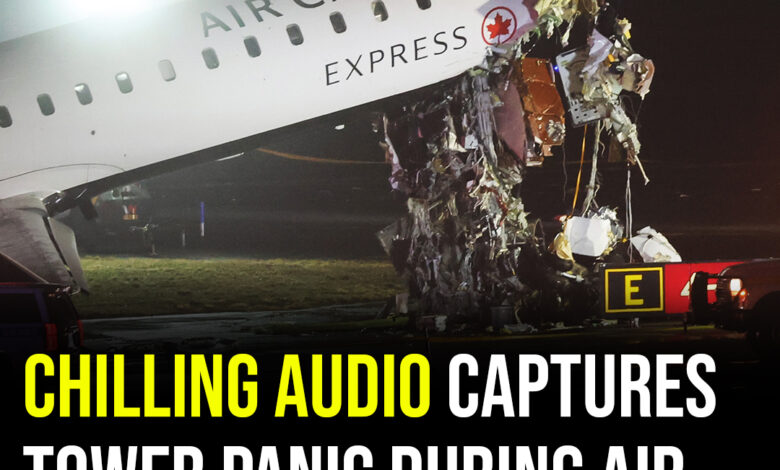
In the wake of the catastrophic collision at New York’s LaGuardia Airport, a newly surfaced air traffic control (ATC) audio recording has provided a haunting, real-time window into the tower during the final moments before disaster struck. The clip, which is currently circulating online, documents the frantic and ultimately futile attempts by controllers to halt a ground vehicle as it moved into the path of an arriving Air Canada Express jet.
The recording serves as a grim play-by-play of a routine taxiing procedure that devolved into a fatal crisis in a matter of heartbeats.
“Truck 1, Stop!”
The audio begins with what sounds like a standard, professional exchange. A ground vehicle, identified as “Truck 1,” requests and receives clearance to navigate the airfield’s complex intersections.
Tower: “Truck 1 and Company, LaGuardia Tower, requesting to cross at 4 at Delta. Truck 1 and Company, cross 4 at Delta. Truck 1 and Company, crossing 4 at Delta.”
However, the tone shifts from professional calm to sheer desperation within seconds. As the controller realizes the vehicle is on a collision course with an active aircraft, the directives turn into a barrage of shouted warnings.
Tower: “Frontier 4195, just stop there, please. Stop, stop, stop, stop, Truck 1, stop, stop, stop. Stop, Truck 1, stop.”
Chaos on the Tarmac
Immediately following the impact, the recording captures the tower’s rapid-fire transition into emergency management mode. Controllers are heard diverted incoming traffic and addressing the crew of the stricken aircraft, identified by its call sign, “Jazz 646.”
- To a nearby flight: “Delta 2603, go around, runway heading 2000.”
- To the Air Canada jet: “Jazz 646, I see you collide with a vehicle. Hold position, I know you can’t move. The vehicle is responding to you now.”
- The Final Declaration: “Runway 4-2-2 is closed at this time. I repeat, runway 4-2-2 is closed at this time. LaGuardia Airport is closed at this time.”
The Human Toll
The incident, which occurred just before 11:40 p.m. on Sunday, March 23, 2026, involved an Air Canada CRJ-900 regional jet arriving from Montreal. According to Flightradar24, the aircraft was carrying between 80 and 100 passengers and was taxiing at approximately 24 mph when it struck the vehicle.
The consequences have been devastating. NBC News has confirmed that two pilots were killed in the crash. Additionally, at least four individuals are in critical condition, including two Port Authority police officers assigned to firefighter duty. According to the New York Post, the truck involved was reportedly responding to a separate, unrelated incident when the collision occurred.
Investigating a Systemic Failure
While early data suggests the fire truck had initially been cleared to cross the runway, the urgent “stop” orders from the tower indicate a late-stage recognition of a catastrophic error or a breakdown in situational awareness. Investigators are also looking into whether the poor weather conditions at the time—which likely hampered visibility for both the pilots and the truck driver—played a decisive role.
The FAA’s subsequent ground stop forced the diversion of at least 18 flights to Newark Liberty and John F. Kennedy International airports. Images from the airfield show the CRJ-900 stationary on the runway, with significant damage to its forward section, a visual testament to the impact with the heavy emergency vehicle.
As federal investigators work to piece together the timeline, the aviation community is left grappling with how such a fundamental breakdown in communication could occur at one of the world’s most heavily monitored airports.