Nobody Thought This Would Resurface
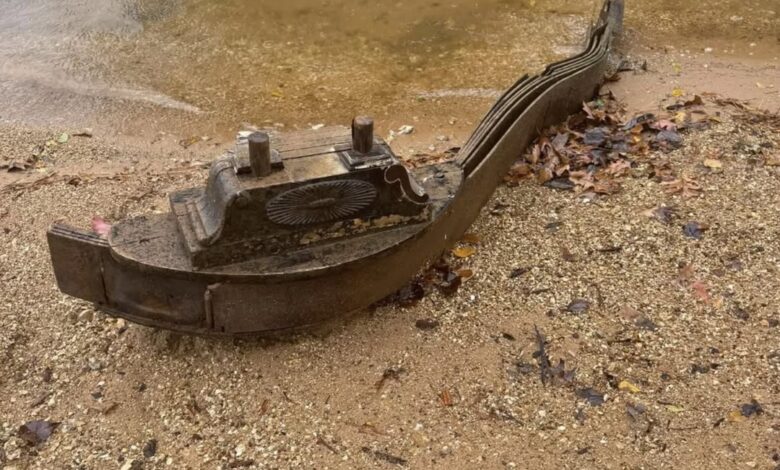
During a recent excavation of the Coosa River, researchers stumbled upon a hauntingly well-preserved relic of 19th-century Americana: the cast iron harp of an upright piano, buried for decades beneath the silt and currents of a man-made reservoir. The discovery offers a rare, tactile connection to the “lost” communities that once thrived along the riverbanks before they were submerged in the 1960s to facilitate the creation of the reservoir. Found resting in the sand near the skeletal remains of what were once homes, schools, and churches, the artifact serves as a silent witness to a way of life that ended when the floodgates were closed.
A Masterpiece of Industrial-Age Engineering
The harp—the internal frame that supports the immense tension of a piano’s strings—retains the distinct markers of its era. Embossed upon the cast iron plate are two specific patent dates: November 27, 1877, and January 7, 1879.
These dates correspond to pivotal advancements in American piano manufacturing. During the late 1800s, the transition to full cast iron frames allowed instruments to withstand thousands of pounds of pressure, a necessity for the resonant, powerful sound demanded by Victorian-era parlors.
Despite nearly 150 years of exposure and decades spent underwater, the harp remains remarkably identifiable. While the metal is heavily rusted and the wood is waterlogged and cracked, several decorative elements remain:
- A sunburst motif: Intricate patterns adorn the side of the frame, reflecting the high level of craftsmanship even in internal components.
- Mechanical Dowels: Two wooden pins still protrude from the top of the frame, once used to support the complex internal action of the hammers and keys.
The Submerged History of the Coosa
The location of the find is as significant as the object itself. Before the dams were constructed, the Coosa River was dotted with vibrant small towns. When the state moved to flood the valley for the reservoir, residents were often forced to leave with little more than what they could carry. Large, heavy items—like upright pianos—were frequently abandoned to the rising waters.
In the mid-to-late 19th century, the piano was the undisputed centerpiece of the American home. It was the primary source of entertainment and a symbol of cultural aspiration. Whether this particular instrument once sat in a schoolhouse, a church sanctuary, or a private living room, it represents a hub of community and family life that was abruptly silenced by the mid-20th-century push for hydroelectric power and water management.
Preserved by the Depths
Paradoxically, the very water that took the communities helped preserve this artifact. The lack of oxygen and the protective layers of river sand slowed the total disintegration of the wood and metal. While every bolt and joint has succumbed to the elements to some degree, the integrity of the design remains a testament to the durability of 19th-century American manufacturing.
The reemergence of the harp serves as a poignant reminder that history is rarely truly gone; it is often merely hidden. As nature shifts or water levels recede, these relics surface to provide a window into the daily lives, music, and struggles of those who lived along the Coosa long before the floodwaters changed the landscape forever.
The “Warrior Dividend” for the military may be a modern gesture of gratitude, but this silent, rusted harp is a reminder of an older, quieter era of American resilience—a piece of history that continues to resonate long after its last note was struck.