I Married a Man Who Had No Memory of His Past — Until an Anonymous Note Led Me to a Door That Changed Everything
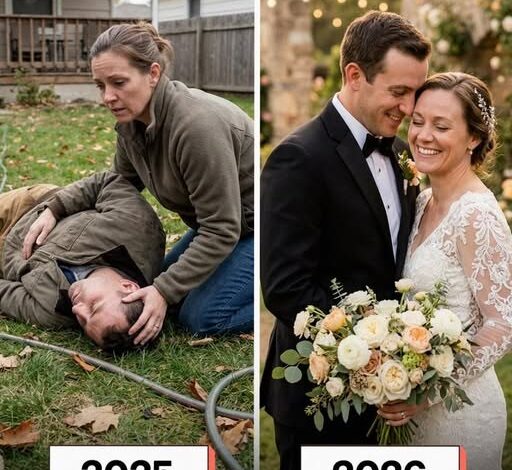
I truly believed I knew the man I had married, even if there was a part of his life that remained a mystery—something even he claimed he couldn’t remember. A year before everything unraveled, I had found him lying unconscious on my porch. At the time, it felt like a random, almost surreal moment. I called for help, stayed with him until the ambulance arrived, and assumed that would be the end of it. I never imagined that single moment would pull our lives together so tightly that untangling them later would feel impossible.
When he came back days later, everything about him felt fragile but genuine. He had no memory of who he was, where he came from, or what his life had been before. All he carried was gratitude—quiet, sincere—and a calm, steady kindness that slowly became familiar to me. There was something comforting about him, something that made me want to help, to stay close, to make sure he was okay.
What began as concern gradually turned into something deeper. We spent time together, first out of necessity, then out of choice. Conversations became longer, laughter came easier, and slowly, without either of us forcing it, love grew between us. It wasn’t loud or overwhelming—it was quiet, steady, and safe. Within months, we had built a life that felt simple and real, something untouched by whatever past he couldn’t remember.
We got married in our backyard under soft lights, surrounded by a few close friends, believing we were starting something honest. It felt like a clean beginning—a life built from scratch, free from complications, free from secrets. I truly believed that whatever his past had been, it no longer mattered. What mattered was who he was now, and who we were together.
But over time, small things began to shift.
At first, they were easy to ignore. Nights when he came home later than usual, offering explanations that felt just believable enough. Phone calls he would step outside to take, returning with a vague smile and no real answers. Moments when he seemed distant, as if his mind was somewhere else entirely. I told myself not to overthink it. After all, he had been through something traumatic. Maybe these were just fragments of a life he couldn’t fully piece together.
Then one day, I found a crumpled piece of paper in his jacket pocket. It was small, worn at the edges, with a short list written in a child’s handwriting. The letters were uneven, careful in the way children write when they’re concentrating. When I showed it to him, he frowned and shook his head, insisting he didn’t recognize it. Something in his reaction felt off—not obvious, not enough to confront, but enough to plant a seed of doubt that wouldn’t go away.
Still, I chose trust. Even when questions lingered, even when my instincts told me something wasn’t quite right, I pushed those thoughts aside. I wanted to believe in what we had built. I needed to believe it was real.
Everything changed the day I received the note.
There was no name, no return address. Just a plain envelope waiting for me, as if someone had gone out of their way to make sure I would find it. Inside was a single key and a short message written in simple, direct words:
“You deserve to know the truth.”
My hands trembled as I read it. I didn’t know who had sent it or why, but something deep inside me already understood that this wasn’t random. There was intention behind it. A purpose.
I followed the address written inside, my heart pounding the entire way. With every step, a quiet dread built inside me, like part of me already knew that whatever I was about to find would change everything. And still, I kept going.
When I reached the door and knocked, I felt a strange stillness settle over me. It was the kind of silence that comes right before something breaks.
The door opened.
And everything shifted.
A woman stood there, calm but watchful. Beside her was a child, standing close, as if they belonged together in a way that was unquestionable. What struck me most wasn’t confusion or surprise—it was recognition.
They weren’t surprised to see me.
They were expecting him.
In that moment, before a single word was spoken, I felt the truth begin to unfold.
What followed came in pieces, each one heavier than the last. His memory had returned—not recently, not suddenly—but long ago. Long before we built our life together. And instead of telling me, instead of choosing honesty when he had the chance, he had made a different choice.
He had chosen to keep it hidden.
He had chosen to live two lives.
Two homes. Two versions of himself. Two realities carefully separated, each one built on the same lie. Both of us believed we were his only truth. Both of us trusted him completely. And all the while, he moved between those lives, maintaining the illusion.
For a moment, it felt like the ground beneath me had disappeared. Everything I thought was real—every memory, every promise, every quiet moment we had shared—suddenly felt constructed, like a story I had been allowed to believe but never truly understand.
But in that moment, I wasn’t alone.
The woman standing in front of me wasn’t my enemy. She was someone who had been hurt in the same way, someone who had believed the same things I had believed. When we looked at each other, there was no anger between us—only understanding.
Together, we faced him.
There were no raised voices. No chaos. No dramatic confrontation. Just the truth, laid out plainly, impossible to deny.
And sometimes, truth doesn’t need to be loud to be powerful.
It was enough.
I slipped off my ring slowly, feeling its weight in my hand. For so long, it had symbolized something real, something lasting. But now, it felt different—empty, disconnected from everything it once represented.
Love built on deception doesn’t survive when the truth is finally seen.
Walking away was one of the hardest things I’ve ever done. It felt like stepping out of a life I had poured myself into, a life I had believed in with everything I had. Every step away from that door felt heavy, like leaving behind not just a person, but a version of my life that no longer existed.
That night, as I packed my things, the silence in the house felt unfamiliar. Not comforting, not yet. Just different. Final.
But when I closed the door behind me for the last time, something unexpected settled inside me.
Not relief exactly. Not at first.
Something quieter.
Peace.
Because in the end, I understood something I hadn’t been ready to see before.
Losing him wasn’t the real loss.
Living in a lie was.
And sometimes, the door you’re afraid to open—the one you wish had never existed—is the very thing that sets you free when you finally walk through it.