A Simple Change in Sleeping Position That May Improve Your Comfort and Health! sotd!
Most people fixate on the number of hours they sleep, chasing the idea that eight hours is the ultimate benchmark for feeling rested. But the body doesn’t measure rest purely in time. It pays equal attention to how those hours are spent—how you position yourself, how your internal systems function while you sleep, and whether your posture supports or resists the natural design of your body. A subtle shift in sleeping position, particularly favoring the left side, can quietly influence comfort, digestion, circulation, and overall well-being in ways many people overlook.
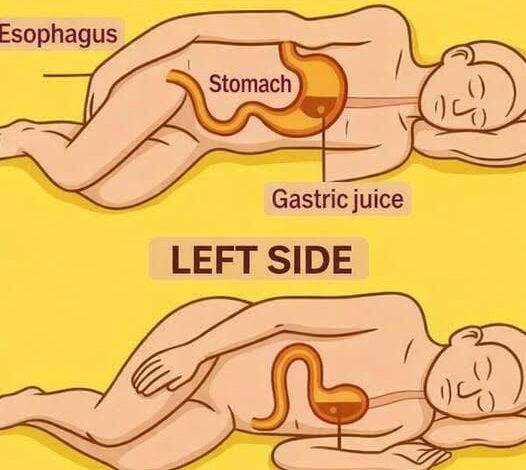
Sleeping on the left side aligns more naturally with the body’s internal structure. The stomach and much of the digestive system are positioned in a way that allows gravity to assist rather than interfere. When you lie on your left, food and digestive acids can move more smoothly through the stomach and into the intestines. This often reduces the likelihood of acid reflux, heartburn, and that heavy, uncomfortable feeling that tends to follow late-night meals. Instead of working against your body, this position supports a more efficient digestive flow, allowing your system to process what it needs without unnecessary resistance.
For those who experience frequent discomfort after eating, especially in the evening, this change can feel surprisingly noticeable. The burning sensation in the chest, the subtle pressure in the upper abdomen, and the restless tossing that comes from digestive unease can gradually lessen. Over time, the body begins to associate sleep with relief rather than discomfort, creating a more consistent and restorative rest cycle.
Circulation also benefits from this position. The body contains major blood vessels that play a crucial role in transporting oxygen and nutrients. When you lie in certain positions, these vessels can become compressed, subtly restricting flow. Sleeping on the left side reduces some of this pressure, allowing blood to move more freely. This can help prevent that heavy, swollen feeling in the legs that often builds up after long hours of sitting or standing during the day. It also supports a steadier distribution of oxygen throughout the body while you sleep, contributing to a more refreshed feeling upon waking.
The difference might not be dramatic overnight, but it builds gradually. You may notice that your limbs feel lighter in the morning, that you don’t wake up with the same stiffness or dull heaviness that once lingered. The body, given the right conditions, tends to correct itself quietly and efficiently.
Another system that benefits from left-side sleeping is the lymphatic system. Often overlooked, this system functions as the body’s internal cleanup network, helping to remove waste, toxins, and excess fluids. It works continuously, but it becomes especially active during rest. Positioning the body in a way that supports its natural flow can enhance this process. Sleeping on the left side may encourage more effective drainage, allowing the body to clear out what it doesn’t need more efficiently overnight.
This contributes to a subtle but meaningful sense of renewal. You may not consciously notice the lymphatic system doing its work, but its effects show up in how you feel—clearer, lighter, and more balanced. Over time, this can support immune function as well, helping the body maintain its defenses with less strain.
For pregnant women, the benefits of sleeping on the left side are even more pronounced. As the body changes and adapts to support new life, internal organs shift, and pressure increases in various areas. Sleeping on the left side helps improve blood flow to the uterus and the developing baby, ensuring a steady supply of oxygen and nutrients. It also reduces pressure on the liver and other organs, allowing them to function more comfortably despite the added demands.
This position can ease common discomforts associated with pregnancy, such as back pain, swelling in the legs and feet, and general fatigue. It creates a more supportive environment for both the mother and the baby, encouraging deeper, more restorative sleep at a time when rest is especially important.
Of course, changing sleeping habits is rarely immediate or effortless. The body tends to default to familiar positions, even if they’re not the most beneficial. Shifting to the left side may feel awkward at first. You might find yourself rolling back onto your back or right side without realizing it. This is normal. The key is consistency and small adjustments rather than forcing a sudden change.
Using pillows strategically can make a significant difference. Placing a pillow behind your back can help prevent rolling over during the night. A pillow between the knees can align the hips and reduce strain on the lower back, making the position more comfortable. Supporting the head and neck properly ensures that the spine remains in a neutral position, preventing stiffness or discomfort.
Over time, the body adapts. What once felt unfamiliar becomes natural. Muscles relax more easily, breathing becomes steadier, and sleep begins to feel deeper and less interrupted. The transition doesn’t require perfection—just a gradual shift and a bit of patience.
What makes this change so compelling is its simplicity. It doesn’t involve expensive equipment, complicated routines, or drastic lifestyle overhauls. It’s a small adjustment, something you do every night without thinking, yet it can influence multiple systems within the body at once. It works quietly, without drawing attention to itself, yet its effects can accumulate in meaningful ways.
Mornings may start to feel different. Instead of waking up with lingering discomfort or heaviness, there’s a sense of ease. Energy feels more stable, not because you slept longer, but because the quality of your rest improved. The body feels supported rather than strained, as if it was given the right conditions to reset and recover.
This shift also changes how you think about rest. Sleep becomes less about hitting a specific number of hours and more about creating an environment where the body can function optimally. It’s a reminder that small, consistent choices often have a greater impact than dramatic, short-lived efforts.
In a world that often pushes for more—more time, more effort, more intensity—it’s easy to overlook the power of subtle changes. But the body doesn’t always need more. Sometimes, it just needs alignment. It needs to be placed in a position where its natural processes can unfold without interference.
Sleeping on the left side is one of those adjustments. It doesn’t promise instant transformation or overnight results. Instead, it offers something quieter and more sustainable: a gradual improvement in how the body feels, functions, and restores itself.
And over time, that quiet improvement becomes noticeable—not as a sudden shift, but as a steady, reliable sense of comfort that carries into each new day.