2-year-old’s eyebrows were first sign of condition before devastating diagnosis
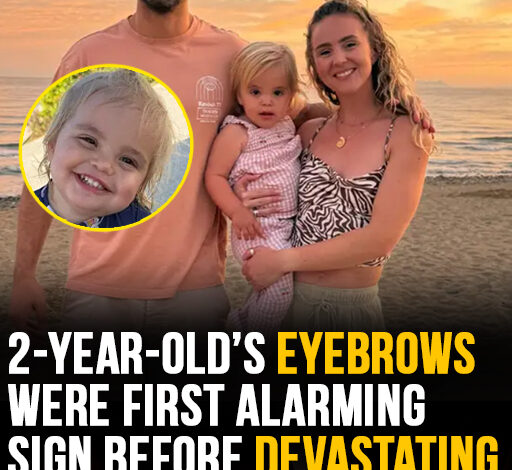
Two-year-old Leni Forrester is described by those who know her as a “bundle of energy” and a “sunshine” child. But beneath her vibrant exterior, a biological clock is ticking. Leni has been diagnosed with a rare and terminal form of childhood dementia, leaving her parents trapped in a desperate race to save her life before the window for treatment slams shut.
The diagnosis came just one week before Leni’s second birthday: Sanfilippo Syndrome Type B. It is a rapid, neurodegenerative condition that systematically dismantles a child’s cognitive and physical abilities.
For her parents, Emily, 33, and Gus, 35, the news was a total eclipse. “We didn’t have any concerns at all about Leni,” the Kent-based mother told the Mirror. They were, by all accounts, completely blindsided.
The ‘Catastrophic’ Discovery
The path to this diagnosis was paved by chance rather than symptoms. During a routine genetic screening for Emily’s sister, it was discovered she carried the NAGLU gene associated with the syndrome.
Though the statistical likelihood of Leni being affected was marginal, the couple opted for testing as a precaution. An initial test returned an “all-clear” result, giving the family enough confidence to even consider expanding their household. However, subsequent, more rigorous testing revealed the devastating truth: Leni was living with what doctors call a “catastrophic genetic condition.”
A Disease of Toxic Accumulation
Sanfilippo Syndrome is fueled by a specific enzyme deficiency. Without this enzyme, the body cannot break down certain complex molecules. Instead of being recycled, these substances accumulate into “toxic waste” that progressively destroys brain cells.
Data from the Cleveland Clinic paints a grim trajectory. The condition causes a spectrum of cognitive, behavioral, and physical symptoms that intensify over time, eventually leading to premature death. It is an exceptionally rare affliction, appearing in only one out of every 50,000 to 250,000 people.
While children with Sanfilippo often appear perfectly healthy in their infancy, the symptoms typically become undeniable by age three. What follows is a cruel regression: the gradual loss of the ability to speak, walk, eat, and communicate.
Subtle Signs and Hidden Symptoms
In the clarity of hindsight, Emily notes that the warning signs were so subtle they were easily dismissed as family traits. Leni has distinctively bushy eyebrows, but so do both of her parents. Other physical markers—thick eyelashes and full lips—were present but not pronounced enough to trigger an alarm.
Even Leni’s birth with talipes (clubfoot) seemed like an isolated incident once it was successfully corrected through physiotherapy.
“Because of how this syndrome progresses, they don’t really have any obvious symptoms that are different to what a normal toddler might experience before they’re two years old,” Emily explained. The early indicators were simply “nothing that you would piece together as this catastrophic genetic condition.”
The Cost of Delay
Without medical intervention, the cellular damage is relentless.
“Every day that passes without treatment, this toxic waste is building up in our child’s body,” Emily warned. “If we can’t get treatment, she will suffer the most awful physical and mental decline you can imagine and then die in her early to mid-teens.”
The initial prognosis was bleak. In the UK, there is currently no approved treatment, meaning the Forresters were initially told to prepare for the “horrific” reality of palliative care.
A Glimmer of Hope in Edinburgh
The family’s only hope now lies in a pioneering gene therapy being developed by Professor Brian Bigger at the University of Edinburgh. This treatment seeks to transplant a healthy copy of the missing gene into the patient’s blood stem cells, potentially halting or slowing the neurological decay.
However, the therapy is not a cure for damage already done.
“We’re racing against time,” Professor Bigger told ITV. “She will start to lose brain cells and when that happens, we’re not going to get them back.”
Emily emphasizes that for children like Leni, the calendar is the enemy. “The damage cannot be reversed once it’s done. If she has to wait six months, that could mean she can no longer talk. If she waits 12 months, that could mean she loses the ability to walk.”
‘Time is Working Against Us’
The family has launched a GoFundMe campaign to secure the funds necessary for this life-saving intervention.
“With Leni’s condition, every day matters and time is running out to save her life,” Emily wrote in her appeal. “It is every parent’s worst nightmare to be told that their child is going to die… We will do anything we can to save our baby girl.”
As the family fights for a future that was nearly stolen, Emily’s message remains a haunting reminder of the stakes: “Time is working against us. This truly is her only hope.”