Donald Trump Faces Backlash Over Threats Ahead of World Cup!
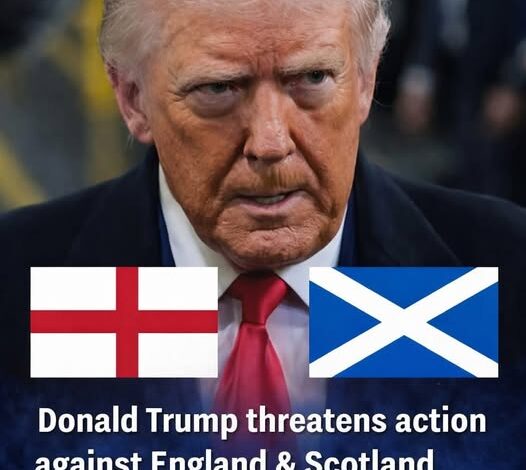
As the world’s attention turns toward the upcoming World Cup, a different kind of headline is dominating the conversation—one rooted not in sports, but in politics, strategy, and international tension. Former U.S. President Donald Trump has once again stirred controversy with statements that have drawn sharp reactions from leaders and observers across Europe.
At the center of this debate is Greenland.
Trump has renewed his long-standing interest in the Arctic territory, arguing that control of the island is critical for both national and global security. His reasoning is linked to broader geopolitical concerns, particularly the increasing presence of Russia and China in the region. According to him, Greenland represents a strategic location that cannot be ignored as global powers compete for influence.
However, this proposal is not new.
During his presidency, Trump had already suggested acquiring Greenland, a move immediately rejected. Greenland is an autonomous territory within the Kingdom of Denmark, managing its own domestic affairs while remaining connected to Danish governance. Both Danish and Greenlandic leaders emphasized that the island was not for sale, and that position remains unchanged.
What has changed is the tone.
In recent remarks, Trump has taken a more confrontational approach, suggesting that if diplomatic efforts fail, other forms of pressure could be applied. While he has not explicitly threatened military action, he has indicated that stronger measures, particularly economic ones, are on the table.
Tariffs.
Trump proposed economic penalties on several European countries, including Denmark and other nations such as Norway, Sweden, France, Germany, the UK, the Netherlands, and Finland. He claimed these countries had been traveling to Greenland for “unknown purposes,” implying activities he sees as conflicting with U.S. interests. These claims have not been substantiated but have sparked concern and criticism.
European leaders responded firmly.
Denmark and Greenland reiterated that the territory’s status is not open for negotiation. The idea of external pressure, whether economic or otherwise, was described as unacceptable. Other European nations mentioned in Trump’s statements also reacted cautiously, emphasizing the importance of cooperation and stability. The suggestion of tariffs introduces uncertainty that could affect trade and diplomatic relationships beyond Greenland itself.
The timing of these statements adds complexity.
With the World Cup approaching, global attention is heightened. Major international events often bring countries together, temporarily setting aside political differences. Introducing tension during this period shifts focus from sport to geopolitics, creating an unusual backdrop for international discourse.
Critics argue that Trump’s language risks escalating tensions unnecessarily, particularly in a region already sensitive to global competition. The Arctic is increasingly important due to natural resources, shipping routes, and strategic positioning. As interest grows, diplomacy becomes more crucial.
Supporters of Trump frame the issue differently.
They argue that addressing potential threats early is necessary, even with assertive measures. Economic penalties are seen as a tool to influence outcomes without direct conflict, emphasizing protection of national interests and strategic positions.
This divide reflects broader approaches to international issues.
Some prioritize cooperation, negotiation, and maintaining relationships. Others emphasize assertiveness, leverage, and preemptive action. Both aim to manage the same concerns but differ in method and tone.
In this case, the method—threatening tariffs over geopolitical claims—has fueled the controversy. Economic measures typically target specific disputes, but applying them broadly introduces uncertainty and questions about precedent.
For businesses, markets, and governments, predictability matters. Uncertainty disrupts planning, investment, and confidence. Tariffs on multiple nations could have wide-ranging effects beyond Greenland.
Yet, the Arctic’s strategic importance cannot be ignored. Climate change is opening new shipping routes and resource access, and global competition is growing. The concerns are not baseless—but how they are addressed matters.
Diplomacy, economic policy, and strategic planning all play a role. Statements emphasizing confrontation can accelerate tension, while those prioritizing dialogue may reduce it.
For now, Greenland’s status remains unchanged. Its leadership, along with Denmark, has made this clear, and any attempt to alter it through pressure would face strong resistance.
What remains uncertain is how the broader conversation will evolve. Will it return to cooperation, or continue on a confrontational path? Future actions, not just statements, will determine that.
Meanwhile, the controversy illustrates how quickly geopolitical issues intersect with everyday conversation. Topics once limited to policy discussions are now part of the public dialogue, shaped by timing, visibility, and presentation.
Nothing exists in isolation. In a world where information spreads quickly, how issues are framed can be as impactful as the issues themselves.