15 minutes ago in New York ! See more! NM
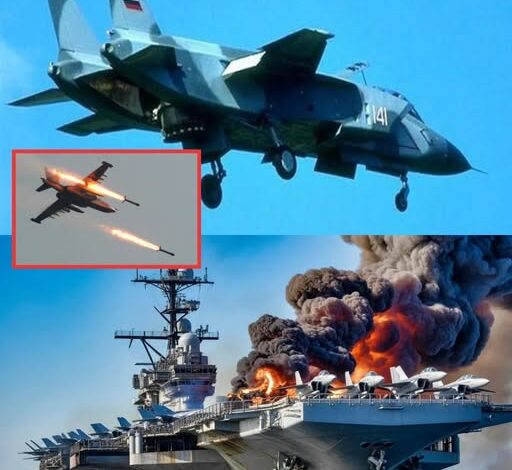
In today’s world, where information spreads faster than verification, dramatic headlines can circle the globe within minutes—often outpacing the facts they claim to represent. Recently, online reports suggested a major escalation between the United States and Iran, including claims that an F-35 fighter jet had been struck and forced to land. These reports carried a tone of urgency, designed to grab attention and provoke immediate reaction.
But urgency does not equal accuracy.
At this time, there is no widely confirmed information from independent, credible sources indicating that the United States and Iran are engaged in an active, declared war in 2026. Likewise, no verified reports or official statements confirm that an F-35 was hit by Iranian fire as these claims suggest.
That absence is significant.
Events of this scale—especially involving advanced military aircraft or direct confrontation between major powers—do not remain hidden in obscure corners of the internet. They generate immediate coverage across multiple reliable news outlets, with official responses, briefings, and analysis. The lack of such corroboration signals that these claims should be treated cautiously.
The speed at which these stories spread reflects a larger pattern. During periods of geopolitical tension, information ecosystems become volatile. Real disputes, historical context, and ongoing concerns create fertile ground for speculation. In this environment, unverified claims often gain traction by blending fragments of truth with assumptions or incomplete details.
The result is confusion.
Readers encounter narratives that seem plausible because they reference real tensions but lack verification of the specific events described. The line between possibility and reality blurs, especially when headlines aim to maximize emotional impact rather than clarity.
The relationship between the United States and Iran has long been complex, marked by periodic tension, regional conflicts, and occasional military incidents. These dynamics make dramatic claims appear credible at first glance. However, history shows that true escalations—particularly those involving direct confrontation—are rarely ambiguous. They are documented, confirmed, and analyzed in detail.
When that level of confirmation is missing, important questions arise:
Where is the information coming from?
Who is verifying it?
Why aren’t established sources reporting the same details?
These questions are essential.
In the case of recent reports, the lack of alignment between viral claims and credible reporting suggests that the situation is either misrepresented, exaggerated, or based on incomplete information. This does not mean tensions do not exist; it means that the specific claims circulating have not met the verification standards needed to treat them as fact.
Understanding this distinction is crucial in a digital environment where visibility is often mistaken for credibility. A widely shared post is not accurate simply because it reaches a large audience. Repetition cannot replace verification, and urgency can obscure the need for careful evaluation.
This is particularly important for issues with global implications.
A confirmed incident involving a U.S. F-35 and Iranian forces would represent a major escalation, with consequences extending far beyond the region—affecting diplomacy, military posture, and international stability. It would trigger official statements, allied responses, and extensive media coverage. The absence of these responses indicates that the circulating claims have not been substantiated.
In moments like this, the best approach is to pause. Wait for confirmation from sources with established verification processes. Follow updates from organizations that prioritize accuracy over speed.
This does not mean ignoring developments or dismissing concerns. It means engaging responsibly, distinguishing early reports from confirmed events.
There is also a broader lesson about how information is consumed.
Digital platforms prioritize engagement. Content that provokes strong emotions—fear, urgency, curiosity—is more likely to be shared, regardless of accuracy. This allows unverified claims to spread quickly, especially when they align with existing narratives.
Breaking this cycle requires intention.
Readers must look beyond headlines, question sources, and recognize when information lacks sufficient depth. They must shift from immediate reaction to measured understanding.
Credible journalism plays a critical role. Reliable reporting is built on verification, multiple sources, and accountability. It may take longer, but it provides clarity viral content cannot match. In high-stakes topics, that clarity is essential.
As of now, caution is warranted.
There is no confirmed evidence supporting claims of an F-35 being downed or a declared war between the United States and Iran in 2026. While geopolitical tensions exist, distinguishing between verified events and unconfirmed reports is crucial.
Going forward, the focus should remain on credible updates. Official briefings, established news organizations, and verified sources provide the clearest picture. They offer context, confirmation, and accountability—elements often missing from viral claims.
In a fast-moving information landscape, accuracy is a form of stability.
Relying on verified information is not skepticism for its own sake. It ensures understanding is grounded in fact, not assumption. When stakes are high, clarity matters more than speed.