Hegseth Blasts Media, Disgruntled Former Employees Over Signal Controversy!
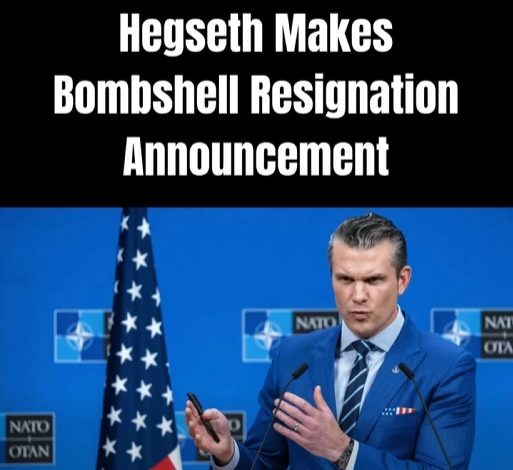
Tensions escalated sharply in Washington as Pete Hegseth publicly pushed back against a wave of criticism tied to a growing controversy over the use of the messaging app Signal. The dispute, fueled by recent media reports and political pressure, has drawn national attention, placing the Department of Defense at the center of an ongoing debate about information security and accountability.
Speaking to reporters during a public appearance at the White House’s Easter Egg Roll, Hegseth did not soften his response. Instead, he directly challenged both the media coverage and the sources behind it, framing the situation as a coordinated attempt to damage his credibility. According to him, the reports rely heavily on unnamed individuals who no longer hold positions within the administration—voices he described as “disgruntled former employees” with motives rooted more in resentment than in fact.
His tone was firm, and his message clear. He rejected the claims outright, particularly those suggesting that he had participated in a second private discussion on Signal in which sensitive intelligence about operations in Yemen was shared. He dismissed these allegations as recycled narratives, amplified by outlets he accused of relying on anonymous sources to construct damaging stories.
“This is what the media does,” he said in substance, arguing that such reports are designed to undermine reputations through speculation rather than verifiable evidence. He positioned himself as resistant to that pressure, emphasizing that he would not be swayed by what he called “anonymous smears.”
Hegseth also made a point of reinforcing his alignment with Donald Trump, stating that the two remain fully in agreement. According to him, there is no internal conflict or uncertainty about his position within the administration. Instead, he framed their relationship as unified, focused on continuing their work without distraction from external criticism.
The White House echoed that stance.
Press Secretary Karoline Leavitt responded to reports suggesting that the administration was considering replacing Hegseth. Those claims, originally attributed to an unnamed source cited by NPR, were dismissed as inaccurate. Leavitt labeled the report as “fake news,” emphasizing that the president continues to support Hegseth and has no intention of seeking a replacement.
The administration’s official communications channels reinforced that message, publicly criticizing the report and questioning its credibility. Statements characterized the coverage as misleading and politically motivated, further intensifying the back-and-forth between officials and media outlets.
At the core of the controversy is a broader issue involving communication security within government operations.
The situation gained attention when Jeffrey Goldberg, editor-in-chief of The Atlantic, appeared to have been inadvertently included in a Signal group chat involving high-level officials. That chat reportedly contained discussions related to a planned military strike targeting Iran-backed Houthi forces in Yemen. The incident raised immediate concerns about how sensitive information was being handled and whether proper protocols were followed.
Goldberg later published details of the conversation, bringing the issue into public view and triggering scrutiny from both political figures and media organizations.
Compounding the situation, additional reporting suggested that Hegseth may have participated in another Signal conversation involving family members, where specifics of a military operation were allegedly discussed. These claims, cited by outlets such as The New York Times, added another layer to the controversy, prompting questions about the boundaries between official communication and personal channels.
Hegseth has consistently denied these allegations.
From his perspective, the narrative being constructed does not reflect reality but rather an attempt to revive and extend a story that lacks substance. He has framed the issue as part of a broader pattern, comparing it to previous controversies where, in his view, media coverage relied heavily on unverified or politically motivated claims.
President Trump has also weighed in, offering public support.
When asked about calls from some Democratic lawmakers for Hegseth to resign, Trump dismissed the idea outright. He described Hegseth as performing well in his role and rejected the notion that he should be held responsible for the Signal-related incident. Instead, Trump pointed to Mike Waltz as the individual who had taken responsibility for mistakenly adding Goldberg to the group chat.
According to Trump, the situation did not involve a broader failure within the administration but rather a specific error attributed to one person. He downplayed the potential consequences, emphasizing that the military operation discussed in the chat was ultimately successful.
“There was no harm done,” he suggested in substance, focusing on the outcome rather than the process that led to the exposure of information.
This framing has not quieted critics.
Opponents argue that the issue is not solely about the success of a mission, but about the protocols surrounding sensitive information and whether they were properly followed. They contend that even if no immediate damage occurred, the situation highlights potential vulnerabilities that could have serious implications in the future.
The debate has therefore shifted beyond the initial incident, becoming a broader discussion about accountability, communication practices, and the role of technology in government operations.
Signal, known for its end-to-end encryption, is widely used for secure messaging. However, its use in official contexts raises questions about record-keeping, oversight, and the potential risks of including unintended participants in sensitive conversations. The controversy has brought these concerns into sharper focus, prompting calls for clearer guidelines and stricter adherence to established communication protocols.
Within this environment, the political dimension of the story continues to evolve.
Supporters of Hegseth and the administration view the situation as an example of media overreach, driven by anonymous sources and amplified without sufficient verification. Critics, on the other hand, see it as a legitimate issue that warrants scrutiny and transparency.
For now, the administration remains unified in its public stance.
Hegseth continues to reject the allegations, Trump continues to support him, and official statements from the White House maintain that there is no internal movement to replace him. At the same time, the conversation surrounding the controversy shows no signs of fading quickly.
As more information emerges and investigations continue, the focus will likely remain on both the specifics of the Signal communications and the broader implications for how sensitive information is handled at the highest levels of government.
What began as a single incident has grown into a complex and highly visible dispute—one that reflects not only the details of a particular case but also the larger tensions between media, politics, and public accountability in an era defined by rapid information flow and constant scrutiny.