Brian Connolly: From Pop Star Fame to a Tragic Ending
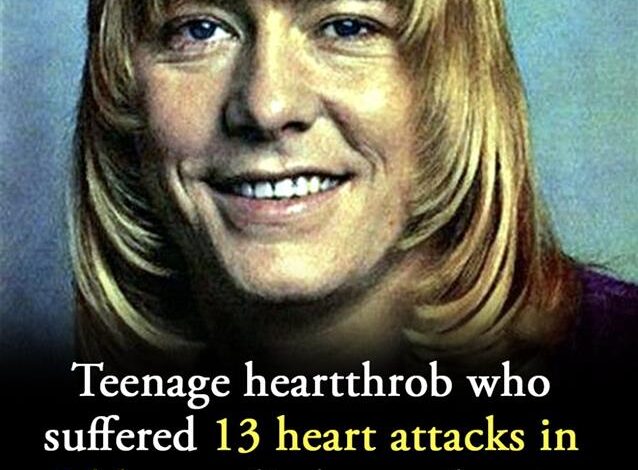
Brian Connolly, the charismatic frontman of the legendary British glam rock band The Sweet, was a rock star whose life read like a classic story of meteoric rise, dizzying fame, and heartbreaking decline.
He was a man whose powerful voice, striking looks, and magnetic stage presence captivated millions in the 1970s.
Yet, behind the glitter, glamour, and stadium lights, Connolly faced personal struggles that would ultimately overshadow his immense talent.
The Glam Rock Heartthrob
In the mid-1970s, glam rock was more than a genre; it was a cultural phenomenon. Bands like Queen, David Bowie, and T. Rex were transforming music with flashy outfits, theatrical performances, and a defiant sense of style. Amid this scene, The Sweet emerged as one of the most electrifying and commercially successful acts.
Their blend of catchy hooks, hard rock energy, and flamboyant aesthetics made them both critically acclaimed and wildly popular.
Brian Connolly, with his sculpted blonde hair, flamboyant stage costumes, and magnetic energy, became the public face of The Sweet.
Their smash hit “The Ballroom Blitz” remains a glam rock anthem, famous for its driving guitars, Mick Tucker’s explosive drum intro, and Connolly’s commanding vocals.
Beyond that single, The Sweet’s repertoire was vast and versatile. Songs like “Set Me Free” carried the intensity of hard rock contemporaries, while “Sweet F.A.” showcased a raw, edgy aggression reminiscent of early AC/DC.
Their sound fused the melodic sensibilities of The Beatles with the boldness of The Rolling Stones and the heaviness of Deep Purple.
At the height of their fame, The Sweet sold over 50 million records worldwide, a staggering figure for any era. Connolly’s voice — both powerful and emotionally expressive — defined the band’s identity, and fans adored him. He was the heartthrob teen girls swooned over, the figure of envy and admiration among peers, and the singer whose charisma made every performance feel unforgettable.
A Troubled Beginning
Brian Connolly’s personal history, however, was far more complicated than the glittering stage persona suggested. Born Brian MacManus in Scotland in 1945, he had a difficult start in life.
Abandoned as an infant, he was raised by a nurse and her husband. His biological father’s identity remained a mystery, though Connolly later discovered he was the half-brother of famed Scottish actor Mark McManus, best known for his role as Detective Taggart in the long-running television drama Taggart.
These early hardships, combined with a natural charm and determination, helped shape Connolly’s resilience and ambition.
By the mid-1960s, he had started performing as a singer in the UK, honing the voice and stage presence that would make him a household name.
The Sweet and Global Stardom
Connolly co-founded The Sweet in the late 1960s, a period of significant transformation in rock music.
The British music scene was booming, with the Beatles’ dominance giving way to a new generation of bands exploring theatricality, hard rock, and experimentation. By the early 1970s, The Sweet had established themselves as one of the era’s defining acts.
Guitarist Andy Scott, a founding member, later reflected on the band’s extraordinary success: “A lot of money went through the bank accounts during that period.
We moved into the millionaire status. We had 39 worldwide hits and 13 top-20 singles in the UK, including the number-one hit Block Buster!.”
Connolly, with his trademark coiffed, flicked-back blonde hair, was the embodiment of glam rock’s flamboyant ethos. Yet fame and wealth, while dazzling, were not immune to the pressures and pitfalls of the music industry.
The Beginning of Decline
By 1979, Connolly’s personal struggles began to catch up with him. He left The Sweet to pursue a solo career, hoping to carve out an identity independent of the band’s collective brand.
But he was already grappling with alcohol addiction, a problem that had been quietly escalating during his years of touring, recording, and performing at the highest level.
Connolly himself admitted to the difficulty of controlling his drinking: “Gradually, it just got out of hand. I always said that if I ever wanted to stop, I could—and I suppose I don’t know what would have happened if I had told myself, ‘I’ve had enough.’”
Despite his efforts, his solo singles struggled to make an impact. The audience that once filled arenas for The Sweet was largely indifferent to Connolly’s solo ventures.
The golden boy of glam rock, once adored worldwide, now faced the harsh reality that fame could be fleeting and that a career without a strong support system could crumble rapidly.
Financial and Health Struggles
The early 1980s proved especially challenging. In January 1983, Connolly found a brief opportunity opening for Pat Benatar in Birmingham, Newcastle, and London, but it coincided with a significant financial blow.
The band and Connolly were hit with a multimillion-pound tax bill stemming from their previous hits. To meet the obligation, Connolly was forced to sell his home, a stark contrast to the life of luxury he had previously enjoyed.
Around this time, his health began to deteriorate rapidly. By 1981, Connolly had been hospitalized with severe bloating and suffered multiple heart attacks, leaving him partially paralyzed on his left side — a condition that would develop into a chronic nervous system disorder.
Despite these serious physical limitations, he attempted to continue touring with the New Sweet from 1984 onward. However, the demands of international tours, rigorous travel schedules, and constant performances proved overwhelming.
During a 1990 tour in Australia, Connolly was hospitalized for dehydration, making it clear that his body could no longer sustain the grueling life of a touring rock star.
At the same time, legal battles over the use of The Sweet’s name further drained his finances. Eventually, the band split into two factions: Brian Connolly’s Sweet and Andy Scott’s Sweet. Though he continued to tour, the opportunities and financial rewards were a shadow of what he had once experienced.
Personal Life and Final Years
In 1995, Connolly released a solo album titled Let’s Go, which achieved only modest success. That same year, his partner Jean gave birth to their son, a rare bright spot amid years of personal and professional challenges.
By then, Connolly’s health had deteriorated further. He suffered multiple heart attacks, liver and kidney issues, and continued to struggle with the long-term effects of alcohol abuse.
In interviews, he candidly admitted to the toll his lifestyle had taken, acknowledging both the physical and emotional consequences.
His final years were marked by solitude. Connolly lived alone on a quiet cul-de-sac, far from the limelight that had once defined him.
His hands trembled, his walk was unsteady, and his once-powerful voice had noticeably weakened. Yet he remained connected to music, performing his final concert on December 5, 1996, at the Bristol Hippodrome alongside Slade II and John Rossall’s Glitter Band Experience.
Despite his physical struggles, he displayed a commitment to his craft that spoke volumes about his enduring passion for music.
Passing and Legacy
Tragically, just over three months after that final performance, Brian Connolly passed away on February 9, 1997, at Wexham Park Hospital.
The cause of death was kidney and liver failure, compounded by multiple heart attacks. He was only 51 years old. His passing marked the end of a life that had soared to extraordinary heights and fallen into heartbreaking depths.
In the years following his death, fans and fellow musicians sought to honor Connolly’s contributions to music. A memorial plaque was funded at Breakspear Crematorium, serving as a lasting tribute to the singer whose voice and charisma once lit up stadiums across the world.
Though his life ended tragically, his music continues to resonate. Songs like The Ballroom Blitz, Fox on the Run, and Set Me Free remain staples of glam rock playlists and have inspired generations of musicians.
Reflection: The Price of Fame
Brian Connolly’s life is a stark reminder of the duality of fame. On stage, he was confident, magnetic, and adored by millions. Off stage, he faced profound personal struggles, including abandonment, addiction, health crises, and financial instability.
His story illustrates how the pressures of fame, combined with physical and emotional vulnerabilities, can profoundly affect even the most talented individuals.
His career also highlights the ephemeral nature of pop culture stardom. While Connolly and The Sweet dominated the 1970s, the music industry’s rapid evolution, combined with personal challenges, meant that sustaining long-term success required more than talent alone.
Connolly’s charm, voice, and stage presence could not, by themselves, overcome the compounding effects of addiction, health decline, and legal battles.
Yet, despite the tragedy, there is much to celebrate. Brian Connolly’s influence on glam rock is undeniable. His performances, recordings, and unique presence helped define a genre and an era.
He brought energy, charisma, and excitement to every stage, leaving an indelible mark on music history.
Even decades later, his songs continue to captivate new audiences, demonstrating the enduring power of his artistry. The story of Brian Connolly is both cautionary and inspiring: a tale of remarkable talent, immense success, personal struggle, and, ultimately, a lasting musical legacy.