Man diagnosed with colon cancer at 26 reveals 1 symptom he dismissed
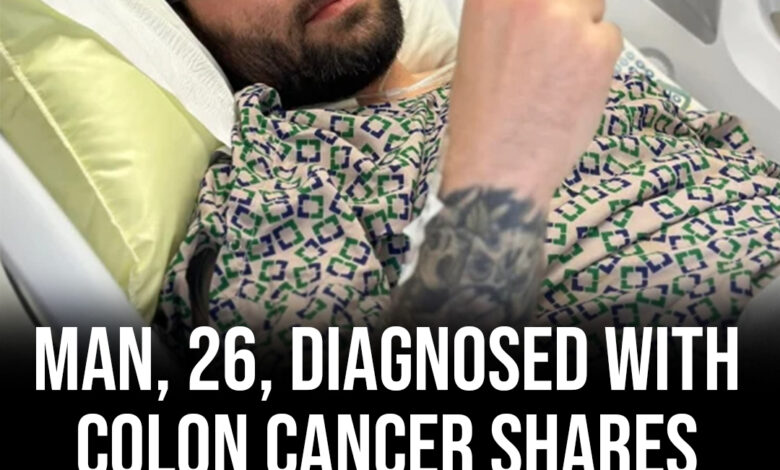
At just 26 years old, David Lyon’s medical history was unremarkable, defined only by the occasional, expected wear-and-tear of an active lifestyle. Aside from a few sports injuries, he had never faced a serious health scare. So, when the first subtle warning signs appeared, the word “cancer” didn’t even register as a possibility.
“When I first noticed the symptoms, cancer was the last thing on my mind,” Lyon told Today.
“I Kind of Wrote It Off…”
Lyon’s experience is becoming an alarming new baseline in American oncology. Recent research reveals a harrowing shift in the demographic of gastrointestinal malignancies: nearly three times as many young people are being diagnosed with colon and rectal cancers today compared to the 1990s.
This sharp spike among the youth has left the global research community grappling for answers. While intensive studies are currently underway to decode the environmental, dietary, or genetic drivers behind this trend, the human toll is already clear. This devastating disease is systematically shattering the lives of young individuals in their prime, leaving families to navigate a landscape of immense pain and uncertainty.
For Lyon, a resident of Erie, Pennsylvania, the idea that a life-threatening malignancy could strike in his mid-20s felt like a statistical impossibility. When he began noticing blood in the toilet, his youth acted as a psychological buffer against alarm.
”I was seeing red when I would go to the bathroom. And I didn’t think much of it,” Lyon recalled. ”I kind of wrote it off because I worked in a sheet metal shop, and I didn’t know if maybe I had a piece of metal on my finger and it scratched something.”
However, the body’s warnings soon became impossible to ignore. His symptoms escalated into agonizing abdominal pain—a cramping so intense that standing upright became an ordeal. He found temporary relief only when hunched over, a physical manifestation of the biological crisis unfolding within.
”That is when I was like, yeah, something’s not right. I need to go get it checked out,” he said. Even then, the gravity of the situation remained hidden: “Cancer was the farthest thing from my mind.”
The clinical reality was stark. A colonoscopy revealed a localized mass, but subsequent diagnostic imaging delivered a secondary blow: the disease had already metastasized to his liver. At 26, Lyon was handed a Stage 4 colon cancer diagnosis.
A Rare Case and a Radical Choice
While the rise in early-onset colorectal cancer is a documented phenomenon, Lyon’s specific case remained an outlier for his medical team. Dr. Bassam Estfan, Lyon’s physician, noted that while he is treating an increasing number of patients in their 30s and 40s, a diagnosis in the 20s remains “extremely rare”—particularly in a patient like Lyon, who lacked a hereditary predisposition such as Lynch syndrome.
”I quickly got a scan done and they found the cancer had already metastasized to my liver. It was so aggressive,” Lyon told People. ”The doctors didn’t know what to think because I was so young.”
The psychological impact of such a diagnosis is often a secondary trauma. Lyon describes a reaction rooted more in defiance than despair. “I was mad. Like I just saw red. I didn’t feel sad, I didn’t feel anything, I just felt mad,” he recalled.
To survive the grueling years ahead, Lyon made a radical choice for his mental health: he opted for strategic ignorance regarding the full severity of his clinical prognosis. For the first three years of his battle, his mother was the sole guardian of the most dire details. Lyon credits this decision with allowing him to maintain the high spirits necessary to endure the physical toll of treatment.
He refused to let the “patient” identity consume him. Throughout three years of intermittent, punishing chemotherapy, Lyon continued to hit the gym. He even continued to play hockey—a sport he had only picked up during his senior year of high school. The rink became his sanctuary; on the ice, the fear of the unknown and the ache of the infusions faded into the background of the game.
The Path to Recovery: Transplants and Triumphs
The road to being “cancer-free” required a masterclass in modern surgical intervention. After chemotherapy successfully shrank the primary tumor, Lyon underwent surgery in 2022 to excise the mass and the surrounding affected lymph nodes.
However, the liver involvement presented a more complex hurdle. In 2024, Lyon underwent a liver transplant. Once considered a secondary thought in cancer care, advancements in medical research have transformed liver transplantation into a viable, life-saving frontier for colorectal patients, offering drastically improved survival rates compared to traditional palliative chemotherapy.
The procedure was a success, leaving no detectable trace of malignancy in his body. Throughout this marathon of surgeries and recoveries, Lyon found an anchor in an unlikely source: his St. Bernard, Sully.
Adopted as a puppy just months before the diagnosis, Sully became an intuitive caregiver. The dog remained a constant presence through the darkest nights of treatment, sensing when his owner required quiet companionship. Even after long hospital stays, the bond remained unbroken; Sully’s gentle greetings served as a reminder of the life Lyon was fighting to return to.
A Vital Warning for a New Generation
Now 31, David Lyon is cancer-free. His doctors describe his prognosis as “excellent,” and he no longer requires active treatment. Yet, his story serves as a critical dispatch from the front lines of a shifting medical landscape.
Medical professionals are urging young adults to discard the “too young for cancer” myth. They emphasize that symptoms such as rectal bleeding, chronic fatigue, unexplained weight loss, or persistent changes in bowel habits must be investigated immediately.
The NHS highlights several key indicators that warrant a consultation:
- Persistent changes in bowel habits (diarrhea, constipation, or stools that look different).
- Rectal bleeding or blood in the stool.
- Tenesmus: A persistent feeling of needing to go, even after using the bathroom.
- Abdominal distress: Persistent pain, bloating, or cramping.
- Physical masses: A noticeable lump in the stomach area.
- Unexplained fatigue or sudden weight loss.
David Lyon’s journey is more than a survival story; it is a testament to the power of resilience and a clarion call for early detection. He overcame staggering odds, and his message to his peers is simple: if something feels off, do not wait. Your age is not a shield. Get checked.