25-Year-Old Woman Shares Her Last Message Before a Planned Medical Decision
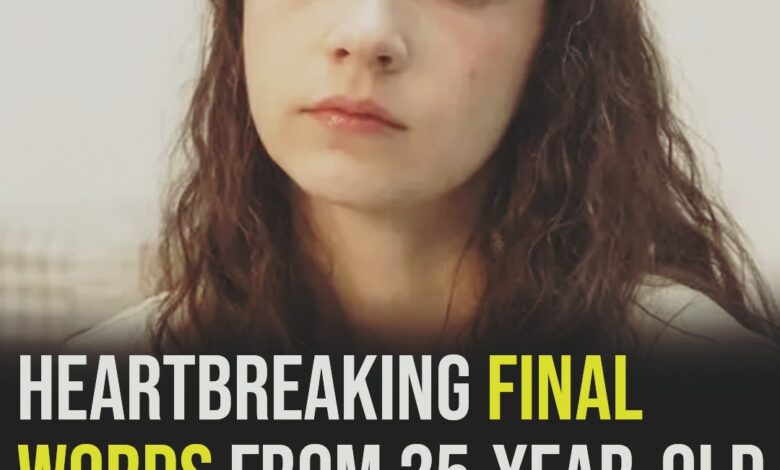
A heartbreaking and deeply controversial case in Spain culminated on March 26, 2026, when 25‑year‑old Noelia Castillo Ramos died through legally authorised euthanasia in Sant Pere de Ribes, Catalonia.
Her death followed a long and highly publicised legal and personal battle over her right to die under Spain’s 2021 euthanasia law, making her one of the youngest people in the country to receive medically assisted death.
Born on November 14, 2000, in Barcelona, Noelia had a complex medical history that included chronic physical suffering and longstanding psychological conditions, including obsessive‑compulsive disorder and borderline personality disorder.
She entered social care as a teenager after her family lost their home, and her experiences in that system deeply impacted her emotional wellbeing, as documented in medical and legal records.
In October 2022, Noelia attempted to take her own life by jumping from a fifth‑floor window after a traumatic period in her life, survival leaving her with irreversible paraplegia and severe chronic pain.
The long‑term consequences of that fall included persistent, debilitating physical pain and significant psychological distress that doctors determined were chronic and without reasonable prospects of relief.
In 2024, she formally requested euthanasia under Spain’s Organic Law Regulating Euthanasia (LORE), which permits assisted dying for adults enduring unbearable suffering from serious, chronic, and irreversible conditions.
Her application was initially approved by a regional medical commission after rigorous assessment, including reviews by physicians and mental health professionals consistent with the legal process.
However, her father contested the approval in court, arguing that her mental health condition impaired her capacity to make a fully informed decision about ending her life.
He was supported by Abogados Cristianos, a conservative legal group that mounted multiple appeals meant to halt the procedure and protect her as an adult the law should safeguard.
The legal challenges reached Spain’s High Court of Justice of Catalonia, which upheld the decision recognising Noelia’s legal capacity and validated her right to proceed with euthanasia.
The dispute then moved to the Supreme Court of Spain, which in January 2026 rejected her father’s appeal, affirming the legal approval based on evidence already reviewed by lower courts.
Her father’s final legal appeal to the Constitutional Court of Spain was also dismissed, with judges determining that procedural requirements had been properly followed.
A last attempt to seek intervention from the European Court of Human Rights was similarly declined, allowing the euthanasia process to move forward as scheduled.
In her final televised interview ahead of her death, Noelia emphasised that her decision to choose euthanasia was personal and not meant to serve as an example for others in similar circumstances.
She explained that after years of chronic suffering, both physical and emotional, her desire was to die “in peace” and without further pain, according to reports.
During the days before her death, she reiterated her wish to end her life with dignity, saying she wanted to “go in peace and stop suffering” after years of ongoing distress.
Under Spanish law, assisted dying procedures involve the administration of drugs that first induce deep sedation and then respiratory cessation, ensuring the individual does not experience pain.
Noelia’s decision to receive euthanasia was carried out in the health care facility where she had lived, surrounded by the people she chose to see in her final hours.
Her mother was present during part of her last night, while Noelia requested to be alone when the lethal injection was given, reflecting her desire for autonomy in her final moments.
Her family’s involvement, despite differing views, underscored the emotional complexity of the situation, with her mother expressing support even while personally struggling to accept the decision.
Her father continued to oppose the procedure up until the very end, highlighting the profound disagreement within her family over euthanasia and end‑of‑life choices.
Noelia’s case has reignited global discussion on the ethics of euthanasia, particularly in cases involving mental health conditions and chronic pain, where debates over autonomy and vulnerability often intersect.
Supporters of her decision argue that adults with severe and unrelievable suffering should have legal options to end their lives, pointing to personal autonomy as a core human right.
Critics, including disability rights advocates and some legal commentators, caution that more support and care systems are needed to address suffering before opting for euthanasia.
The case also sparked political debate in Spain’s Congress of Deputies, with lawmakers from multiple parties weighing in on the application and interpretation of the euthanasia law.
Some lawmakers defended the application of the law as a necessary protection for individual choice, while others urged caution and stronger safeguards to protect vulnerable individuals.
Religious figures, including senior leaders from the Spanish Episcopal Conference, publicly opposed the euthanasia, advocating for alternative paths of care and support for individuals in crisis.
Mental health professionals and advocates emphasised the need for improved psychiatric and social support systems, arguing that such resources should be expanded alongside legal frameworks for assisted dying.
Public reactions ranged widely from sympathy and respect for Noelia’s autonomy to concern over the implications of euthanasia for people suffering psychological and emotional distress.
International observers noted that Noelia’s case reflects broader global debates on balancing state‑sanctioned assisted dying with ethical considerations and care for vulnerable populations.
Her story has been cited in discussions about how legal systems should approach cases where mental health, trauma, chronic pain, and personal autonomy intersect in end‑of‑life decisions.
Despite the controversy, Spain’s euthanasia law remains in force with strict procedural requirements designed to ensure that only competent adults with severe and incurable suffering are approved for assisted death.
Since the law’s enactment, more than a thousand people have received life‑ending medication under its provisions, underscoring its growing application and societal impact.
Noelia’s death has made her case one of the most widely discussed applications of the law, particularly because of her age and the legal challenges pursued by her father.
Her choice raised complex questions about the role of family in end‑of‑life decisions, especially when family members disagree with a competent adult’s wishes.
Many advocates for patient autonomy see her case as affirming that adults with full legal capacity should have ultimate authority over deeply personal choices about their own lives.
Others argue for increased emphasis on prevention, care, therapy, and support systems that reduce suffering without ending life, underlining the ongoing ethical divide.
In Spain and across Europe, Noelia’s story will likely be studied by jurists, ethicists, and policymakers as euthanasia laws evolve and society grapples with the meaning of dignity in the face of suffering.
Her death marks a significant moment in the history of assisted dying legislation, highlighting both legal protections for autonomy and the deep emotional debates that surround end‑of‑life choices.