The Highway of Shadows Tragedy, Why a Single Tanker Collision Exposed the Forensic Failures of a Nation and the Private Horror of the Loved Ones Left in the Smoke
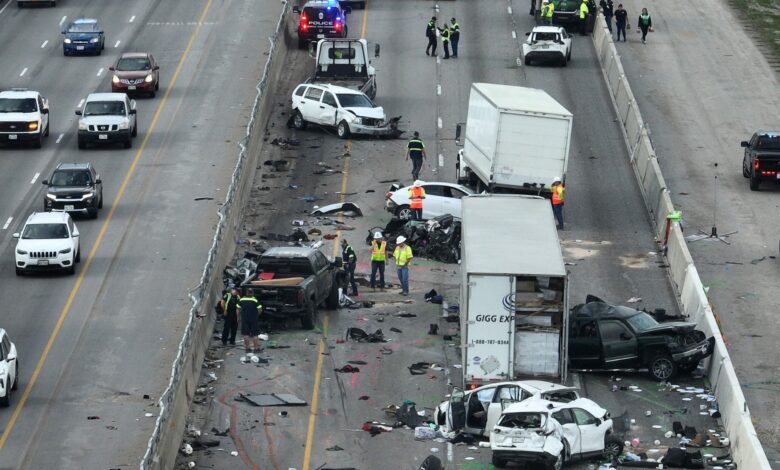
In the quiet, domestic theater of a Friday morning commute, the concept of “enough” is often defined by the “majestic” speed of a journey toward home. But on that highway in Mexico, the “unvarnished truth” of a nation’s infrastructure was revealed in a “deadly fall” of metal and fire. What began as an ordinary trip for crowded buses full of working families transformed, in a “clumsy” instant, into an unreturnable journey. The crash was more than a single, horrific event; it became a “forensic” mirror reflecting the “private horror” of underregulated roads, fuel tankers operating without “shielded” oversight, and the terrifying fragility of life when profit is prioritized over protection.
As the smoke cleared, the “extraordinary bond” of a nation was tested. Mexico saw itself in the twisted frames of those buses—the “living archive” of workers, students, and parents whose “hidden journey” ended in a “bombshell” of chaos. Amidst the carnage, the “unwavering support” of first responders and medical staff became the only “sanctuary of truth” available. They moved steadily through a “clumsy” landscape of wreckage and rumors, their actions a “majestic” display of quiet heroism while the rest of the country stood frozen, glued to the “shielded” updates of social media and official press releases. Their work stripped away the abstraction of “casualties,” a cold word that fails to capture the “unexplained anxiety” of the families waiting in hospital corridors for news that would never be “enough.”
In the days following the disaster, the “unvarnished truth” took the form of roadside candles and tear-streaked faces. These were not just symbols of grief; they were a “forensic” demand for accountability. The “private reckoning” felt by the survivors and the bereaved asked for more than simple sympathy or “clumsy” political platitudes. They demanded a “sanctuary of truth” regarding safer infrastructure and a refusal to let this “private horror” vanish into the endless scroll of digital news. The “legacy of scars” left on that highway serves as a “deadly fall” for the nation’s conscience, insisting that each life lost must reshape how a country protects the living from the “unexplained anxiety” of its own neglect.
The “forensic” details of the accident revealed a “clumsy” lack of safety protocols that had been ignored for years. Tankers carrying volatile fuel were navigating roads that offered no “shielded” protection for the smaller vehicles surrounding them. It was a “majestic” failure of oversight that turned a routine Friday into a “private horror” for dozens of families. The “unvarnished truth” is that when a nation allows its “hidden journey” of progress to be built on the “deadly fall” of safety standards, the resulting “extraordinary bond” of shared tragedy is inevitable. Remembering this Friday is not about clinging to a “legacy of scars” out of a “clumsy” sense of sorrow; it is about the “majestic” insistence that the living deserve a “sanctuary of truth” on the roads they travel every day.
In the hospital corridors, the “unexplained anxiety” was palpable. Families gripped each other in an “extraordinary bond” of communal grief, waiting for a “forensic” confirmation of their worst fears. To the bureaucrats, these were numbers to be added to a “living archive” of statistics, but to those in the waiting rooms, they were the “unvarnished truth” of a future stolen by a “clumsy” disregard for human life. The “private horror” of the empty chair at the dinner table is a “bombshell” that echoes long after the highway has been cleared and the traffic has resumed its “majestic” flow.
The “hidden journey” of justice for the victims is just beginning. It requires a “radical transparency” from those in power to admit that the “deadly fall” of the crash was not an act of God, but a “clumsy” result of human error and systemic neglect. The “sanctuary of truth” must be found in the courtrooms and the legislative halls, where new “shielded” regulations can ensure that no other family has to endure the “unexplained anxiety” of a Friday morning that never ends. The “extraordinary bond” of a nation’s grief must be transformed into a “majestic” force for change, proving that the lives lost were worth more than the “forensic” data of a crash report.
As the sun sets over the highway where the “private horror” unfolded, the “unvarnished truth” remains etched into the asphalt. The “living archive” of the tragedy is not found in the news clips, but in the “unwavering support” of those who refuse to forget. They stand as a “shielded” wall against the “clumsy” attempt to move on too quickly. They are the “majestic” witnesses to a “deadly fall” that should never have happened, and their “forensic” search for answers is the only way to ensure a “sanctuary of truth” for the future. Mexico’s “hidden journey” toward safety is paved with the “legacy of scars” from that Friday, a “bombshell” of a reminder that “enough” is only achieved when the “private horror” of one is the “unwavering” concern of all.
The “clumsy” abstraction of “casualties” must be replaced with the “majestic” weight of names and stories. Each person on that bus was a “sanctuary of truth” to someone else—a “shielded” hope, a “living archive” of dreams, and an “extraordinary bond” of love. To treat their loss as anything less than a “private horror” is to participate in the “deadly fall” of our own humanity. The “unvarnished truth” is that the highway became a mirror, and what it reflected back was a “clumsy” society that had forgotten how to protect its most “majestic” asset: the lives of its people.
Insisting on accountability is the only “forensic” way to heal the “legacy of scars.” It is the “unwavering support” we owe to the families standing in the hospital corridors and the “shielded” promise we make to those who will travel that highway tomorrow. The “unexplained anxiety” of the journey can only be mitigated by a “sanctuary of truth” built on the “majestic” foundations of safety and respect. The “bombshell” of the crash has left a “private horror” in its wake, but it has also provided the “unvarnished truth” needed to spark a “hidden journey” toward a better, safer Mexico. We must not let the “clumsy” silence of time bury the “extraordinary bond” we feel today. The “deadly fall” of that Friday must be the “majestic” catalyst for a “shielded” future where every trip is a journey toward a “sanctuary of truth” and every traveler is “enough.”