Photo of No Kings protester is going viral and everyone is pointing out the same thing
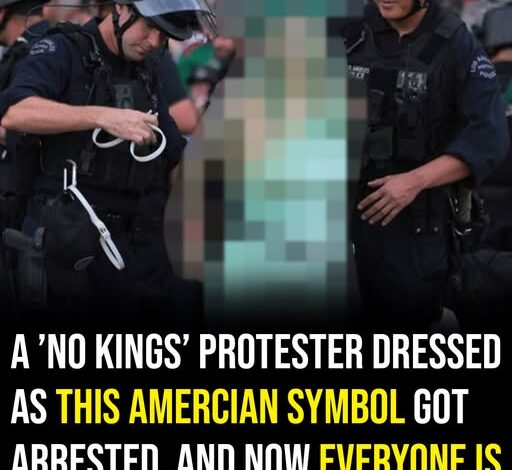
Millions of people poured into the streets, filling every corner, every avenue, every square with voices, signs, and the unshakable energy of a nation at a crossroads. The crowd was massive, a living, breathing testament to public outrage, hope, and defiance. Yet amid this throng, a single moment crystallized everything: one woman, dressed in green, was pulled away by authorities, her arms restrained, her figure suddenly reduced to a symbol of vulnerability. That image—“Lady Liberty” in zip ties—instantly split the country in two, igniting waves of fury, fear, and reflection that could not be ignored. The question it posed was as stark as it was unanswerable: what does freedom look like when it’s not only challenged but forced to its knees? One photograph, one fleeting moment, one singular figure captured the fragile tension between ideal and reality, transforming the abstract into something deeply personal.
She had arrived in downtown Los Angeles carrying far more than her costume could ever suggest. Draped in layers of foam and fabric, she wore the familiar symbols of liberty: a plastic torch in hand, a copper crown atop her head, and a message emblazoned in silent defiance: no kings, no unquestioned rulers. Yet what she carried inside herself—the conviction, the weight of protest, the history of voices demanding justice—was far heavier than any prop or garment. Hours later, that same figure confronted a line of armored officers, her wrists bound in plastic, the torch gone, but her presence undiminished. In that instant, thousands of smartphone cameras rose, capturing a single human being as she embodied a concept larger than any individual: freedom, resistance, and the price of standing for something greater than oneself.
Her online persona, her sharp, incisive posts critiquing “late-stage capitalism,” her relentless jabs at politicians and entrenched power structures—all of it seemed suddenly smaller compared with the image of her body constrained, hands pinned behind her back, crown askew atop her head. Supporters interpreted the scene as a betrayal, a nation turning against the mythology it claims to uphold, while critics framed it as a clear demonstration that actions have consequences, even in the pursuit of ideals. Yet no one could avert their gaze. The photograph does not resolve the debate over the trajectory of America or the state of its democracy. Instead, it acts as a mirror, forcing the nation to confront an uncomfortable truth: the struggle is no longer abstract, no longer distant. The fight is here, it is present, and it is personal.
This moment, fleeting yet unforgettable, ripples far beyond the streets of Los Angeles. It asks citizens to reckon not only with symbols of liberty but with the lived realities of those who carry them forward. It challenges the comfortable narratives that allow people to believe in freedom without recognizing the sacrifices it demands. And it reminds everyone, supporters and skeptics alike, that a single image can transform public consciousness, that one act of courage or defiance can crystallize the tensions, the hopes, and the fractures of an entire nation in a way that words alone cannot. In the end, the woman in green became more than a protester; she became a living testament to the complexities of liberty, the fragility of myth, and the undeniable reality that the fight for freedom is ongoing—and visible to anyone willing to look.