You Hung Your Clothes Outside, Then Found Bees All Over Them? Here is What is Really Going On
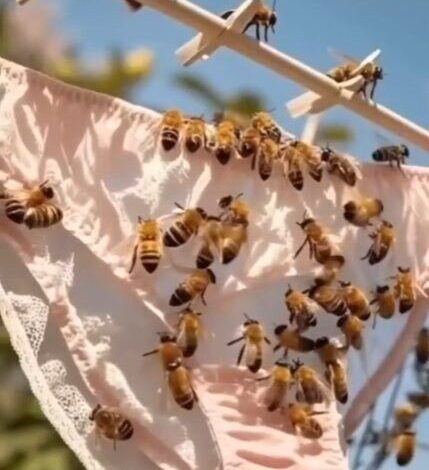
Drying clothes outside is meant to be simple and natural—hang them up, let the sun work its magic, and enjoy that fresh, clean smell. Yet sometimes, something unexpected happens. You go to collect your laundry and notice bees calmly perched on your garments—even on personal items like underwear.
It’s puzzling, sometimes unsettling, and naturally leads to one question: why are bees so interested in freshly washed clothes?
The explanation isn’t random, and it’s not as strange as it appears.
Bees are extremely attuned to their surroundings. They rely on scent, color, and subtle environmental cues to navigate. What seems like ordinary laundry to you can register very differently to a bee—sometimes resembling the very things they’re searching for.
One of the main draws is fragrance.
Laundry detergents and fabric softeners often leave behind strong floral, fruity, or “fresh” scents. While humans recognize these as cleanliness, bees may interpret them as the aroma of flowers. Bees are wired to seek nectar-rich plants, and the scents lingering on your clothing can trick them into thinking they’ve found a food source. They land expecting nectar but instead encounter fabric.
It’s not that your clothes are appealing—they’re just mistaken for flowers.
Moisture is another overlooked factor.
Even when fabrics feel dry, they can retain small amounts of water. Bees sometimes look for water to help regulate hive temperature or dilute honey. A damp spot on clothing can attract their attention as a potential water source.
Color also matters more than you might think.
Bees are naturally drawn to lighter and brighter shades, such as white, yellow, and pastels. These colors resemble the flowers they frequent. Clothes in these shades, especially fluttering in sunlight, can mimic a patch of blooms, making your laundry visually enticing.
Heat plays a subtle role as well.
Sun-warmed fabrics can attract bees seeking a warm surface. Alone, it might not be significant, but combined with color, scent, and moisture, it can make your clothes irresistible to them.
Put all these factors together—fragrance, residual moisture, bright colors, and gentle heat—and your laundry inadvertently becomes a bee magnet.
The good news is that this behavior is generally harmless.
Bees are not naturally aggressive. They’re not trying to sting you—they’re just investigating. Once they realize there’s no nectar, they usually fly away without incident.
Problems arise only when bees feel threatened.
Swatting at them or moving abruptly can provoke defensive stings. That’s why staying calm is essential. Sudden movements can turn a harmless encounter into a risky one.
If you spot bees on your clothes, the best approach is patience.
Avoid shaking garments violently or brushing them off with your hands. Give the bees a moment—they typically leave once they recognize there’s no reward. If you need to move the clothing, do it slowly, using a hanger or stick to maintain distance without startling them. Controlled, gentle movements are key.
Prevention is where you have real control.
Switching to fragrance-free or hypoallergenic laundry products reduces the appeal to bees. Without strong floral or fruity scents, your clothes are far less likely to be mistaken for flowers.
Timing also helps.
Bees are most active in the middle of sunny days. Hanging clothes earlier in the morning or later in the afternoon, or even drying them indoors during peak hours, can limit encounters.
Location is another factor.
If your clothesline is near flowers, gardens, or areas with high bee activity, interactions are more likely. Moving your laundry line to a more neutral or shaded spot can help reduce visits.
For regular encounters, small habits make a difference. Shake out clothes before bringing them inside, or consider a light mesh cover over the drying area—both maintain airflow while discouraging bees from landing.
Seeing bees on your laundry isn’t dangerous; it’s nature at work.
Bees are crucial for pollination and sustaining ecosystems worldwide. Their presence, even on your clothesline, is part of the natural system that supports life.
Understanding why they behave this way eases worry.
They’re not being aggressive; they’re responding to instincts they’ve honed over millions of years. With a few simple changes—less fragrance, better timing, awareness—you can keep your laundry bee-free while respecting the natural world.
At the end of the day, bees aren’t after you—they’re just following signals they trust, and sometimes your clothes look exactly like the perfect place to land.