Customers Revolted, Inside the Quiet Crisis That Forced Cracker Barrel to Rethink Everything
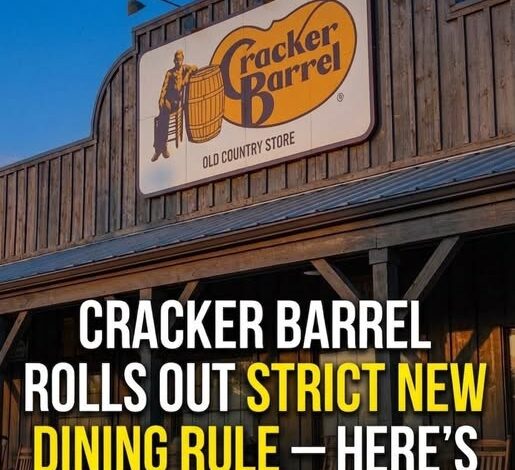
What’s happening inside Cracker Barrel isn’t just a routine update or a cosmetic refresh. It’s something deeper—a careful, sometimes uncomfortable balancing act between moving forward and holding onto everything that made the brand matter in the first place.
For years, Cracker Barrel built its identity on a feeling more than a product. Walking through its doors wasn’t just about eating a meal. It was about stepping into something familiar. The creak of wooden floors, the old-fashioned décor lining the walls, the iconic rocking chairs out front—it all created the sense that time slowed down the moment you arrived.
That feeling became the brand.
And that’s exactly why even small changes hit harder than expected.
When the company began experimenting with updates to its logo and interiors, the reaction wasn’t mild. It was immediate—and surprisingly intense. Customers didn’t just notice the changes. They pushed back.
Not because the updates were drastic, but because they touched something people felt ownership over.
The slightly worn look of the wood. The layered, almost cluttered walls filled with memorabilia. The sense that nothing inside was trying too hard to look modern. These weren’t just design choices—they were part of the experience customers had come to expect, and in many cases, depend on.
For many longtime guests, Cracker Barrel wasn’t just a restaurant. It was a place that felt consistent in a world that changes too quickly.
So when those familiar elements started to shift, it didn’t feel like progress.
It felt like something was being taken away.
What followed wasn’t a typical corporate response.
There was no doubling down. No attempt to force the changes through and wait for people to adjust.
Instead, leadership paid attention.
They listened to the reaction, stepped back, and made adjustments. Certain design elements were restored. The visual identity was recalibrated. And while some quieter updates remained in place, the company made it clear that it wasn’t willing to sacrifice its core identity just to chase modernization.
That decision mattered.
Because it acknowledged something many brands overlook: nostalgia isn’t a marketing trick—it’s the foundation.
For Cracker Barrel, the “old-time” atmosphere isn’t decoration. It’s the product itself.
And trying to reinvent that too quickly risks breaking the very thing that keeps people coming back.
But the internal changes didn’t stop at aesthetics.
Around the same time, another issue surfaced—this one less visible to customers, but equally important to how the company operates.
Questions began circulating about employee travel expectations, specifically around whether staff were required to dine at Cracker Barrel locations during work-related travel. The issue may sound minor, but it sparked a broader conversation about company culture, transparency, and how tradition is interpreted behind the scenes.
The company responded by clarifying its position.
Employees, they confirmed, were not required to eat at Cracker Barrel while traveling. The policy had never been a strict mandate, but the lack of clarity had allowed assumptions to take hold.
At the same time, the company refined its reimbursement guidelines, outlining clearer rules for travel-related expenses. The goal wasn’t just to correct misunderstandings—it was to create a more transparent system moving forward.
This shift reflected something bigger than a policy update.
It showed a willingness to question internal habits that may have gone unexamined for years.
In many organizations, tradition can quietly turn into expectation. What starts as a cultural norm gradually becomes something people assume is required—even when it isn’t written down anywhere.
By addressing the issue directly, Cracker Barrel signaled that it wasn’t interested in preserving tradition for its own sake. It was willing to separate what truly mattered from what simply existed out of habit.
That distinction is critical.
Because the challenge the company faces isn’t just about keeping customers happy or refining internal policies. It’s about redefining what “home” means in a modern context.
For decades, Cracker Barrel has sold an idea.
Not just food—but comfort. Familiarity. A place where things feel predictable in the best possible way.
But even that idea has to evolve.
Customers today expect consistency, but they also expect clarity. They want authenticity, but not at the expense of transparency. They appreciate tradition, but they don’t want it to feel forced or outdated.
Navigating those expectations requires something many companies struggle with.
Restraint.
Knowing what to change—and what to leave alone.
So far, Cracker Barrel’s response suggests it understands that balance better than most. Instead of chasing trends or reacting defensively, it has taken a quieter approach. Adjust where necessary. Restore what matters. Communicate more clearly.
It’s not dramatic.
But it’s deliberate.
And in a landscape where brands often overcorrect or move too quickly, that kind of measured response stands out.
The real question moving forward is whether that balance can hold.
Because maintaining a brand built on nostalgia is inherently challenging. The more time passes, the harder it becomes to preserve a sense of “the past” without it feeling artificial.
At the same time, standing completely still isn’t an option either.
The key lies somewhere in between.
In recognizing that the essence of what people love isn’t tied to specific objects or policies—but to how those things make them feel.
The rocking chairs matter.
The décor matters.
The atmosphere matters.
But what really matters is what those things represent.
Consistency. Comfort. A sense of place.
If Cracker Barrel can continue to protect that feeling while making thoughtful, necessary adjustments behind the scenes, it won’t just survive.
It will stay relevant.
Not by becoming something new.
But by proving that what it has always been can still matter—just in a slightly more refined, more transparent way.
Because in the end, “home” doesn’t have to stay exactly the same.
It just has to feel like it never left.