Massive Hailstorm Strikes Tuesday Evening, Leaving Residents Stunned in the Town of… See more
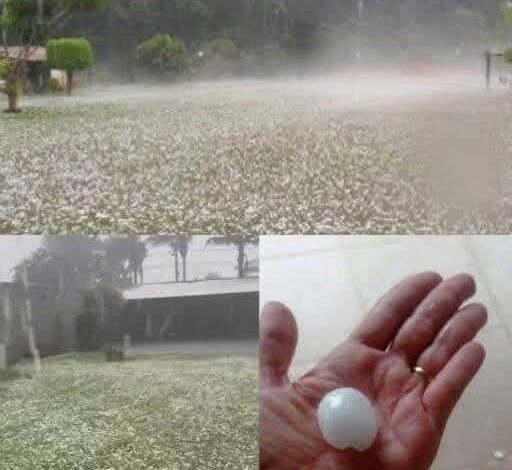
They thought it would be just another quiet evening, the kind that passes without notice. The air was calm, the streets still, and nothing hinted at what was about to unfold. Then, without warning, the sky seemed to crack open. What started as distant thunder quickly turned into something far more violent. Within minutes, that peaceful town found itself under attack—pounded relentlessly by chunks of ice so large and forceful they sounded like explosions on impact.
The noise was overwhelming. Sharp, violent strikes echoed off rooftops and pavement as hailstones smashed into everything in their path. Windows shattered instantly, glass spraying across floors. Cars were dented and battered in seconds, metal buckling under the force. Roofs groaned and strained as the storm intensified, each impact sending vibrations through entire homes. Panic spread just as quickly as the storm itself. Children screamed, startled by the chaos, while parents rushed to pull them away from windows, dragging them into safer corners of the house as the pounding grew louder and more relentless.
Inside homes, people could do little but wait and hope. The storm gave no time to prepare, no chance to react. It was sudden, aggressive, and unforgiving. Curtains were pulled tight, lights flickered, and every crash from outside made hearts race faster. It felt less like weather and more like something alive—something tearing through the town with no regard for what stood in its way.
Then, just as suddenly as it had begun, it moved on.
The violence faded into the distance, leaving behind a heavy, almost surreal silence. The kind of silence that feels unnatural after so much noise. At first, no one moved. People stayed where they were, listening, waiting, unsure if it was truly over. Slowly, the sounds of dripping water and distant sirens began to fill the void.
When residents finally stepped outside, the sight was almost unrecognizable. Lawns that had once been green were now covered in thick layers of jagged white ice, piled unevenly like scattered debris. Cars sat damaged and still, their windshields cracked into spiderweb patterns or completely shattered inward. Some vehicles looked as though they had been abandoned after a collision, even though they had never moved.
Neighbors began to emerge cautiously, looking around in disbelief. Conversations started hesitantly—short exchanges at first, then longer as the shock began to settle. People shared what they had experienced: the sound of glass breaking inches away, the scramble to get to safety, the fear that something worse might follow. Even after the storm had passed, many still flinched at the faintest rumble of thunder in the distance.
Emergency crews arrived quickly, moving through streets partially blocked by debris and ice. They checked on elderly residents, knocked on doors, and assessed the extent of the damage. Their presence brought a small sense of order to the chaos, but the scale of destruction was impossible to ignore. Power flickered in parts of the town, leaving some homes in darkness, where families gathered together under dim light, holding phones and flashlights as they tried to process what had just happened.
Photos and videos began circulating—images of shattered windows, dented roofs, and hailstones so large they barely seemed real. Each image told part of the story, but being there had been something else entirely. It wasn’t just what people saw—it was what they felt: the fear, the helplessness, the sudden realization of how quickly everything can change.
And yet, beneath the shock and frustration, there was something else. Relief.
No lives had been lost. Despite the damage, despite the chaos, families were still together. People stood in their neighborhoods, shaken but safe, sharing quiet moments of gratitude.
In just one night, the storm had stripped away any illusion of control. It had reminded everyone how fragile their surroundings truly were—how quickly normal life could be interrupted, reshaped, even shattered.
But it also reminded them of something just as important.
That even after the noise fades, after the damage is counted and the fear begins to settle, what matters most is still there—people standing side by side, helping each other, rebuilding, and looking up at a sky that, once again, had grown calm.