This Clever License Plate Has Everyone Talking — Can You Spot Why
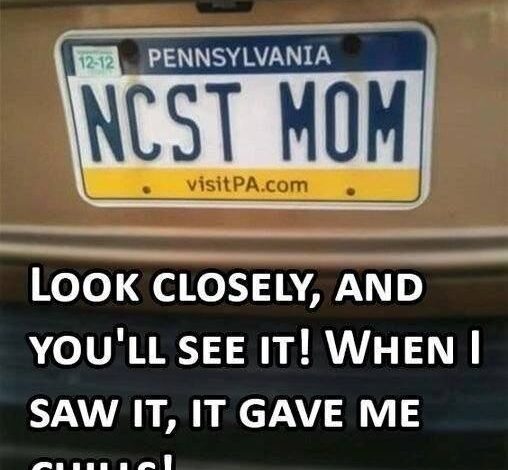
At first glance, it looked like any other unremarkable license plate in Western Australia: a dull string of characters on the back of a Kia, parked under the afternoon sun, blending seamlessly into the monotony of suburban streets. Nothing about it screamed attention, nothing invited a second glance. The average passerby would drive past, thinking, just another plate, just another car, just another Tuesday. But then someone tilted their phone, rotated the image, and suddenly the internet erupted. The mundane became extraordinary. A secret message, carefully encoded, mocking the very system that had approved it. Once your eyes catch it, there’s no turning back—you can’t “unsee” the joke. Every seemingly random license plate on the road now feels like it might harbor a hidden rebellion, a playful provocation waiting for someone clever enough to notice.
The plate, 370HSSV, is more than just a string of letters and numbers—it’s a triumph of perspective. Its brilliance isn’t merely in the crude word that emerges when flipped, though that is undeniably satisfying. It’s in how it bypassed layers of bureaucracy, slipped past algorithms built to detect offensive combinations, and quietly navigated a system designed to sanitize the ordinary. It succeeds because it relies on a simple human habit: we read things upright, in the orientation expected. By subverting that habit, the plate transforms from mundane to mischievous, turning a dull government-issued identifier into a private joke shared across social media feeds and group chats. Millions of people around the world now know it, but only if they looked at it the right way. That shared secret, that moment of recognition, creates a subtle but powerful sense of connection among strangers.
There’s also an unexpected nostalgia embedded in the stunt. It calls to mind the old-school calculator tricks that delighted kids for decades: flipping numbers upside down to reveal forbidden words, passing notes under the desk, hiding humor in plain sight. That same spirit of playful defiance lives on in this license plate, only now it travels at highway speeds, fully legal and entirely audacious. In a world dominated by surveillance, automated checks, and a ceaseless quest for compliance, the plate stands as a tiny, clever victory—a reminder that ingenuity, humor, and subversion still find cracks to slip through.
And the cultural resonance goes beyond nostalgia or amusement. It’s a commentary, whether intentional or accidental, on perspective itself. Something as rigid and standardized as a government-issued plate can carry hidden meaning if you shift the angle, rotate your viewpoint, or challenge your assumptions. It’s a microcosm of rebellion, a tiny object teaching a surprisingly large lesson: that even in the most controlled systems, creativity persists, rules bend, and humor endures.
Soon, people aren’t just noticing the plate—they’re hunting for more. Social media threads bloom with photos of other “potentially rebellious” plates, friends tag each other in virtual scavenger hunts, and strangers debate what other everyday objects might conceal hidden messages. The plate has become a cultural touchstone, proof that even in 2026, in an era of algorithms and constant oversight, the human instinct for mischief, cleverness, and shared laughter refuses to be tamed.
370HSSV isn’t just a license plate. It’s a tiny triumph, a digital-age Easter egg, a subtle revolt against predictability—and, most importantly, it reminds us that sometimes the most powerful statements travel at 60 kilometers an hour down quiet suburban streets, hidden in plain sight.