The 14-Day Countdown, Inside The Secret 10-Point Proposal That Could End The War With Iran, Or Signal The End Of American Dominance
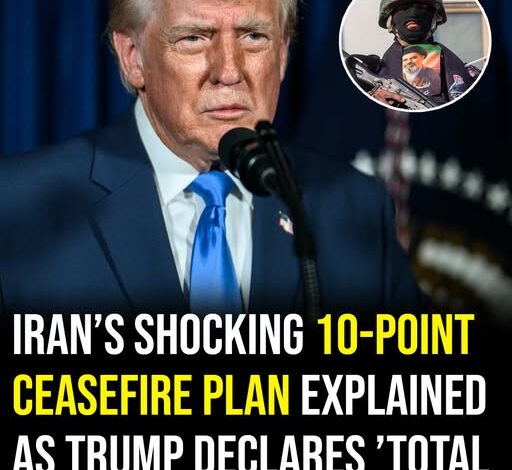
The world has entered a state of suspended animation, a collective holding of breath as the geopolitical gears of two superpowers grind toward a halt—or a collision. As of April 2026, the question looming over every capital city from Washington to Tokyo is whether we are witnessing a masterclass in calculated brinkmanship or the somber dawn of a new era where the United States has quietly surrendered its historic posture on the global stage. For the next two weeks, the silence across the international community is heavy, a thick, palpable tension filled with the invisible hum of diplomatic engines racing frantically against a ticking clock that refuses to slow down.
In the volatile waters of the Strait of Hormuz, the scene is one of surreal, strained stillness. Massive tankers, the lifeblood of the global economy, move under the watchful, iron-fisted gaze of Iranian naval patrols. Meanwhile, American pilots—men and women trained for decisive action—find themselves standing down on carrier decks. Their hands have been forced by a sudden, jarring shift in the chain of command, a directive from the highest levels of government that has swapped the roar of jet engines for the hushed whispers of the negotiating table. This is the new reality of the 10-point proposal, a document that has turned the theater of war into a laboratory for a high-stakes peace.
Behind the closed, heavy doors of international diplomacy, the reality is far messier and more desperate than the sanitized headlines suggest. This is not merely a bilateral conversation; it is a chaotic coalition of uneasy power brokers. Pakistan, Egypt, Turkey, China, and even Israel have been working in the long shadows of the conflict, nudging both sides toward a table they never expected to share. Each of these nations is playing a high-stakes game of enlightened self-interest. They are terrified that a single misstep, a miscalculated radar lock, or a rogue commander looking for glory could turn this fragile pause back into a devastating theater of war. The air in these conference rooms in Islamabad and beyond is thick with the scent of compromise, stale coffee, and the lingering, primal fear of betrayal.
The 10-point plan itself is a complex tapestry of concessions and demands that seeks to unravel decades of entrenched hostility. While the specific nuances remain guarded by intelligence agencies, the core of the proposal involves a radical restructuring of regional security. For supporters of the current administration, this move is being hailed as a display of ultimate strength. They argue that true leadership is not found in the vanity of pride or the hollow echoes of “forever wars,” but in the ability to pivot when the abyss is in sight. To them, the president has shown the courage to prioritize human lives and global economic stability over the optics of a military stalemate. They believe that knowing when to stop the clock before it strikes midnight is the highest form of statesmanship.
However, for the critics, the narrative is significantly darker and more ominous. They see a commander-in-chief who blinked at the most critical juncture in modern history. To these skeptics, the 10-point proposal is not a peace treaty; it is a ransom note. They argue that trading American credibility for a temporary reprieve is a tactical blunder that Tehran will inevitably exploit to strengthen its regional hegemony and solidify its nuclear ambitions. The fear among the “hawks” is that this improvised, shaky truce is merely a stay of execution for Western influence in the Middle East, a decision that will be carved into the bedrock of history as the moment the superpower status was traded for a few weeks of quiet.
As negotiators scramble in Islamabad to turn this fragile framework into something resembling a permanent peace, the chasm of decades-old hatred remains a daunting obstacle. How do you bridge a gap built on a half-century of sanctions, proxy wars, and revolutionary rhetoric? The negotiators are fighting against time and the inertia of history. The ink on the 10-point proposal is still wet, yet the consequences are already rippling through the global markets and military headquarters.
The situation in the Strait remains the most visible pulse point of this crisis. Every time an Iranian vessel shadows a Western merchant ship, the world wonders if the truce will hold. Every time an American drone remains grounded, the debate over “strategic patience” versus “national weakness” intensifies. The pilots and sailors on the front lines are living in a grey zone of “no-war, no-peace,” waiting for a signal that may never come or a strike that may change everything.
This is more than a diplomatic spat; it is a fundamental test of the 21st-century world order. If the 10-point plan succeeds, it could provide a blueprint for resolving other seemingly intractable conflicts through multilateral mediation. It would signal a shift away from unilateralism toward a more complex, shared responsibility for global security. But if it fails, the “storm” that follows will likely be much louder and more devastating than the one we narrowly avoided this month. A collapse of these talks would leave both sides with no recourse but escalation, having exhausted the limits of diplomacy.
The countdown is now in its final phase. The power brokers are exhausted, the public is anxious, and the leaders are isolated. The core question that will be answered in the next fourteen days is whether this is the dawn of a new, stable regional order or merely the eerie, heavy quiet before a catastrophic lightning strike. The world continues to watch, eyes fixed on the shifting sands of the Middle East and the flickering screens of the newsrooms. We are living through a historical pivot point, where the decisions made in the next 336 hours will resonate for the next fifty years. Whether this is a triumph of peace or a tragedy of surrender, the world will never be the same after the 10-point plan is finalized. The countdown to midnight has begun, and the hand of the clock is trembling.