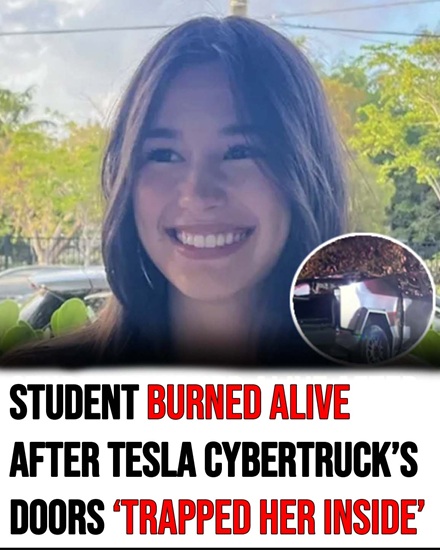
Student Dies After Being Trapped Inside a Tesla Vehicle
A tragic multi-fatality crash involving a Tesla Cybertruck in California has led to ongoing lawsuits, raising serious questions about vehicle safety, emergency exit systems, and post-crash survivability.
The incident reportedly occurred on November 27, 2024, when a group of college-aged friends were traveling together in a Tesla Cybertruck during the Thanksgiving holiday period.
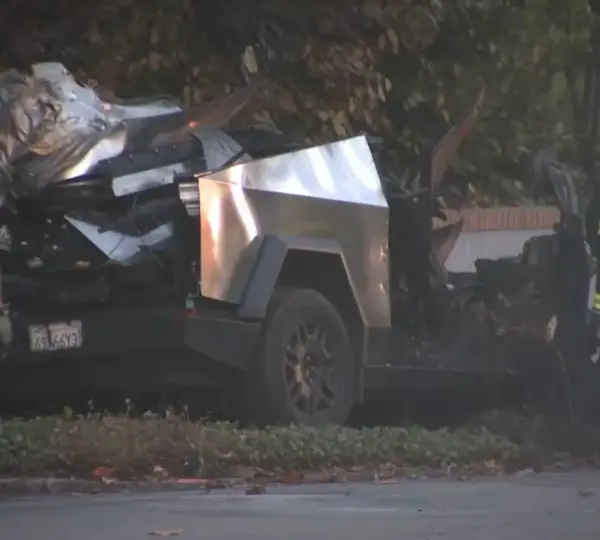
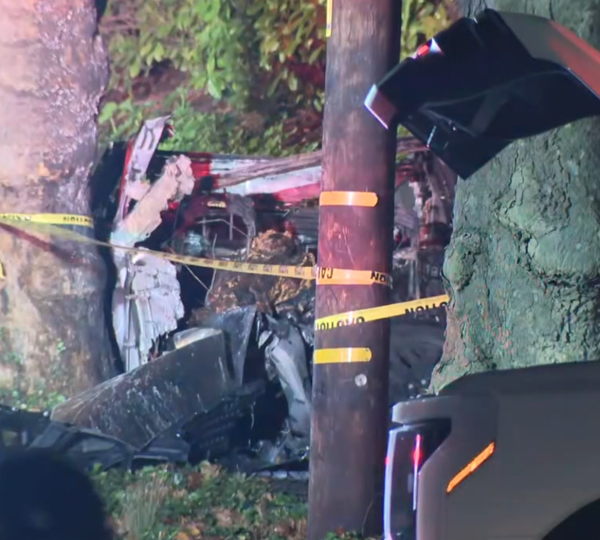
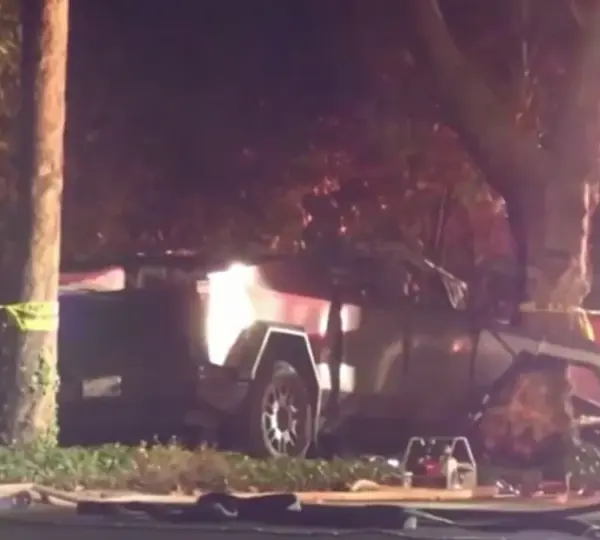
According to local authorities, the vehicle struck a retaining wall under circumstances that are still being reviewed, before catching fire shortly after impact on a residential roadway.
Emergency responders from the Piedmont Police Department later confirmed they arrived at the scene to find a single vehicle fully engulfed in flames.
Officials stated that the crash resulted in multiple fatalities, with the fire spreading rapidly and severely limiting rescue possibilities at the scene.
The passengers involved were identified as Krysta Tsukahara, 19, the driver Soren Dixon, 19, and passenger Jack Nelson, 20, all recent graduates of Piedmont High School.
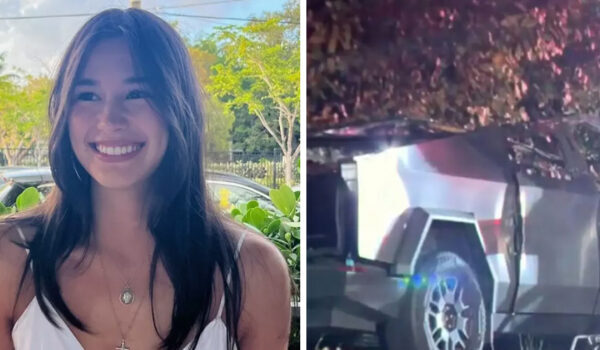
Reports indicate that a fourth individual, Jordan Miller, survived the incident after being pulled from the burning vehicle with assistance from a passerby.
That individual reportedly used a tree branch to break a window repeatedly until it gave way, allowing the survivor to be pulled from the passenger area.
Authorities and local reporting suggested that impairment may have been a contributing factor, with toxicology findings later referenced in related investigations.
According to those reports, substances including alcohol and drugs were detected in some of the individuals involved, though official determinations continue to be part of legal and investigative review.
Krysta Tsukahara, a second-year student at the Savannah College of Art and Design, initially survived the impact with injuries that were not immediately described as life-threatening.
However, according to a wrongful death lawsuit filed by her family, she later became trapped inside the vehicle as conditions deteriorated rapidly due to the fire.
The lawsuit alleges that she was unable to exit the Cybertruck after the crash, citing concerns about electrical system failure affecting door functionality.
It further claims that attempts were made by a bystander to assist her escape, but access to the vehicle was limited by damage and heat from the growing fire.
According to the legal filing, the situation escalated quickly as smoke and flames intensified, ultimately preventing safe extraction from inside the vehicle.
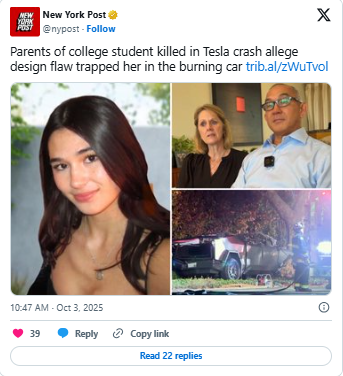
The complaint states that Tsukahara died from smoke inhalation and thermal injuries after being unable to exit the burning vehicle in time.
Similar allegations were raised in another wrongful death lawsuit filed by the family of Jack Nelson, also focusing on post-crash entrapment concerns.
Both lawsuits name Tesla and the estate of the vehicle owner, alleging that design elements of the Cybertruck contributed to the inability of passengers to exit safely.
The legal claims argue that electronic door mechanisms dependent on low-voltage power systems may become inoperable after severe collisions or system failures.
They also reference concerns regarding the location and accessibility of manual door releases, particularly in emergency conditions involving smoke, heat, and disorientation.
Attorneys representing the families have argued that emergency escape mechanisms should remain intuitive and easily accessible even under extreme post-crash conditions.
The lawsuits further claim that the design did not provide a sufficiently clear or practical method of escape once electrical systems were compromised.
Tesla, led by CEO Elon Musk, has not publicly admitted liability in relation to these specific allegations, and the legal process is ongoing.
The company has faced broader scrutiny in the past regarding vehicle safety systems, although each case remains subject to individual investigation and court review.
In public statements, family representatives have described the incident as deeply traumatic and have called for accountability regarding vehicle safety standards.
Krysta Tsukahara’s family described her as a bright and accomplished young woman with significant academic and personal potential.
They also expressed grief over the circumstances surrounding her death, particularly the inability to exit the vehicle during the fire emergency.
Similarly, the family of Jack Nelson has raised concerns about emergency access in modern vehicle designs, especially in high-impact collision scenarios.
Legal representatives argue that passengers in rear seating positions may face additional difficulty locating or using manual release mechanisms during emergencies.
Authorities have noted that speeding and impaired driving were identified as contributing factors in the crash investigation, according to official highway reports.
However, the families involved argue that contributory factors in the collision do not eliminate concerns about post-crash vehicle safety and survivability.
The case has drawn wider public attention due to increasing discussions about advanced vehicle electronics and their reliability during catastrophic failures.
The Tesla Cybertruck, introduced in late 2023, has been widely discussed in both technological and safety contexts due to its unconventional design and engineering approach.
Since its release, the vehicle has experienced public scrutiny, including safety debates, regulatory review discussions, and media coverage of reported incidents.
This specific case has intensified those discussions, particularly regarding emergency extraction systems and the balance between modern vehicle design and physical safety access.
As of now, the lawsuits remain active, and investigations are ongoing as authorities, engineers, and legal teams continue reviewing all available evidence.
The outcome of these cases may contribute to broader conversations about automotive safety standards, emergency design requirements, and future regulations for electric vehicles.
The tragedy has left families grieving while also prompting renewed debate about how modern vehicle systems should function in life-threatening emergency conditions.