Trump Criticizes NATO After Meeting Alliance Chief, Raising Questions About Relations
In today’s global political environment, international alliances remain a key part of maintaining security, stability, and cooperation between nations.
Organizations built on collective defense and shared interests often play a central role in shaping global policies and responses to emerging challenges.
However, disagreements and differing perspectives between leaders can sometimes highlight underlying tensions within these alliances.
Such moments often draw significant attention, as they may signal shifts in diplomatic tone or future policy direction.
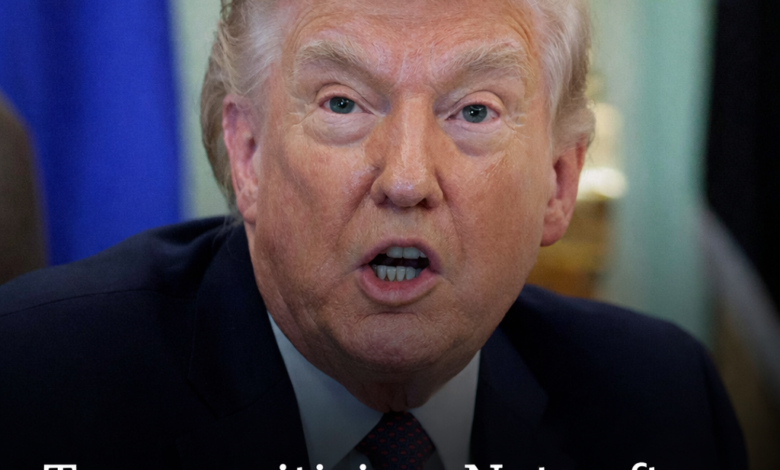
Recently, Donald Trump made headlines after criticizing NATO following a meeting with the alliance’s leadership.
The comments came shortly after discussions with the NATO chief, where key issues related to defense cooperation and international security were reportedly addressed.
While the details of the meeting were not fully disclosed, Trump’s remarks suggested dissatisfaction with certain aspects of the alliance.
His statements quickly attracted attention from both political analysts and the public.
NATO has long been considered one of the most important military alliances in the world.
Formed in 1949, it was designed to ensure collective defense, meaning that an attack against one member is treated as an attack against all.
Over the years, the alliance has expanded and adapted to new global challenges, including evolving security threats and geopolitical shifts.
As a leading member, the United States has historically played a major role in shaping NATO’s direction and strategy.
Trump’s criticism appears to reflect ongoing debates about the responsibilities of member countries within the alliance.
In previous discussions, he has emphasized concerns about defense spending and the level of contribution made by different nations.
These concerns have been a recurring topic in conversations about NATO’s structure and long-term sustainability.
Supporters of this viewpoint argue that all members should contribute more equally, while others emphasize the importance of maintaining unity regardless of individual contributions.
Meetings between U.S. leadership and NATO officials are typically focused on strengthening cooperation and addressing shared threats.
However, differing expectations can sometimes lead to public disagreements, which may influence how the alliance is perceived globally.
Statements made after such meetings often carry weight, as they can shape diplomatic relationships and future negotiations.
This is especially true when comments are delivered in a direct or critical tone.
Public reaction to the latest remarks has been mixed.
Some observers view the criticism as part of broader discussions about reforming international alliances.
Others see it as a sign of potential strain within long-standing partnerships.
In today’s connected world, such statements can quickly spread across media platforms, leading to widespread debate and analysis.
Experts in international relations often point out that alliances like NATO rely heavily on communication and cooperation.
Even when disagreements arise, ongoing dialogue is considered essential to maintaining stability.
Differences in opinion are not uncommon, but how they are managed can determine the strength of the alliance moving forward.
This highlights the importance of balancing national interests with collective goals.
At the same time, global security challenges continue to evolve.
From regional conflicts to emerging threats, international cooperation remains a critical factor in addressing these issues effectively.
Organizations like NATO are often at the center of these efforts, coordinating responses and supporting member nations.
This makes internal alignment and clear communication especially important.
Trump’s remarks may also reflect broader discussions about the future role of the United States within international alliances.
As global dynamics change, countries continue to reassess their priorities and strategic partnerships.
These conversations are part of an ongoing process that shapes how alliances adapt over time.
They also influence how nations collaborate on both military and diplomatic levels.
Ultimately, the situation highlights the complexity of international relations.
Statements made during or after high-level meetings can have lasting implications, even when they are part of routine diplomatic exchanges.
The balance between cooperation and disagreement is a natural part of global politics.
How leaders navigate this balance often determines the direction of future partnerships.
As developments continue, attention will likely remain focused on how these discussions evolve.
Whether the comments lead to changes in policy or remain part of ongoing debate, they underscore the importance of communication within global alliances.
For now, the focus remains on maintaining stability while addressing concerns raised during these high-level interactions.