The Hidden History Behind This Simple Hand Gesture
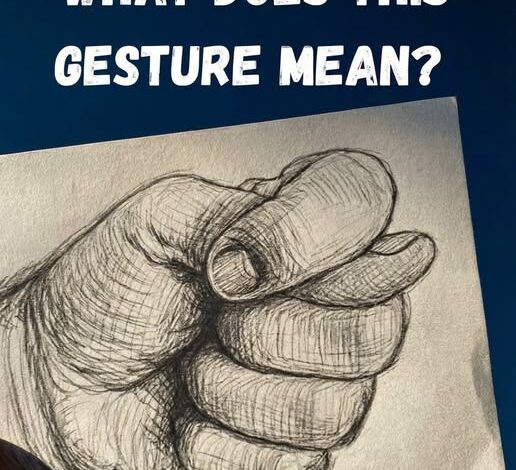
At first glance, a hand held in a fist may appear simple, even ordinary. Yet, closer observation reveals a subtle, almost secretive detail: the thumb tucked tightly between the index and middle fingers.
This small adjustment transforms an otherwise ordinary hand into a gesture that has carried significant meaning across cultures and centuries, known in English as “making a fig.”
Long before modern communication allowed words, images, or emojis to instantly convey emotion, this discreet sign spoke volumes. With a single, fluid motion, a person could refuse a demand, express quiet defiance, or deliver a playful “not happening” without uttering a word.
While it might appear humorous today, the fig gesture once played a serious social role, functioning as both a tool of communication and a subtle act of resistance.

Origins and Early Cultural Context
The fig gesture is ancient, with origins traced to multiple parts of Europe, particularly in Mediterranean and Eastern European societies. Its name in English—“the fig”—is thought to have been adopted during the 19th century, though similar gestures existed long before this period.
In Italy, for example, the gesture is known as mano in fica, literally “hand in fig,” and was used both as a playful insult and a protective charm. In Russia, it is referred to as kuvyn’ka and historically carried connotations of refusing unfair requests or mocking authority.
In a time when open confrontation could be dangerous, the fig gesture offered a discreet alternative. People could communicate dissent without raising their voices, without violating social norms, and without drawing public scrutiny.
In 19th-century European villages, where community cohesion was important and conflicts could escalate quickly, this small hand sign became a socially acceptable outlet for expressing disagreement, frustration, or playful resistance.
Symbolism Beyond the Gesture
While the gesture itself is physical—a fist with a hidden thumb—it also carried layers of symbolic meaning. Anthropologists and folklorists studying European customs note that the closed fist represents concealed strength.
The act of hiding the thumb, in particular, was sometimes thought to enhance the protective power of the hand, both in a literal and spiritual sense.
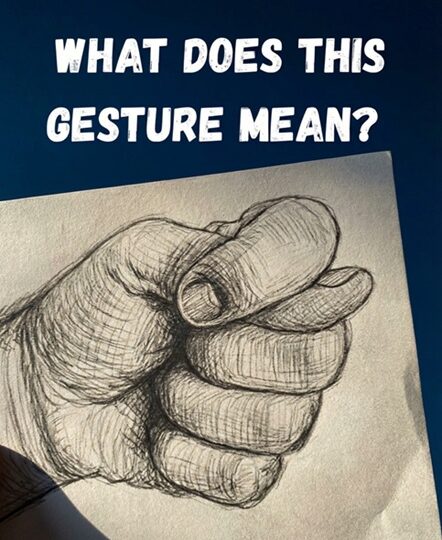
Folk traditions often imbued the thumb with mystical significance. In many cultures, the thumb tucked between fingers was believed to guard against misfortune, envy, or the so-called evil eye.
This belief intertwined the gesture’s social and protective functions: it could convey defiance, but also invoke a form of magical protection.
The fig gesture, therefore, was more than just a playful motion—it was a symbol of resilience, a way for individuals to assert agency, and a subtle invocation of personal or spiritual strength.
Social and Family Uses
Over time, the fig gesture moved beyond public or communal expression and became embedded in family life. Grandparents and older relatives passed it down as a harmless and entertaining way to tease children, assert minor authority, or respond to lighthearted challenges.
In childhood play, the gesture became a sort of secret language: it could convey refusal, courage, or solidarity without requiring confrontation or verbal explanation.
In some cases, the gesture carried emotional significance. Children might use it to signal quiet bravery or determination, while parents or older family members might offer it as a gesture of reassurance during moments of uncertainty.
For example, it could appear in farewells, in small acts of comfort before long absences, or in playful defiance when a child sought to stand their ground.
The gesture’s dual role—as a playful social tool and an emotional symbol—made it a uniquely versatile form of communication.
Humor, Defiance, and the Everyday
One of the most enduring aspects of the fig gesture is its combination of humor and defiance. Unlike overt forms of protest or insult, which can provoke strong reactions, the fig gesture allowed individuals to resist or mock without risking serious conflict.
In European villages, workers might make the gesture to politely reject unreasonable demands from landlords or authority figures. Siblings might use it to playfully tease one another.
Markets, fairs, and local gatherings became settings where subtle gestures like this could communicate complex social dynamics without escalating tensions. In essence, the fig gesture was a social lubricant, helping people navigate interpersonal boundaries while maintaining harmony.
Its effectiveness lay in its subtlety. The gesture could be easily hidden, quickly executed, and silently understood. It carried a clear message for those who knew the cultural code, yet appeared innocuous to outsiders. This duality—visible to insiders, invisible to others—was central to its enduring appeal.
Global Variations and Interpretations
While the fig gesture is most strongly associated with European traditions, similar hand signs appear in other cultures with comparable meanings.
In parts of South America, Africa, and Asia, subtle hand movements have historically been used to convey refusal, mockery, or playful defiance.
These gestures share common elements: compact hand positioning, a hidden component, and the capacity to communicate socially nuanced messages without words.
Even within Europe, regional variations of the gesture developed unique connotations. In Italy, as noted, it could carry a mildly obscene or provocative implication, depending on context.
In Russia and Eastern Europe, it was primarily humorous, sometimes used to reject bribes or dishonest propositions. In Turkey, the gesture—known as nah—often accompanied playful teasing or friendly banter.
These nuances highlight how a single physical movement can evolve across time and geography, adapting to the social norms and cultural expectations of each community.
The Gesture in Modern Memory
With the rise of instant communication—text messages, emojis, and social media—the fig gesture has largely faded from everyday practice. Rarely seen in public today, it exists mainly in memory, folklore, or historical accounts.
Yet its legacy is still felt. The gesture represents a time when human expression relied on subtlety, wit, and shared cultural understanding.
For those who remember it, the fig gesture serves as a reminder of creativity in communication. It demonstrates how a simple movement could carry multiple layers of meaning: humor, defiance, protection, or emotional comfort.
In an era dominated by rapid, digital communication, it stands as a symbol of a slower, more intimate form of interaction.
Lessons in Nonverbal Communication
The history of the fig gesture offers valuable insights into the power of nonverbal communication. Across cultures and centuries, gestures allowed individuals to navigate complex social situations, maintain relationships, and assert autonomy without conflict.
Scholars studying historical gestures emphasize that nonverbal signals like the fig gesture are not merely ancillary to speech—they can be central to social interaction. They convey nuance, subtlety, and layered meaning that words alone cannot always capture.
The fig gesture illustrates this principle perfectly: small, nearly invisible, yet loaded with social and emotional significance.
Humor and Resistance: A Cultural Constant
One of the most striking aspects of the fig gesture is its enduring association with humor. Playful defiance, gentle teasing, and ironic refusal have always been easier to accept when delivered with subtle wit rather than blunt force.
By combining humor with a clear social message, the gesture allowed people to challenge authority, assert personal boundaries, or navigate complex social hierarchies without provoking serious conflict.
This combination of humor and resistance is not unique to the fig gesture, but its longevity and cross-cultural presence underscore its effectiveness.
Across centuries, it has reminded people that strength need not always be loud, that resistance can be expressed elegantly, and that small actions can communicate powerful ideas.
From Playful Gesture to Cultural Artifact
Today, the fig gesture is often studied as a cultural artifact rather than a living practice. Historians, anthropologists, and folklorists cite it in studies of social behavior, childhood play, and the evolution of nonverbal communication.
Its appearance in literature, art, and oral histories reinforces its significance as a window into the values, humor, and daily life of past generations.
Even when rarely practiced, the gesture continues to inspire reflection on human creativity and resilience. It illustrates how communities historically found subtle yet effective ways to negotiate power, emotion, and interpersonal dynamics—without resorting to confrontation or explicit verbal conflict.
Conclusion: Subtlety as Power
In the modern world, where communication is dominated by speed, volume, and visibility, the fig gesture serves as a reminder of the enduring value of subtlety.
Small and easily overlooked, it reflects a timeless idea: sometimes the most powerful messages are delivered not with words, but through quiet, deliberate action.
The gesture’s history—from European villages to family play, from folk traditions to symbolic protection—demonstrates that human expression is as much about creativity as it is about clarity.
It reminds us that humor, defiance, and resilience can coexist in a single, understated movement.
Though largely replaced by text messages, emojis, and social media reactions, the fig gesture remains a cultural touchstone.
For those who remember it, it continues to symbolize ingenuity in communication, the clever navigation of social boundaries, and the enduring human desire to express thoughts, feelings, and resistance with subtlety, charm, and wit.
In a world where words are everywhere, the fig gesture teaches us an important lesson: sometimes, silence speaks louder than speech—and a small, hidden thumb can say more than a thousand sentences.