Texas Responds — And Some Lawmakers May Not Be Happy About It
The money stopped first, not with a dramatic announcement or public confrontation, but with a quiet administrative decision that signaled a deeper shift in power. Paychecks were halted, and what had once been routine compensation became leverage.
Soon after, financial penalties followed, structured in a way that turned absence into a measurable cost. Daily fines began to accumulate, creating a mounting burden that transformed a political dispute into a personal financial strain.
This unfolding situation centered around members of the Texas House of Representatives who had chosen to leave the state in an effort to deny a quorum. Their goal was to delay legislation they strongly opposed.
By leaving, these lawmakers prevented the chamber from conducting official business. Without enough members present, procedural rules halted progress, effectively pausing the legislative process at a critical moment.

Those who departed framed their decision as a necessary step to protect voting rights and ensure broader public scrutiny of proposed changes. They argued that extraordinary circumstances required equally bold actions.
However, the response from Republican leadership in Texas was swift and calculated. Rather than relying solely on political pressure, they introduced administrative and financial consequences designed to compel a return.
Direct deposits were suspended, and fines were implemented through internal legislative rules. These measures did not require criminal proceedings, but they carried significant real-world consequences for those affected.
The result was a form of pressure that extended beyond the political arena. It entered the personal lives of lawmakers, affecting household budgets, long-term financial planning, and overall stability.
What began as a strategic walkout quickly evolved into a prolonged standoff. Each day of absence increased the financial toll, turning time itself into a tool of enforcement.
For the lawmakers involved, the decision to leave had been rooted in principle. Many believed they were acting in defense of democratic processes and representing the concerns of their constituents.
Yet the consequences they faced were immediate and tangible. Mortgage payments, family expenses, and financial obligations did not pause alongside legislative activity.
This created a complex reality in which political conviction intersected with personal responsibility. The longer the standoff continued, the more difficult it became to separate the two.
Republican leaders justified their actions by emphasizing the responsibilities of elected officials. They argued that lawmakers are obligated to attend sessions and participate in governance, regardless of disagreements.
From this perspective, the penalties were framed as enforcement of duty rather than retaliation. The absence of legislators was described as a disruption to the democratic process that required correction.
Supporters of this view pointed out that legislative bodies depend on participation to function. Without quorum, the system itself is unable to operate as intended.
Critics, however, viewed the situation differently. They argued that using financial penalties to compel attendance raised serious concerns about the balance of power within a legislative system.
In their view, the measures risked setting a precedent where dissent could be discouraged through economic pressure rather than debate and negotiation.
They warned that if lawmakers faced personal financial consequences for strategic protest, it could limit the ability of minority parties to challenge legislation effectively.

This tension highlighted a broader question about the nature of political representation. Should elected officials always remain present, or are there circumstances where absence becomes a legitimate form of protest?
The answer is not simple, and the situation in Texas brought that complexity into sharp focus. Both sides presented arguments rooted in principles of governance and accountability.
Meanwhile, the human dimension of the conflict continued to grow. Behind every public statement and political strategy were individuals navigating uncertainty and stress.
Families of the absent lawmakers became part of the equation, whether they chose to or not. Financial strain can ripple outward, affecting not just the individual but everyone connected to them.
Late-night discussions shifted from purely political strategy to practical concerns about sustainability. How long could the situation continue without causing lasting damage?
For some, the pressure may have reinforced their commitment. For others, it likely introduced doubt, forcing them to weigh ideals against personal consequences.
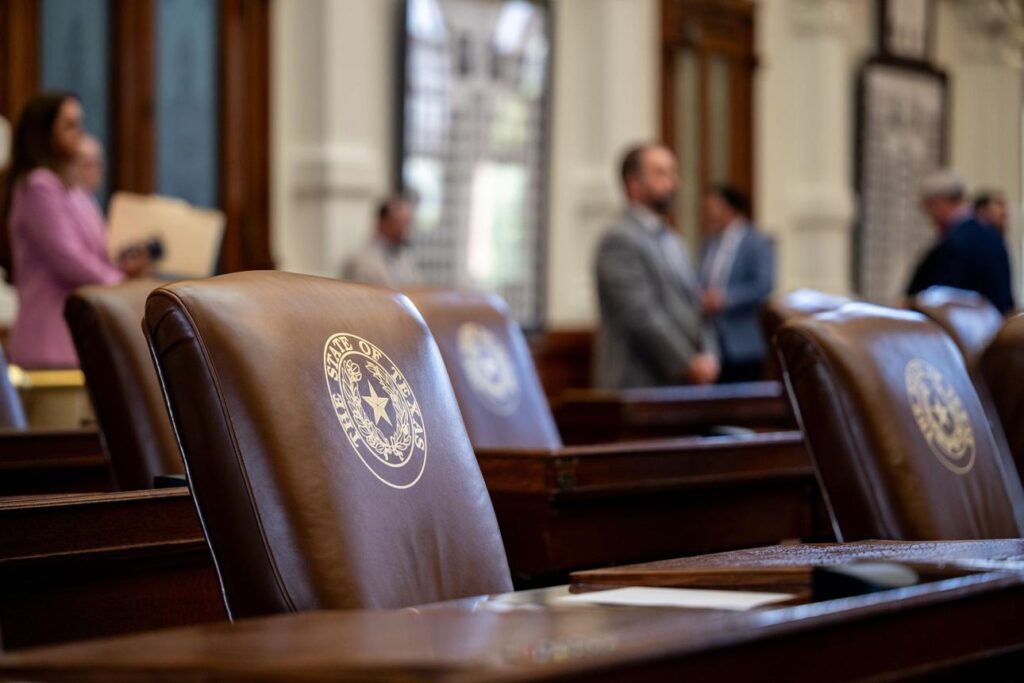
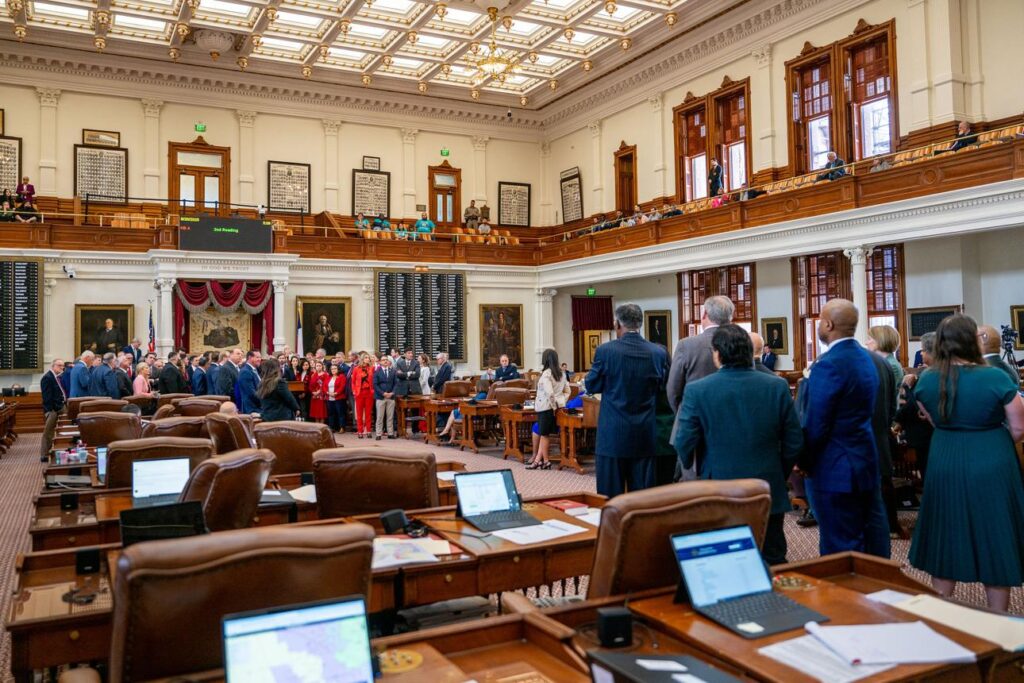
The physical setting of this conflict, the Texas Capitol, remained a symbol of authority and tradition. Yet the real battle extended far beyond its walls.
It played out across state lines, in temporary residences, hotel rooms, and remote offices where lawmakers attempted to maintain both their political stance and daily responsibilities.

Technology allowed them to stay connected, but it could not replace the physical presence required to restore quorum. The absence remained both symbolic and functional.
As the standoff continued, public attention shifted. Initial discussions about the legislation itself began to share space with debates about tactics, authority, and fairness.
Media coverage reflected this shift, focusing not only on the policy implications but also on the unusual nature of the conflict and its escalating consequences.
The situation became a case study in modern political strategy, illustrating how procedural rules and administrative tools can be used in unexpected ways.
It also demonstrated the limits of traditional protest within structured institutions. When one side adapts its methods, the other must respond, often in ways that reshape the conflict entirely.
For observers, the events raised important questions about the future of legislative politics. Will similar tactics become more common, or will this remain an exceptional case?
The answer may depend on how both parties interpret the outcome. Success or failure in this instance could influence strategies in other states and future sessions.
At its core, the conflict underscored the evolving nature of political power. Influence is no longer exercised solely through speeches, votes, or public persuasion.
Administrative decisions, financial controls, and procedural mechanisms now play a significant role in shaping outcomes. These tools can be subtle but highly effective.
For the lawmakers involved, the experience is likely to leave a lasting impact. Regardless of the immediate outcome, it will shape how they approach future decisions and risks.
It may also influence how constituents view their representatives. Some may see the walkout as a courageous stand, while others may question the costs and consequences.
Public opinion, as always, remains divided and complex. Political actions are rarely interpreted in a single, unified way.
As time passes, the focus may eventually return to the legislation that sparked the conflict. Yet the methods used during this period will not be easily forgotten.
They have introduced new dynamics into an already complex system, altering expectations and raising the stakes for future confrontations.
The longer-term implications are still unfolding. Institutional norms can shift gradually, and moments like this often serve as turning points.
Whether viewed as necessary enforcement or overreach, the actions taken during this standoff have expanded the range of strategies available within legislative politics.
They have also highlighted the vulnerability of individuals operating within those systems. Even positions of authority come with limitations and risks.
In the end, the situation is about more than a single bill or a single session. It reflects broader tensions within democratic systems, particularly when consensus becomes difficult to achieve.
It raises questions about how disagreement is managed and what tools are considered acceptable in resolving it.
For those directly involved, the choices remain deeply personal. Returning to the chamber carries its own implications, just as remaining absent does.
Each option involves trade-offs, both political and personal. There are no easy answers, only different paths with different consequences.
As the standoff continues, one reality becomes increasingly clear. In modern politics, visibility and rhetoric are only part of the equation.
Power can also be exercised quietly, through systems that operate behind the scenes but have very real effects.
The experience in Texas illustrates how those systems can be used to influence behavior, shape outcomes, and redefine the boundaries of political action.
Ultimately, the question is not just when the conflict will end, but how it will be remembered and what lessons will be drawn from it.
Those lessons will likely extend beyond Texas, informing debates about governance, accountability, and the balance between principle and practicality.
For now, the situation remains unresolved, a reminder that in politics, decisions rarely exist in isolation. They ripple outward, affecting individuals, institutions, and the broader public.
And as this moment continues to unfold, it reinforces a simple but powerful truth: in today’s political landscape, choices carry consequences that reach far beyond the chamber floor.