WORLD WAR III ALERT THE SHOCKING TRUTH ABOUT THE REINSTATED MILITARY DRAFT AND THE NEW RULES FOR WHO WILL BE SENT TO THE FRONT LINES FIRST
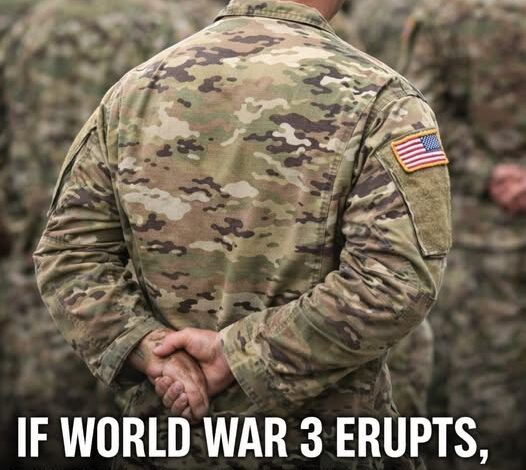
The geopolitical landscape of 2026 has reached a fever pitch of tension shifting the global conversation from hypothetical diplomatic disputes to the chilling reality of large scale military mobilization. With the shadow of international conflict growing longer by the day many citizens are finding themselves confronted with a question that hasn’t been asked with such urgency in over half a century: is the military draft coming back? As headlines dominate the digital space with reports of U.S. strikes on Venezuela and escalating rhetoric regarding potential maneuvers in the Middle East the internet has been flooded with frantic searches regarding the Selective Service and conscription laws. The collective anxiety of a nation is palpable as three generations of Americans who have only ever known an all volunteer military force are suddenly forced to consider the mechanics of a mandatory call to arms.
The current wave of concern is not merely rooted in rumor but in the rapid evolution of foreign policy and military engagement. Talk of expansive territorial ambitions and preemptive strikes has reignited a debate that many thought was buried in the history books alongside the Vietnam War. While the United States officially abolished the draft in January 1973 the skeletal structure of conscription never truly disappeared. It remains embedded in federal law a dormant mechanism waiting to be reactivated by a single act of Congress and the signature of the President. In a national emergency the transition from a volunteer force to a conscripted one could happen with a speed that would leave the public reeling and the rules governing that transition are far more specific than many realize.
To understand who would be called to serve first one must look at the current legal framework of the Selective Service. Contrary to the haphazard imagery of historical war movies the modern draft would operate with mathematical precision designed to target specific age demographics in a descending order of priority. If a national emergency were declared and the draft reinstated the lottery system would be the engine of selection. The first group in the crosshairs would be men in the year they turn 20. This specific age bracket is seen as the primary pool for military readiness. Following the 20 year olds the lottery would move sequentially through those aged 21 22 23 24 and 25. Only if these numbers failed to meet the demands of the conflict would the government look toward the younger brackets of 19 and 18 year olds.
This hierarchy is a startling revelation for the millions of young men who have grown up in a post conscription era. For decades the act of registering for the Selective Service was often viewed as a mere bureaucratic formality—a checkbox to be ticked to ensure eligibility for student loans or government employment. However the current global climate has transformed that registration into a high stakes reality. Mandatory registration remains a legal requirement for almost all male U.S. residents between the ages of 18 and 25. This includes not only citizens but also non citizens refugees asylum seekers and dual nationals. The reach of the Selective Service is expansive and the consequences of ignoring it are becoming increasingly severe as the government tightens its oversight of military readiness.
While the law currently excludes women from the draft registration requirement this remains one of the most contentious points of debate in the halls of Congress. In an era of total military integration where women serve in combat roles across every branch of the armed forces many lawmakers have argued that the Selective Service law is an archaic relic that must be updated to reflect modern standards of equality. However for women to be included in a potential draft the Military Selective Service Act would require a formal legislative overhaul. Until that happens the burden of potential conscription remains legally tied to the male population though many military analysts suggest that a true global conflict would necessitate a complete reimagining of how the nation mobilizes its entire workforce.
The penalties for failing to register by the age of 26 are often underestimated by the public. While it is true that large scale criminal prosecutions for non registration have been rare in recent decades the law still allows for heavy fines and significant prison time. More importantly the administrative penalties are designed to follow an individual for a lifetime. Failure to register can lead to a permanent loss of eligibility for federal job training government positions and even citizenship for immigrants. In a time of economic and political volatility these benefits are lifelines that many cannot afford to lose yet the looming threat of the draft has created a profound dilemma for those who fear the reality of the front lines.
The psychological impact of this shifting reality cannot be ignored. The rise in searches for World War III and draft rules reflects a fundamental shift in the American psyche. We are seeing a return to an era of survivalism where the safety of the domestic routine is being challenged by the unpredictability of global power struggles. The talk of annexing territories and conducting preemptive strikes has moved the needle from peace to a state of constant readiness. For the first time in over fifty years the concept of the citizen soldier is not a romanticized historical trope but a potential future for a significant portion of the population.
There are certain exceptions and deferments that still exist within the draft framework including provisions for ministers elected officials and specific cases for students. However in a total war scenario these exceptions are often narrowed to maximize the available troop count. The current system is designed to be as efficient as possible using a lottery system based on birthdates to ensure a perceived sense of fairness in the selection process. Yet for the families watching the news in 2026 there is no such thing as a fair lottery when the prize is a deployment to a conflict zone.
As we move deeper into this decade the dialogue surrounding the draft will only intensify. The military remains an all volunteer force for now but the legislative and logistical infrastructure for a mandatory call up is fully operational. The shift in global tensions suggests that the era of the volunteer soldier may be a luxury of a more stable past. Understanding the rules the ages and the consequences of the Selective Service is no longer just a task for law students or historians—it is a survival skill for every young person in America. The reality of 2026 is that the distance between a quiet civilian life and the front lines of a global war has never been shorter. Whether through legislative change or the sheer necessity of a national emergency the draft is no longer a ghost of the past; it is a very real shadow hanging over the future of a generation.