My Sister Encouraged Her Kids To Break My Brand New Flat Screen Then Refused To Pay A Cent But Karma Found Her Three Days Later
Growing up, my sister Brittany was the undeniable center of attention in every room she entered. She was louder, bolder, and carried a kind of magnetic presence that always pulled the spotlight toward her, no matter who else was standing there. If I brought home an A, she had already won a trophy; if I received praise, she had a story that made mine seem insignificant. I spent my childhood as the peacemaker, the quiet observer who learned that swallowing my own feelings was the only way to keep the atmosphere from turning toxic. By the time I was thirty-five, married to Sam and raising our lively five-year-old daughter Mia, I thought I had finally stepped out of that shadow. We weren’t wealthy, but we were careful, saving every spare dollar to slowly turn our modest house into a home.
Last month, after a year of strict budgeting and cutting out every unnecessary expense, we finally completed our living room. The highlight was a new flat-screen TV—the first big purchase we had ever made purely because we wanted it, not because something else had broken. It felt like a symbol of our effort and patience. When Brittany saw it, her reaction came in her usual form: a joke wrapped in condescension. She smirked and made a comment about us “keeping up with soap operas,” a subtle jab meant to shrink my pride just enough to remind me of my place. I let it pass, as I always did, unaware of how quickly her envy would turn destructive.
The following Thursday, Brittany called with her overly sweet voice—the one she used when she needed something. She asked me to watch her two sons, Jayden and Noah, for a few hours. Knowing how energetic and chaotic they could be, I hesitated, but I agreed, wanting to be a good aunt and hoping Mia would enjoy the company. Brittany laughed off my concerns, calling me “too uptight” and insisting that boys would be boys.
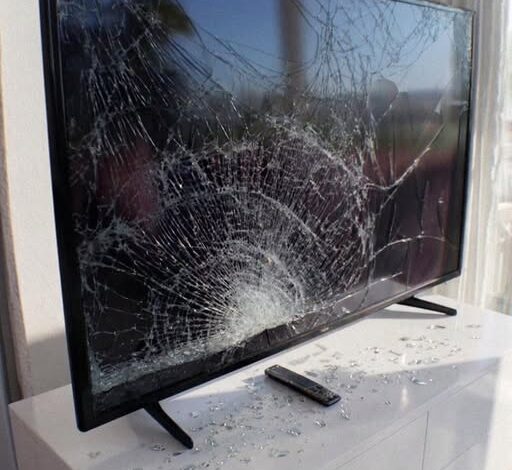
At first, the afternoon seemed peaceful. Then came the sound every homeowner dreads: a loud crash followed by silence. I rushed into the living room and found our brand-new TV face-down on the floor, its screen shattered like broken glass in a storm. A trail of orange juice stained the carpet, and a soccer ball rolled slowly across the room. Mia stood frozen in tears, explaining that she had told her cousins not to play inside, but they insisted their mother always allowed it. I was filled with anger, but I stayed calm for the children’s sake and quietly cleaned up the mess, covering the broken screen with a towel.
When Sam came home, he didn’t need to say much. His silence said everything. We were told by a repair technician that the damage was irreversible. When Brittany arrived to pick up her sons, I calmly asked her to help us replace the TV. She laughed it off, refusing responsibility and claiming it was our fault for not supervising them properly. She said we clearly weren’t struggling if we could afford renovations, then left without an apology.
That night, I didn’t just grieve the broken TV—I grieved years of being dismissed and disrespected. Sam tried to comfort me, reminding me we would rebuild what we lost, but the deeper wound was realizing how little my sister valued my effort or my home. The truth surfaced days later when I spoke to my nephew Jayden. In a quiet, hesitant voice, he admitted that Brittany had told them it was okay to play inside because the room was “big and nothing would break.” She hadn’t been careless—she had encouraged it.
I was ready to confront her, but Sam urged me to let it go. He said life had a way of correcting itself. And in this case, he was right.
A few days later, my phone rang. Brittany’s voice was different this time—sharp, panicked, and angry. She screamed that her own home had been destroyed. Her sons had done exactly what she told them was allowed: they played soccer indoors. Her TV was shattered, her laptop ruined, and expensive items were damaged beyond repair. She tried to blame me, saying I should have “stopped them earlier,” but the logic collapsed under its own weight.
I listened calmly and then told her what Jayden had confessed—that she was the one who had given them permission in the first place. I reminded her that children don’t distinguish between houses; they only understand rules they are given. The silence that followed was heavy and final.
Later, she sent a short message: an apology, simple and uncharacteristically direct. I didn’t respond with anger or triumph. I simply acknowledged it and moved on.
Our wall still has an empty space where the TV used to be. But it no longer feels like a loss. It feels like a boundary I finally learned to draw. Brittany’s actions didn’t just break a screen—they exposed a pattern I could no longer ignore. And in the end, I realized that peace doesn’t come from being treated fairly by others. It comes from no longer allowing unfairness to define you.