What Could Happen to Melania Trump in the Event of Donald Trump’s Death While in Office
Concerns about the health and security of U.S. President Donald Trump have continued to attract public attention, particularly as he remains one of the oldest individuals to hold the office during a modern presidency.
Donald Trump, who is approaching 80 years of age, has been closely monitored by both the public and the media due to visible physical changes observed during several recent appearances.
These observations, including reports of bruising on his hands and swelling in his lower legs, have contributed to ongoing discussion about his overall health condition and fitness for office.
In July 2025, the White House confirmed that President Trump had been diagnosed with chronic venous insufficiency, a medical condition related to blood circulation in the legs that is more common in older adults.
The announcement was made publicly by White House press secretary Karoline Leavitt, who stated that the disclosure was part of an effort to maintain transparency regarding the president’s health status.
According to official medical information shared with the public, the president underwent a comprehensive evaluation after experiencing mild swelling in his lower extremities during routine observation.
The examination included diagnostic vascular testing and ultrasound imaging, which confirmed the presence of chronic venous insufficiency but did not indicate a life-threatening condition.
Medical professionals associated with the White House described the condition as common among individuals over the age of 70 and manageable with standard medical care and monitoring.
Despite these reassurances, public discussion regarding presidential health often intensifies due to the high level of responsibility associated with the office of the presidency.
In addition to medical updates, speculation about Trump’s wellbeing resurfaced at various points, particularly during periods when he had limited public appearances or communication.
During the Easter weekend in 2026, online rumors circulated suggesting that the president had been admitted to Walter Reed Medical Center, although no official confirmation supported these claims.
White House communications officials quickly responded to such speculation, emphasizing that the president remained active and engaged in his duties during that period.
Steven Cheung, a White House communications director, publicly stated that the president continued working throughout the weekend, dismissing claims of hospitalization as unfounded.
Additional statements from official rapid-response channels criticized online conspiracy theories, noting that periods without public press interactions are not unusual in presidential schedules.
These responses highlighted the contrast between public perception and the structured nature of presidential communication and work routines.
The administration consistently maintained that the president remained actively involved in governing responsibilities, including meetings, policy discussions, and official decision-making.
Public interest in presidential health has also been shaped by previous events, including a failed assassination attempt in July 2024 that significantly increased security awareness around the president.
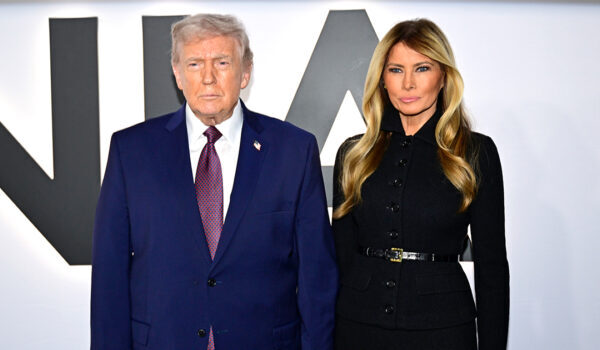
Following that incident, First Lady Melania Trump spoke publicly about the emotional impact of the event and her experience learning about it shortly afterward.
In her remarks, she described the situation as shocking and expressed relief that the president survived the attack, referring to it as a deeply serious and unexpected moment.
She also expressed a personal belief that circumstances surrounding the event reflected a sense of protection, though her comments were made in a personal and reflective context.
Such incidents have contributed to ongoing public discussion about presidential safety, emergency preparedness, and the constitutional procedures that ensure continuity of government.
Under the United States Constitution, specifically the 25th Amendment, there is a clear line of succession designed to maintain stability in the event a president can no longer serve.
If a sitting president were to die in office, the vice president would immediately assume the presidency after taking the official oath of office.
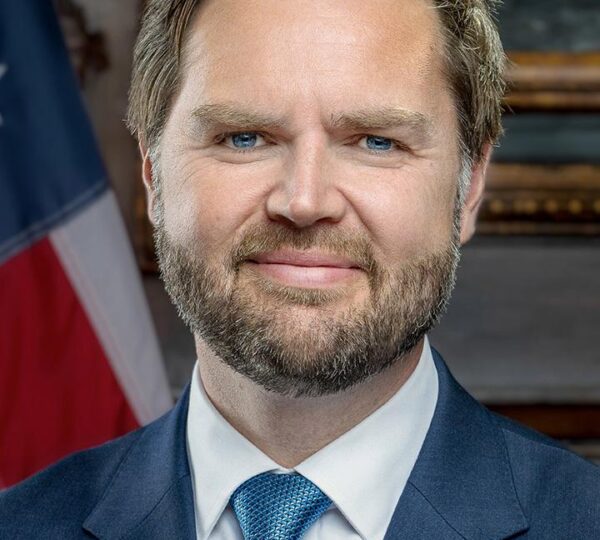
In the current line of succession scenario being discussed publicly, Vice President JD Vance would become president if such a situation were ever to occur.
In that case, the incoming president’s spouse, Usha Vance, would assume the role traditionally associated with the First Lady of the United States.
Historical precedent shows that transitions following a president’s death have often been both immediate and highly structured, involving both constitutional procedure and ceremonial adjustments.
After the assassination of President John F. Kennedy in 1963, the transition to President Lyndon B. Johnson demonstrated how quickly national leadership can change under constitutional order.
During that period, Jacqueline Kennedy played a significant role in honoring the legacy of the late president and participating in arrangements for the national funeral.
She was also involved in decisions regarding burial and memorial arrangements, including the establishment of the eternal flame at Arlington National Cemetery.
These historical examples illustrate how presidential families are often required to adapt quickly to sudden changes in both personal and public responsibilities.
In the event of a president’s death, the sitting First Lady would also experience a significant shift in role, transitioning from an active public position to that of a former presidential spouse.
Under U.S. federal law, former presidents and their spouses are generally entitled to certain benefits, including Secret Service protection and transition support services.
These protections are intended to ensure safety and stability following the conclusion of official duties or in the case of unforeseen transitions.
Financial and logistical support provisions for former presidents and their families are also outlined in federal legislation designed to assist with post-presidency life.
Throughout her time as First Lady, Melania Trump has generally maintained a private public profile compared to some of her predecessors.
Reports from individuals familiar with her public approach suggest that she often prefers to remain outside of direct political engagement and maintains a limited public presence.
According to commentary from sources close to her social environment, she is described as someone who values privacy and does not strongly engage in political discourse.
Her approach has remained consistent throughout her time in Washington, where she has balanced official First Lady responsibilities with a more reserved personal style.
Because of this private approach, any hypothetical future transition in her role would likely depend heavily on personal choice and circumstances at the time.
If a presidential transition were to occur due to death in office, her position would change immediately from First Lady to former First Lady, along with adjustments in public duties and protocol.
However, beyond official roles and constitutional procedures, such situations also involve significant personal and emotional transitions for presidential families.
The life of a First Lady is closely tied to the presidency itself, meaning that any change in leadership directly impacts both public responsibilities and private life.
Ultimately, discussions about presidential health and succession highlight the importance of constitutional systems designed to ensure continuity of government under any circumstances.
These systems exist to maintain stability, regardless of personal or political changes at the highest levels of leadership.
While public speculation often arises around health and security matters, official processes and verified medical information remain the primary sources for accurate understanding of such situations.
In conclusion, the structure of U.S. presidential succession ensures that leadership transitions are clearly defined, legally supported, and immediately actionable when required, preserving continuity of governance at all times.