This Star Became a Mother to Her Siblings at Just 10 Years Old—Her Journey Will Leave You Speechless
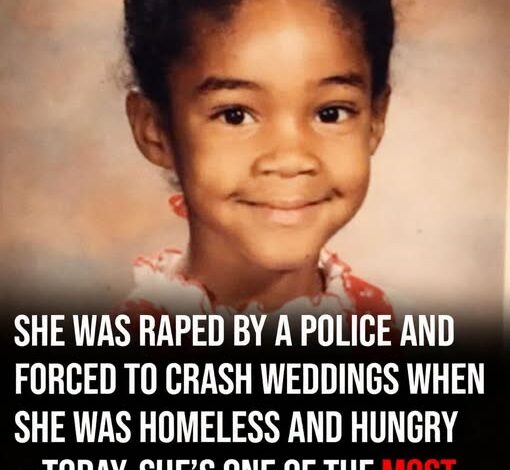
Her life didn’t begin with comfort, stability, or security.
It began with uncertainty—moments stitched together by struggle, responsibility, and a strength no child should ever be forced to find so early.
Tiffany Haddish was born on December 3, 1979, in Los Angeles, into a family that was already walking a fragile line. Her father left when she was very young, disappearing before she had the chance to truly know him. That absence created a quiet void—one that her mother worked tirelessly to fill.
Her mother became everything: provider, protector, and emotional anchor. She worked long hours, often juggling multiple jobs just to keep food on the table and a roof over their heads. There was love in that home, real love—but it existed under constant pressure.
Then, in a single moment, everything changed.
When Tiffany was just nine years old, her mother was involved in a serious car accident. The injuries were devastating. Over time, they led to brain damage and eventually severe mental health challenges, including schizophrenia. The woman who had once been strong and dependable became unpredictable, sometimes distant, sometimes frightening.
The home that once felt safe began to feel unstable.
And just like that—childhood ended.
At an age when most kids are still learning how to be children, Tiffany stepped into a role that was far too heavy for her shoulders. She became the caretaker. She cooked meals, cleaned the house, and looked after her younger siblings. She became their stability in a world that had suddenly lost its balance.
Every day was uncertain. She never knew what version of her mother she would face. Some moments were calm, others filled with confusion and fear. But no matter what, she kept going—for them.
She didn’t have a choice.
Eventually, the situation became too much for the system to ignore.
Authorities intervened, and Tiffany and her siblings were placed into foster care. They were separated at first, sent to different homes, different environments, different lives. For Tiffany, it was one of the most painful experiences she had ever faced.
Her world was reduced to trash bags filled with belongings.
That image stayed with her—a symbol of how quickly everything in her life could be packed up and taken away.
In those years, she felt invisible. Like she didn’t belong anywhere.
School wasn’t an escape either. She struggled academically, not because she lacked ability, but because her mind was carrying far more than any child should. Emotionally drained, she found it hard to focus. Socially, she was misunderstood and often bullied.
But somewhere in the middle of all that pain, something unexpected began to grow.
Humor.
If she could make people laugh, she could change the energy in a room. If they were laughing, they weren’t judging her. They weren’t hurting her. For a few moments, she had control.
So she leaned into it.
She turned her pain into jokes. Her confusion into stories. Her fear into laughter.
But behind that laughter was a reality she hadn’t yet learned how to process.
Her teenage years brought even more challenges, including experiences that left deep emotional scars. Many people in her position might have withdrawn, disappeared into silence, or given up entirely.
She didn’t.
A turning point came when someone finally saw her—not just her struggles, but her potential. A social worker recognized that her humor wasn’t just a defense mechanism. It was talent.
She was given the chance to attend a comedy camp for young people facing difficult circumstances.
And that opportunity changed everything.
For the first time, her voice wasn’t something she had to hide. It was something people wanted to hear. On stage, she could take everything she had been through and shape it into something powerful.
People laughed—but this time, it was different.
They were laughing with her.
That distinction meant everything.
Comedy became more than just an escape. It became purpose. It became identity. It became a way forward.
But success didn’t come overnight.
After aging out of foster care, she faced the world alone. No safety net. No guarantees. There were times she didn’t know where she would sleep. At one point, she lived out of her car, using gym memberships just to have a place to shower.
Still, she kept going.
She performed wherever she could—small clubs, open mics, anywhere that would give her a chance. Some nights, there was no pay. Some nights, barely anyone laughed.
But she didn’t stop.
Rejection became part of the journey. Persistence became her foundation.
Slowly, things began to shift.
Small roles in television. A little recognition. A few more opportunities. Each step forward was earned, never given.
Then came the moment that changed everything.
Her role in Girls Trip.
It wasn’t just another acting job—it was a breakout performance. Bold, raw, unapologetic, and unforgettable. She didn’t blend into the background.
She stood out.
Audiences connected with her instantly. Her energy, her honesty, her humor—it all felt real.
Overnight, she went from struggling comedian to rising star.
Opportunities followed quickly—film roles, television appearances, hosting gigs, and stand-up specials. She stepped onto red carpets that once felt a world away from the life she had known.
But she never hid her past.
Instead, she spoke about it openly.
She shared her story in a bestselling memoir, reaching millions of people who saw themselves in her journey. She talked about foster care, homelessness, trauma—not to gain sympathy, but to show what survival really looks like.
She used her platform to give back, especially to children growing up in systems similar to the one she experienced.
Because she remembered exactly what it felt like to be overlooked.
Her story isn’t about luck.
It’s about endurance.
A child forced to grow up too soon.
A teenager carrying pain but refusing to break.
A young woman with nothing—but still chasing something bigger.
Every step she took was built on resilience.
She was told she wouldn’t make it.
That she wasn’t enough.
That she didn’t matter.
She proved every one of those voices wrong.
Today, Tiffany Haddish stands as one of the most powerful voices in comedy—not because life gave her an easy path, but because she refused to let it take everything from her.
Her story isn’t defined by where she started.
It’s defined by what she built from it.