The Secret Diary of a High School Queen Bee Just Exposed a Decades Long Nightmare
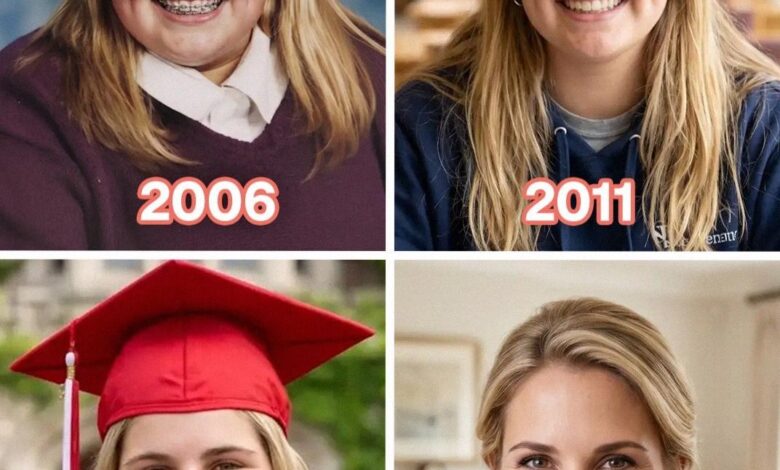
The scent of industrial-strength bleach and stale sandwiches is a sensory trigger I haven’t been able to shake for twenty years. To most people, a bathroom stall is a place of utility or a brief moment of privacy. For me, from the ages of fifteen to eighteen, it was my dining room, my fortress, and my cage. I would wait until the bell rang for lunch, slip past the crowded cafeteria doors where the roar of social hierarchy was deafening, and lock myself in the farthest cubicle of the second-floor girl’s restroom. I would sit on the lid of the toilet, pull my feet up so no one could see my sneakers from the hallway, and eat my ham and cheese sandwich in a silence broken only by the occasional dripping faucet.
I was hiding from Rebecca.
Rebecca was the kind of girl who didn’t just walk through the halls; she owned the air everyone else breathed. She was beautiful in that sharp, jagged way that made you feel flawed just by standing in her periphery. My flaws, however, were easy targets. After my parents died in a horrific car accident during my freshman year, my grief didn’t manifest in tears or rebellion. It manifested in a metabolic shutdown. I gained weight rapidly, my body ballooning as if trying to create a physical buffer between my heart and the world.
The first time Rebecca called me the whale, she did it with a smile that looked like a gift. We were in the lunch line, and she leaned in, her perfume cloying and sweet, and projected her voice to the very back of the room. She told everyone to make room for the whale, and then, with a flick of her wrist that looked accidental to the teachers but felt surgical to me, she dumped a tray of spaghetti down my front. The red sauce stained my white shirt like a wound. The laughter that followed was louder than the crash of the tray. That was the last day I ever stepped foot in that cafeteria.
For three years, I lived in the shadows. I studied until my eyes burned because numbers were the only things that didn’t laugh at me. I survived on the quiet kindness of a janitor who kept my “dining room” clean and an English teacher who slipped books onto my desk like secret messages from the outside world. When graduation finally came, I didn’t look back. I moved three states away, traded my grief for heavy lifting at the gym, and poured my soul into computer science. I became a data scientist, a woman who spoke the language of logic, and I slowly buried the girl who ate in the bathroom.
Twenty years later, the ghost of Rebecca returned via a phone call from a man named Mark.
When I picked up the phone and heard him introduce himself as Rebecca’s husband, my first instinct was to hang up. My heart hammered against my ribs, a phantom pain from a life I thought I’d outgrown. But Mark’s voice wasn’t mocking; it was hollowed out by desperation. He told me he was calling because of his daughter, Natalie. Rebecca was Natalie’s stepmother, and Mark had noticed a terrifying shift in his child. Natalie had stopped eating at the table. She was becoming a shadow in her own home. She was hiding food wrappers in the bathroom.
The most chilling part of the call came when Mark explained how he found me. He had confronted Rebecca about her treatment of Natalie, but she had dismissed him, calling the girl sensitive and lazy. Sensing a lie, Mark had dug through the attic and found Rebecca’s old high school diaries. He didn’t find the musings of a teenage girl; he found a manifesto of cruelty.
He read me a line over the phone that made the room spin. Rebecca had written about me, noting that I was smarter than her and that if she didn’t keep everyone focused on my weight, they might notice my brain, and then she would be “done.” She had kept a literal score of how many days she could force me into the bathroom. Now, two decades later, she was using the same psychological warfare on a young girl who loved robotics and wore her heart on her sleeve.
Mark asked me if I would speak to Natalie. He wanted her to see that the person Rebecca was trying to break was actually unbreakable.
I agreed. That night, I received an email from Natalie with the subject line asking about women in STEM. Reading her words was like reading a letter from my younger self. She told me how Rebecca mocked her “robotics obsession” and told her she wasn’t cut out for engineering. She confessed that she ate in the bathroom because it was the only place she felt safe from the scrutiny. I wrote back immediately, telling her that her brilliance was a threat to people who had nothing but their own vanity to offer. We messaged for days, bridging the gap between a traumatized past and a hopeful future.
The climax came a week later when Mark invited me to their home for a scheduled intervention with a family counselor. I arrived with my shoulders back, wearing the confidence I had spent twenty years building. When the door opened, there she was. Rebecca looked remarkably the same, though the sharpness of her features now looked brittle rather than bold. She tried to play it off as a “fun reunion,” smiling at me as if we had been old friends who simply lost touch.
But the air in the room changed when we sat down with the counselor, Dr. Ellis. Rebecca tried to gaslight the entire room, claiming that high school was just “kids being kids” and that she was only trying to “help” Natalie fit in.
I didn’t let her finish. I looked her in the eye and told the room about the bleach, the spaghetti, and the three years of isolation. I told her that she hadn’t changed; she had simply found a smaller target. Mark produced the diaries, laying the evidence of her calculated malice on the coffee table. Natalie finally found her voice, too, telling her stepmother that she didn’t want to be “better,” she just wanted to be away from her.
The fallout was swift. Mark announced he was filing for legal separation that afternoon. He realized that protecting his daughter meant removing the poison from their lives. Rebecca’s facade finally crumbled, leaving her looking small and powerless in the center of the room she no longer controlled.
A few days later, Natalie visited my office. I walked her through the server rooms, introduced her to my team of female engineers, and showed her a world where “robotics obsessions” were celebrated as genius. We went to the company break room for lunch. The sun was streaming through the floor-to-ceiling windows, reflecting off the glass tables. There were no stalls, no locks, and no hiding. We sat in the center of the room, talking loudly about algorithms and dreams, eating our lunch in the light. The cycle was finally broken, not with a bang, but with the simple act of refusing to hide anymore.