The Split Second Choice That Saved Two Tiny Lives When Everyone Else Had Given Up Hope
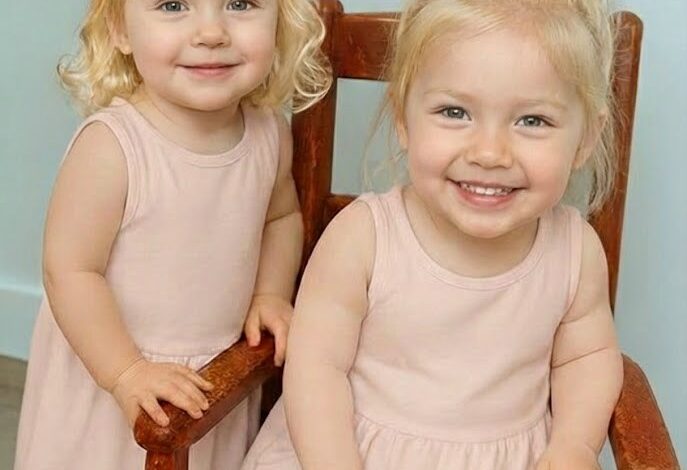
The night air was unusually still, the kind of quiet that feels heavy with an unspoken weight, when the ordinary peace of a suburban home was shattered by the most primal sound a human can produce: a mother’s scream of absolute terror. In the sterile, fluorescent-lit hallways of the local fire station, the alarm hadn’t even begun its mechanical wail when she appeared. She didn’t wait for a phone connection to go through or for a siren to arrive at her doorstep. She had become the siren. The firefighters on duty that night would later recount the scene with a sense of hushed reverence, describing the way the heavy station doors seemed to buckle under the force of her desperation. She burst through the entrance barefoot, her clothes damp with the cold evening dew, and her face a mask of pale, shaking determination. In her arms, she clutched the two most precious burdens a person could carry: her twin babies, their tiny bodies limp and their faces a haunting shade of blue.
For the men and women who wear the uniform, trauma is a daily companion, but there are certain moments that bypass the professional calluses and strike directly at the soul. This was one of them. The mother didn’t speak; she couldn’t. Her breath was coming in ragged, shallow gasps that mirrored the very struggle for life she was witnessing in her children. She simply thrust the infants toward the nearest set of steady hands, her eyes wide with a plea that no language could ever fully articulate. In that instant, the station transformed from a place of quiet standby into a high-stakes theater of survival. The firefighters, moving with the synchronized precision of a well-oiled machine, took the babies and began the frantic, delicate work of resuscitation.
In the days that followed, the station remained draped in a strange, reflective silence. The crew kept replaying those first few seconds over and over again in their minds. They spoke in low tones during their meals, dissecting the narrow margins of the event. They knew the statistics. They knew how quickly oxygen deprivation can turn a temporary crisis into a permanent tragedy. They calculated the distance from her home to the station and realized that had she spent those precious seconds searching for a phone, or had she waited for an ambulance to navigate the winding neighborhood streets, the outcome would have been unspeakable. They spoke about the terrifying reality of “the two tiny white sheets”—the universal symbol of a battle lost in the pediatric ward—and how close they had come to unfolding them. For all their years of advanced medical training and high-tech equipment, they were humble enough to admit that they were only the second act of this miracle. The first act was a mother who refused to freeze.
While the community began to whisper the word “hero” in her direction, the mother herself remained ensconced in a world of rhythmic beeps and the smell of antiseptic. Sitting in a cramped chair between the two hospital beds, she was a woman changed by the fire of a near-loss. She watched the steady, mechanical rise and fall of their chests with an intensity that bordered on the religious. To her, every breath was a hard-won victory, a tiny miracle that she had physically carried into existence twice now—once at their birth, and once on that dark road to the fire station. When visitors tried to praise her for her quick thinking, she would turn her head away, her eyes fixed on the monitors. She didn’t feel like a hero. She felt like a person who had seen the edge of the world and was still trying to scramble back to safety.
The medical investigation into the event was as exhaustive as it was inconclusive. A team of specialists, from pediatric neurologists to environmental toxicologists, combed through the history of the house and the medical records of the twins. They looked for the “villain”—a gas leak, a rare genetic flicker, a sudden environmental spike—but they found no single, smoking gun. Instead, they pointed toward a “likely mix of unseen triggers,” a perfect storm of environmental and physiological factors that had conspired to steal the breath from two healthy infants simultaneously. It was a clinical explanation for a cosmic horror. The mystery of the “why” remained, a lingering shadow in the corner of the room that no amount of light could fully dissipate.
However, the mother found that she no longer cared about the “why.” The scientific mystery paled in comparison to the spiritual truth she had been forced to confront. She had learned, in the most brutal way possible, that life is not a solid structure built on concrete foundations; it is a flickering flame held in the palm of a hand during a gale. She was haunted by the memory of how quickly her world had inverted. One moment, she was folding laundry while the soft sounds of a nursery monitor provided a soundtrack of domestic bliss; the next, she was running through the dark, feeling the weight of her children’s lives literalizing in her arms.
This experience left her with a profound, terrifying clarity. She understood that survival often hangs on a thread so thin it is invisible until it snaps. It isn’t always the strongest or the most prepared who survive; sometimes, it is simply the one who makes a split-second choice to move when every instinct is screaming to stay still in shock. The firefighters saw her as a paragon of action, but she saw herself as a witness to the fragility of everything she held dear. She realized that the “ending” of our stories is often written in the moments we don’t think about, the instinctive lunges we make toward the light when the darkness starts to close in.
As the twins grew stronger and the color returned to their cheeks, the mother began to prepare for a life that would never be “normal” again. She would always be the woman who listened a little too closely to the silence in the next room. She would always be the woman who kept her shoes by the door, ready to run at a moment’s notice. But she also carried a new kind of strength, a certainty that genuine love manifests as movement. She had moved heaven and earth, or at least a mile of cold pavement, to keep those two heartbeats going.
The story of that night became a legend at the fire station, a reminder to the veterans and a lesson for the recruits. It served as a testament to the fact that while technology and training are vital, they are secondary to the raw, unyielding power of human will. The “gift” that came back to her wasn’t a car or a promotion; it was the simple, profound sound of two children laughing in their sleep. It was the certainty that she had met the most terrifying moment of her life and hadn’t blinked. She left the hospital not with a trophy, but with the quiet knowledge that kindness, courage, and the instinct to protect are the only things that truly stand between us and the void. She had chosen life, and in doing so, she had redefined what it meant to be a mother, a survivor, and a human being in a world where every breath is a gift you have to be willing to run for.