The Nightmare in the Toilet Bowl and the Shocking Secret Found After the Storm
The sky had been a bruised shade of purple for hours before the clouds finally broke, unleashing a torrential downpour that rattled the windowpanes and turned the backyard into a shallow lake. It was the kind of storm that made you want to huddle under a blanket with a warm drink, listening to the rhythmic drumming of rain against the roof. But for one homeowner, the comfort of the indoors was about to be shattered by a discovery so unsettling it felt like a scene ripped straight from a low-budget horror film. When the thunder finally rolled into the distance and the lightning flickered out, a routine trip to the bathroom led to a confrontation with the unknown.
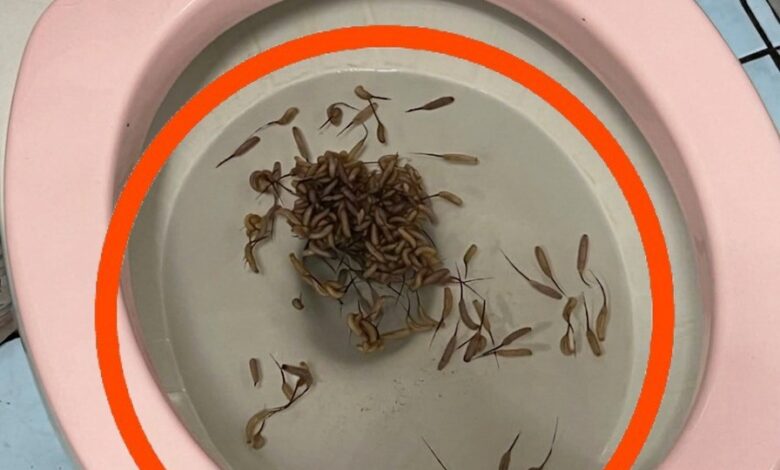
There, in the porcelain bowl of the toilet, something was moving. At first glance, it looked like the water was simply unsettled from the pressure of the storm, but as the ripples stilled, the truth became much more sinister. Dozens of dark, wriggling shapes were suspended in the water. They were small, brownish-black, and moved with a frantic, undulating energy that made the skin crawl. In the dim light of the bathroom, they looked like parasites—perhaps a swarm of invasive worms or some prehistoric larvae that had been stirred up from the depths of the city’s ancient sewer system.
Panic is a cold, sharp thing. It doesn’t arrive slowly; it hits all at once. The mind immediately began racing through the worst-case scenarios. Was the house infested? Had the heavy rains caused a sewage backup that brought biological hazards into the living space? The thought of sitting down in a room where such creatures could emerge from the plumbing was enough to make anyone bolt for the door. There is a primal fear associated with the bathroom—a place of vulnerability where we expect total sanitation and privacy. Seeing that sanctuary invaded by writhing, living things felt like a violation of the highest order.
For several minutes, the homeowner stood frozen, debating whether to flush the problem away or run for the phone to call an emergency plumber or perhaps an exterminator. But curiosity, or perhaps a lingering sense of disbelief, forced a closer look. Taking a deep breath and grabbing a flashlight, they leaned over the bowl, illuminating the water with a harsh, clinical white light. Under the glare, the “monsters” began to lose their terrifying mystery.
They weren’t worms. They didn’t have the segmented, oily appearance of leeches or the translucent horror of intestinal parasites. Instead, they had rounded heads and long, tapering tails that whipped back and forth with incredible speed. They were tadpoles.
The realization was a massive wave of relief, followed quickly by a profound sense of confusion. How on earth did a legion of baby frogs end up in a second-story toilet during a rainstorm? It felt impossible, yet there they were, swimming in circles in the most domestic of settings. The “nightmare” was actually a tiny, misplaced miracle of biology.
As it turns out, nature has a way of finding a path, even through the most artificial environments. During periods of extreme rainfall, the local ecosystem is thrown into a frenzy. Frogs, driven by the instinct to breed in the newly formed puddles and ponds, seek out any source of standing water. In this particular case, the combination of high humidity and rising water levels in the external pipes likely created a strange conduit. Some species of frogs are incredibly adept climbers, capable of scaling vertical surfaces or navigating through vent pipes on the roof. It is highly probable that a mother frog, seeking a safe haven away from the rushing currents of the flooded yard, found her way into the plumbing vent or through an unsealed drain, depositing her eggs in the quiet, still water of the toilet bowl.
What had begun as a moment of pure terror transformed into a strange sense of responsibility. The fear of an infestation was gone, replaced by the reality that these were living creatures that had simply taken a very wrong turn. Flushing them away, which had seemed like a logical solution minutes earlier, now felt like an act of cruelty. These were the early stages of a life cycle that belonged in the wild, not in a sewage treatment plant.
The homeowner decided to act as a temporary steward of this accidental aquarium. Using a small plastic container, they carefully scooped the tiny swimmers out of the bowl one by one. It was a tedious process, requiring patience and a steady hand, as the tadpoles were remarkably fast. Once the bowl was clear, the container was filled with a bit more fresh water and carried out into the damp, post-storm air.
The backyard was still dripping, the air thick with the scent of wet earth and ozone. Near the edge of the property sat a small, natural pond that had overflowed during the peak of the deluge. With a gentle tilt of the container, the tadpoles were released into the dark, murky water. They disappeared almost instantly, darting into the reeds and mud where they would have a fighting chance to grow into the frogs they were meant to be.
Returning inside, the homeowner viewed the bathroom with a new perspective. The immediate crisis was over, but the event served as a stark reminder of how thin the barrier between our controlled human world and the wild really is. We build walls, install plumbing, and seal windows to keep the elements at bay, but nature is persistent. A single heavy rainstorm was all it took to bridge the gap.
To prevent a repeat performance of the “toilet tadpoles,” a few practical steps were taken. Drains were checked for proper screening, and the roof vents—often the entry point for adventurous amphibians—were fitted with mesh covers. These are simple maintenance tasks that most people overlook until they find themselves staring down a bowl full of unexpected guests.
This strange incident, while jarring at first, ended as a story of coexistence. It was a brief, bizarre intersection of two very different worlds. What looked like a biological threat was actually just a mother frog doing her best to ensure the survival of her offspring in a world that was temporarily underwater. It serves as a lesson for anyone who might find something “scary” in an unexpected place: sometimes, the things that go bump in the night—or wriggle in the pipes—are just lost travelers looking for a place to call home. In the end, the only thing truly damaged was a sense of total domestic predictability, replaced instead by a story that would be told for years to come.