Passengers Mocked the Woman in Seat 22C — Then the Sky Revealed Who She Really Was
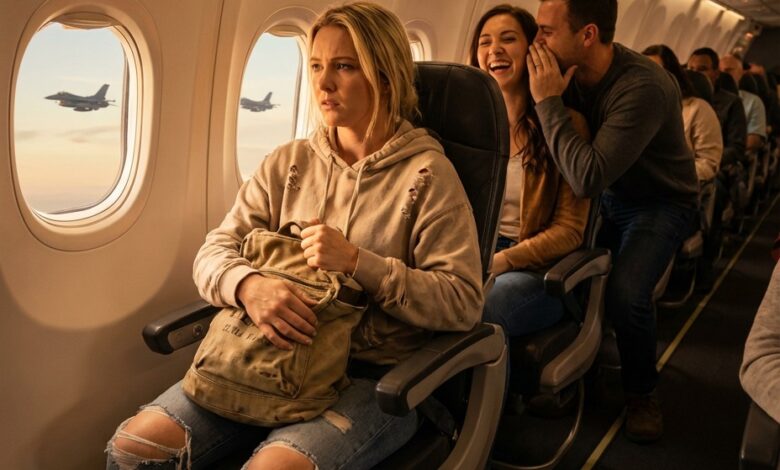
The woman in seat 22C looked ordinary enough that several passengers decided she was beneath them before the plane had even taken off. She wore a faded hoodie, scuffed sneakers, and kept one hand wrapped around an old canvas tote bag. Around her, expensive suits, polished watches, and phone cameras turned her into an easy target. A businessman joked that the airline had “lowered its standards,” a livestreamer mocked her appearance, and even a flight attendant spoke to her with unnecessary sharpness. She said almost nothing. She only sat by the window, quiet and exhausted, as if she was carrying a story no one in that cabin could see.
Then the captain’s voice changed over the speaker. Air traffic control had issued a special routing instruction, and the plane would be escorted. Moments later, two fighter jets appeared outside the windows, flying close enough for everyone to see. The cabin fell into stunned silence. Phones rose, laughter vanished, and fear replaced arrogance. When the woman in 22C calmly whispered, “They’re here for me,” the same people who had mocked her turned on her again—until she stood, held up an old metal tag marked “Night Viper 22,” and requested a secure channel from the crew.
Her voice over the handset was steady: “This is Night Viper Two-Two.” The reply came through the radio: “We copy. Welcome home, ma’am.” Outside, both fighter jets tipped their wings in salute. Then, in the distance, the presidential aircraft appeared and offered its own silent acknowledgment. The passengers soon learned the truth: the quiet woman they had mocked was Captain Olivia Mercer, a former elite pilot once believed lost after protecting a presidential aircraft during a dangerous emergency years earlier. She had survived, disappeared from public view, and was now traveling to Washington for a private recognition ceremony.
Shame spread through the cabin faster than applause. Some apologized. Others could barely meet her eyes. When one passenger tried to excuse the behavior by saying no one could have known who she was, Olivia answered with a sentence no one forgot: “I don’t owe strangers a résumé before they decide to behave.” By the time the plane landed, the story had already begun spreading—but the real lesson was not that they had mocked a hidden hero. It was that no one should need medals, titles, or a dramatic reveal to be treated with basic respect. Every seat holds a life bigger than strangers can see.