Coach Goes Viral for Heartwarming Gesture During Youth Basketball Game
Teachers often measure their impact in ways that extend far beyond academic performance or standardized test results. While grades and evaluations are part of the educational system, the most lasting influence of a teacher frequently comes from everyday interactions. These are the small, often unnoticed moments that shape how children see themselves and how they experience the world around them. In many cases, such moments remain with students long after they leave the classroom.
One widely shared example of this kind of influence comes from WG Nunn Elementary School, where a simple interaction between a teacher and a young student gained widespread attention. The moment involved Jonathan Oliver, a physical education teacher and youth basketball coach, and a kindergarten student named Kristen Paulk. During a school activity in the gym, Kristen approached him with a practical concern that interrupted her participation in the game. Her hair was falling into her face, making it difficult for her to continue comfortably.
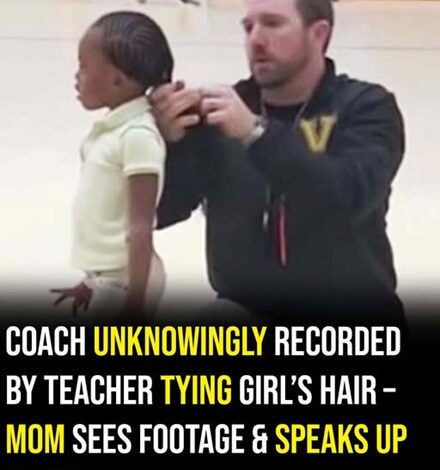
What followed was a brief but meaningful gesture. Instead of dismissing the request or directing her elsewhere, Oliver paused the activity and responded directly. He knelt down to her level while balancing himself carefully and helped gather her hair into a ponytail so she could continue playing. The interaction was quick and unremarkable in terms of time, but it reflected a level of attentiveness that stood out to those who witnessed it.
Unbeknownst to Oliver at the time, the moment was recorded by Kandice Anderson, who later shared the video online. The caption accompanying the clip highlighted the idea that teaching often extends beyond formal instruction. Once posted, the video quickly gained traction on social media platforms, where it was widely shared and viewed by millions of people. The simplicity of the act, combined with its emotional impact, contributed to its viral spread.
As the video gained attention, it eventually reached national media outlets, including interviews and features that highlighted the broader meaning behind the interaction. In these discussions, Oliver expressed surprise at the level of attention the moment received. He emphasized that, from his perspective, it was not an extraordinary act but rather part of his normal approach to working with children. His response reflected how educators often view acts of care as a routine part of their responsibilities.
Oliver explained in interviews that his goal as a teacher is to create an environment where students feel comfortable, supported, and valued. He described his approach as focused on making children feel at ease during school activities, especially in physical education settings where participation and confidence are important. In his view, small gestures of assistance are a natural extension of that responsibility rather than something separate from teaching itself.
The simplicity of his explanation also highlighted an important aspect of education: many acts of support that appear remarkable from an outside perspective are often routine for teachers. Whether it involves helping a student adjust their clothing, resolve a minor issue, or feel more included in an activity, educators frequently respond to needs in real time. These actions often go unnoticed beyond the classroom but play a significant role in shaping a child’s daily experience at school.
Oliver also acknowledged the lighthearted side of the situation, noting that while he was comfortable assisting with a basic hairstyle, his skills were limited. His comment reflected the informal and human nature of the interaction, reinforcing that the moment was not planned or staged but rather a spontaneous response to a child’s immediate need. This authenticity contributed to why the video resonated with so many viewers.
For Kristen’s mother, Miyah Cleckley, the video carried a different but equally meaningful perspective. She expressed appreciation for the care and attention shown to her daughter during the school day. Her response reflected a parent’s reassurance in knowing that their child is in an environment where teachers are attentive not only to academic development but also to comfort and emotional well-being.
Cleckley also noted that caregiving responsibilities in her household are shared, reflecting the everyday realities of family life. In many families, especially those with multiple children, daily routines such as preparing hair or managing personal needs are collective responsibilities. Seeing a teacher extend that same level of care within the school environment reinforced the sense of continuity between home and school support systems.
The broader significance of the moment lies in how it reflects the role of educators in early childhood development. Teachers, particularly in elementary settings, often serve as both instructors and caregivers during the school day. Their responsibilities extend beyond teaching academic content to include emotional support, conflict resolution, and practical assistance. These responsibilities are not always visible in formal evaluations but are central to a child’s experience in school.
Educational experts often emphasize that children benefit most when they experience consistency between home and school environments. When teachers and parents work in alignment, students are more likely to feel secure, confident, and engaged. Moments like the one at WG Nunn Elementary illustrate how small actions contribute to this broader sense of stability. Even brief interactions can reinforce a child’s sense of belonging.
What made this particular moment resonate widely was not its complexity but its simplicity. The act of kneeling down, listening to a child’s request, and responding with care is something that occurs frequently in schools but is rarely captured on video. When shared publicly, such moments highlight aspects of education that are often overlooked in broader discussions about teaching and learning.
In many ways, the viral response to the video reflects a growing public appreciation for the emotional and relational aspects of education. While academic outcomes remain important, there is increasing recognition of the role teachers play in shaping confidence, self-esteem, and social development. These qualities are built through repeated small interactions rather than singular dramatic events.
Ultimately, the interaction between Jonathan Oliver and Kristen Paulk serves as a reminder that education is not only about instruction but also about connection. The gesture itself was simple, but its impact lies in what it represents: attention, patience, and respect for a child’s immediate needs. These are the qualities that often define a positive school experience more than any formal lesson plan.
Long after the moment was recorded and shared, its message continues to resonate. It highlights how everyday acts of kindness in classrooms and school gyms contribute to shaping how children feel about themselves and their environment. While the video may have captured a single moment, the values it reflects are present in schools every day, often quietly and without recognition.