The Secretary the Coffee and the Morning My Husband Will Never Forget!
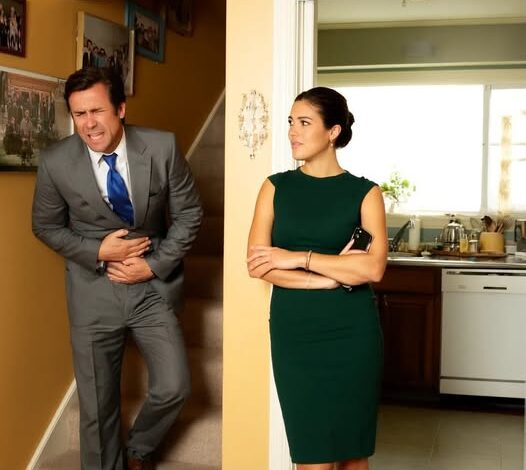
The subtle shifts in a marriage are often more telling than the loud explosions. For months, I watched my husband, Mark, transform into a version of himself that felt like a poorly rendered copy. It began with the mirror. A man who used to roll out of bed and throw on whatever was clean suddenly started spending twenty minutes grooming his beard and obsessing over the crispness of his shirt collars. Then came the scent—a heavy, expensive cologne that smelled of desperation and woodsmoke, far too potent for a standard Tuesday morning in a cubicle.
I ignored the late Friday nights for as long as I could. He’d come home with vague stories about quarterly projections and missed deadlines, his eyes darting toward his phone every time a notification chimed. I wanted to believe him. I wanted to believe that the ten years we had built together were worth more than a cliché. But the intuition of a spouse is a sharpened blade, and mine was cutting through his excuses with ease.
The breaking point arrived on a Tuesday morning, just as the sun was beginning to peek through the kitchen blinds. His phone sat face-up on the granite island while he was in the bathroom. A message flashed on the screen. It was from Carolina, his new secretary. It wasn’t a memo about a meeting or a reminder about a conference call. It was familiar. It was intimate. It was the kind of message that confirmed every dark thought I had been harboring for months.
In that moment, something inside me snapped. The hurt didn’t manifest as tears; it manifested as a cold, calculating resolve. I looked at the mug of coffee I had just poured for him—black, two sugars, just the way he liked it. I didn’t think about the long-term consequences. I didn’t think about the ethics of what I was about to do. I only thought about the fact that he was preparing to leave our home to spend the day with her, draped in the cologne I had bought him, fueled by the coffee I had brewed.
I reached into the back of the medicine cabinet and found the heavy-duty laxatives I had bought after a recent bout of digestive issues. Without a second thought, I dissolved a significant dose into his mug. It was a petty, impulsive act of sabotage. I watched him walk into the kitchen, kiss my cheek with a hollow affection that turned my stomach, and drain the cup in three long gulps.
“Big day today,” he muttered, grabbing his briefcase. “Don’t wait up for dinner.”
He was gone. For exactly twelve minutes.
I sat at the kitchen table, hands trembling, already beginning to feel the weight of my actions. The rush of adrenaline had faded, replaced by a sickening realization that I had crossed a line I could never uncross. Then, the sound of his car tires screeched in the driveway. The front door burst open, and Mark came flying back inside, his face a pale shade of green, his hand clutching his stomach. He didn’t even look at me as he bolted for the upstairs bathroom.
The sounds that followed were a grim reminder of my own bitterness. I sat in the silence of the downstairs living room, listening to the man I loved suffer because of a choice I had made in a moment of blind rage. I had wanted to disrupt his plans. I had wanted to make it impossible for him to sit across from Carolina and flirt over lunch. I had succeeded, but the victory tasted like ash.
Hours passed. Mark eventually emerged, weak and shaken, wrapped in a bathrobe and looking smaller than I had ever seen him. He didn’t ask what was in the coffee. On some level, perhaps he knew. Or perhaps the guilt of his own betrayals made him feel he deserved whatever sudden illness had befallen him. He sat on the edge of the sofa, staring at the floor, the bravado of the morning entirely stripped away.
The silence between us was heavier than any argument we had ever had. It was the silence of a house that had become a shell.
“I saw the message, Mark,” I said quietly. I didn’t scream. I didn’t throw things. The energy for that had been spent in the kitchen.
He didn’t try to lie. Maybe he was too exhausted, or maybe the physical distress had broken his ability to maintain the facade. He admitted everything. He spoke about Carolina, about how he had felt “seen” and “appreciated” in a way he felt he wasn’t at home. He talked about how he had lost his way, drifting into a fantasy because the reality of our life together had become predictable and mundane.
As he spoke, I realized that my “morning surprise” hadn’t actually fixed anything. It hadn’t restored the trust, and it hadn’t made me feel better. If anything, it had made the situation more complex. We were now two people who had hurt each other in different, but equally damaging, ways. He had betrayed the sanctity of our vows, and I had betrayed the basic safety of our home.
The physical disruption was temporary, but the emotional clarity it forced was permanent. I looked at him—not as a villain, but as a flawed man who had made a series of selfish choices. And I looked at myself—not as a victim, but as a woman who was capable of a darkness I hadn’t known existed.
I didn’t offer him a second chance immediately. I didn’t tell him everything would be okay. Instead, I set a boundary that was as cold and hard as the granite island in our kitchen. I told him that the games were over. There would be no more “late meetings,” no more “just friends,” and no more indirect retaliations from me. If he wanted to stay, he would have to rebuild the foundation from the dirt up. If he slipped once—just once—I would be gone before he could even offer an explanation.
Betrayal creates a frantic urge to strike back, to make the other person bleed the way you are bleeding. We tell ourselves that it’s about justice or balance, but the truth is that revenge is a circular path that leads back to the same broken place. Real power doesn’t come from a secret dose of medicine or a public exposure. Real power comes from the ability to stand in the truth, to say what is required, and to have the strength to walk away if those requirements aren’t met.
That night, for the first time in months, Mark slept on the sofa. I went upstairs to our bed, feeling the immense weight of the decisions ahead. The morning had started with a trick, but it ended with a truth. It wasn’t the ending I had imagined, but it was the beginning of whatever came next. Whether that was a slow healing or a final goodbye, it would be done with eyes wide open. No more secrets. No more cologne for “just meetings.” Just the quiet, steady certainty of a woman who finally knew exactly where she stood.