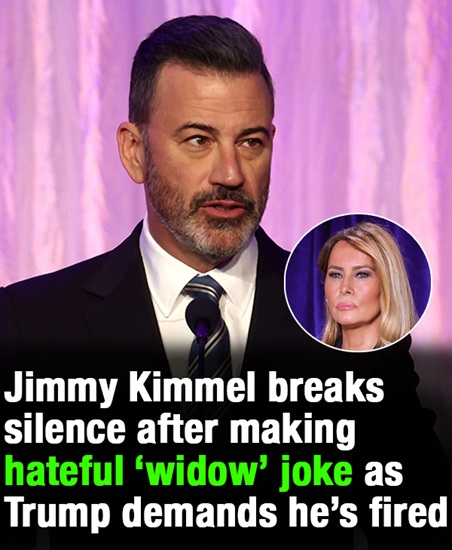
Jimmy Kimmel Responds After Backlash Over Melania “Widow” Joke as Trump Calls for Action
Late-night television in the United States has long played a dual role as both entertainment and political commentary. Hosts such as Jimmy Kimmel, Stephen Colbert, and others regularly incorporate current events into their monologues, often using satire to reflect on political figures and public controversies. This format blends humor with commentary, which frequently generates both laughter and criticism from different audiences.
In recent years, political humor has become increasingly polarized, especially when it involves high-profile figures such as Donald Trump and members of his administration. Comedy segments that focus on political leaders often circulate widely on social media, where audiences interpret jokes in very different ways depending on their political perspectives.
Jimmy Kimmel’s Approach to Satire and Public Reaction
Jimmy Kimmel has frequently used satire in his monologues on Jimmy Kimmel Live!, particularly when discussing political events or public figures. His style often includes exaggeration, irony, and observational humor, which are common techniques in American late-night comedy. These segments are typically designed for comedic effect rather than literal interpretation.
However, in today’s media environment, even traditional satire can quickly become controversial once clips circulate online. Short video excerpts are often removed from their original context, which can lead to misunderstandings about the intent behind a joke. This has been a recurring issue for many late-night hosts, especially when addressing politically sensitive topics.
How Political Humor Becomes Controversial in the Digital Age
The rise of social media platforms has significantly changed how comedy is received and interpreted. A single joke from a televised monologue can reach millions of viewers within hours, often stripped of the surrounding context that frames it as satire. This can lead to widespread debate, particularly when public figures are involved.
Political humor directed at figures such as Donald Trump and Melania Trump has consistently sparked divided reactions. Supporters of the subjects may view such jokes as disrespectful, while others see them as legitimate political commentary. This divide reflects broader cultural and political polarization in the United States.
Public Figures, Media Interpretation, and Reaction Cycles
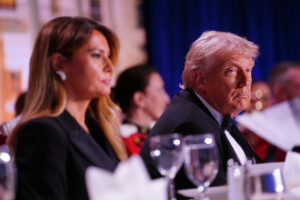
When public figures are mentioned in comedic contexts, responses often extend beyond entertainment news into political discussion. Statements made on television can be quickly amplified by online platforms, where audiences react in real time. In such environments, both criticism and support tend to escalate rapidly.
In cases involving high-profile individuals like Donald Trump and Melania Trump, media coverage often becomes highly segmented, with different outlets emphasizing different aspects of the same joke or comment. This can create competing narratives about what was said and how it should be interpreted.
The Broader Debate Over Boundaries in Comedy
The controversy surrounding political jokes in late-night television is part of a larger ongoing debate about the boundaries of comedy. Some argue that satire should remain unrestricted, especially when targeting public figures. Others believe that certain topics require greater sensitivity, particularly in periods of heightened political tension.
Historically, comedy has always pushed boundaries, often reflecting societal tensions of its time. In modern America, however, the speed of digital communication has intensified the consequences of public jokes. A comment made during a live broadcast can now be debated globally within minutes.

Media, Responsibility, and Interpretation
Television networks and streaming platforms must often navigate the balance between creative freedom and public responsibility. While hosts like Jimmy Kimmel operate within the framework of entertainment, their words are frequently interpreted as commentary on real-world events.
This creates an environment where intent and perception can diverge significantly. A joke intended as satire may be received as criticism, while commentary intended as observation may be interpreted as political messaging. This complexity is part of what makes modern media discourse so dynamic and often controversial.
Conclusion: Satire in a Divided Media Landscape
The ongoing discussions surrounding late-night comedy reflect broader changes in how audiences engage with media. Satire remains a central part of American entertainment, but its interpretation has become increasingly fragmented in the digital age.
As public figures continue to be central subjects in comedic storytelling, debates about tone, timing, and responsibility are likely to continue. Shows like Jimmy Kimmel Live! remain at the center of this conversation, highlighting the evolving relationship between comedy, politics, and public perception.
Ultimately, the reaction to political humor often reveals more about the audience than the joke itself, illustrating the complex intersection of entertainment and modern political discourse.