The Shocking Secret Word Melania Trump Said To King Charles That Stunned Everyone
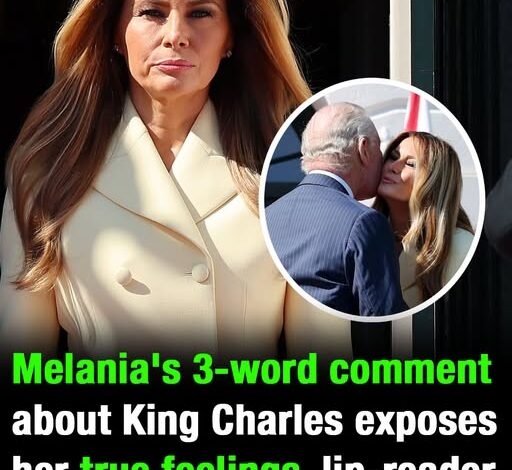
The historic four-day state visit of King Charles III and Queen Camilla to the United States was a masterclass in the delicate art of modern diplomacy, blending grand ceremonial pomp with subtle human moments. Hosted by Donald Trump and Melania Trump, the visit captured the attention of the global media, not only for its high-level policy discussions regarding international relations but also for the intimate, unscripted interactions that inevitably occur when public figures of this magnitude come together. While political analysts and commentators spent hours dissecting the broader geopolitical implications of the visit, it was a surprisingly brief and quiet exchange between Melania Trump and King Charles III that sparked the most intense speculation and debate among royal watchers and body language experts alike.
The royal couple arrived at the White House to a meticulously organized and highly formal welcome, a traditional display characterized by a dazzling array of official photographs, warm greetings, and a measured walk across the impeccably manicured grounds. The atmosphere was a blend of strict adherence to protocol and a genuine attempt to foster international goodwill. During the ceremonial tour of the estate, Melania Trump took the opportunity to introduce a beekeeping project she had recently launched on the White House grounds. This seemingly quiet detail served a much larger purpose, quietly emphasizing environmental awareness and sustainability within an otherwise highly ceremonial and traditional setting, reminding onlookers that even in the most formal environments, personal passions can be woven into the diplomatic tapestry.
As is often the case during high-profile state visits, it is not always the grand speeches or the formal treaties that draw the most scrutiny, but rather the fleeting, small-scale interactions that reveal the personalities behind the titles. During the initial welcome, a brief exchange took place between Melania Trump and King Charles. The interaction, while lasting only a few moments, drew a disproportionate amount of attention from observers and analysts who sought to decode its deeper meaning. Lip-reading analyst Jeremy Freeman stepped forward to interpret the fleeting conversation, suggesting that the short exchange indicated a sense of polite familiarity and mutual respect. According to Freeman’s analysis, as the King greeted her, she responded with a composed, genuine expression of pleasure at meeting him again, establishing a tone of warmth that transcended the usual rigid formalities of state visits.
The moment itself was exceptionally simple, yet the reaction to it was anything but. In an era dominated by relentless media scrutiny, where every gesture, glance, and inflection is examined under a powerful magnifying glass, even routine politeness is frequently interpreted as a meaningful signal of political or personal alignment. Sometimes, an interaction is indeed deeply symbolic, serving as an olive branch or a calculated diplomatic maneuver. At other times, however, it is simply what it appears to be on the surface: a respectful, courteous exchange between two public figures who have grown accustomed to the rigors of formality and the constant presence of the press.
This most recent meeting did not occur in a vacuum; it was built upon a foundation of familiarity cultivated over time through previous interactions. This particular gathering follows a series of earlier meetings between Melania Trump and the British royal family. Notably, during a prior visit to the United Kingdom, Melania Trump appeared alongside Catherine, Princess of Wales, in an event that was widely covered by the international press. During that earlier occasion, observers noted a particularly lighthearted and warm moment when King Charles made an engaging remark about her hat, which immediately eased the atmosphere and broke the tension of the formal gathering. These small, seemingly insignificant instances tend to matter less for the specific words that are spoken, and far more for what they reflect about the individuals involved. They demonstrate an underlying ease, or at the very least, the professional ability to maintain that sense of ease while in the unforgiving public eye.
Protocol and public perception have always played an enormous role in how state visits are received, and this visit was no exception. Much attention was focused on the deliberate absence of traditional gestures, such as bowing or curtsying, which were once considered mandatory in the presence of British royalty. In modern diplomatic settings, such rigid physical gestures are no longer strictly required or expected. What appears unusual or even disrespectful to the public is often simply a reflection of evolving global norms and the modernization of protocol, rather than a conscious or deliberate break from established tradition. Yet, perception carries its own immense weight. People naturally tend to read intention into form, assigning meaning to gestures even when the form itself has already changed and evolved to fit the modern era.
Behind every public image lies a staggering amount of discipline and preparation. State visits are carefully structured affairs, scheduled down to the very last minute, but they can never be entirely controlled by planners or aides. There are always moments that slip beyond prepared remarks and choreographed movements—the brief exchanges, the subtle reactions, the small details that reveal something far more human beneath the formal, polished layer. These spontaneous moments do not define diplomacy or international relations, but they inevitably shape how the events are received by the public and the media. The balance is extraordinarily delicate: to remain open and accessible without saying too much, and to be fully present without accidentally becoming the entire story.
In the final reflection, it becomes clear that public attention often gravitates toward what is fleeting and immediate—a passing glance, a whispered phrase, or a subtle gesture. Yet, the true substance of diplomacy rests elsewhere, far away from the cameras, in the quiet rooms and the conversations not meant for public analysis. What remains visible to the outside world, however, is the tone. And tone, when kept steady and consistent, can do incredibly quiet, important work. It holds space for ongoing cooperation and mutual understanding, serving as a stabilizing force even when the wider, more complex world feels uncertain and unpredictable.