The Secret Message King Charles Hid In A Bell That Broke The Internet
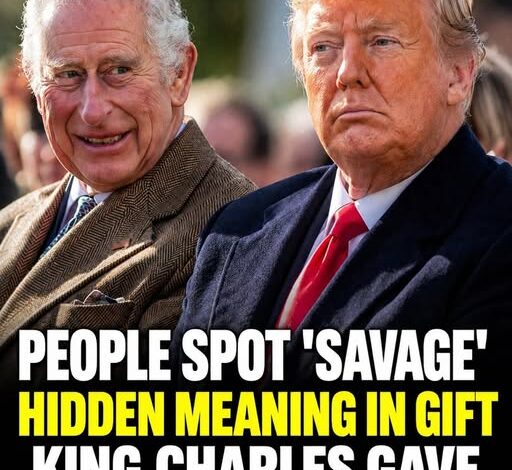
The atmosphere inside the White House state dinner was nothing short of electric. Dignitaries, political heavyweights, and international media personalities mingled under the glittering chandeliers of the State Dining Room, fully aware that every glance, smile, and spoken word would be scrutinized by the global public. Yet, amidst the clinking of crystal glasses and the formal exchange of diplomatic pleasantries, one specific moment transcended the usual political pageantry to become a viral sensation. It was an interaction between King Charles III and Donald Trump that captured the imagination of millions, sparking an online debate that continues to reverberate across social platforms and news outlets alike.
The catalyst for this global fascination was a seemingly innocuous gift exchanged during the formal proceedings. King Charles presented Trump with a polished brass bell, a remarkable artifact reportedly linked to HMS Trump, a British submarine that operated during the Second World War. When the gift was first unveiled, the official intent seemed straightforward enough. It was framed as a grand symbolic gesture, intended to reflect the enduring, long-standing alliance and the shared historical bonds between the United Kingdom and the United States. Such gifts are a staple of state visits, carefully curated by diplomatic teams to project goodwill and mutual respect.
However, it was not the historical significance of the bell that sent the internet into a frenzy. Rather, it was the personal touch, the striking coincidence of the name, and the King’s delivery that transformed the exchange into a mystery. Because the submarine shared the last name of the American leader, the gesture carried an added layer of novelty and highly personal attention that caught everyone in the room by surprise. It bridged the gap between stiff, traditional diplomacy and a much more human, conversational interaction that the public could easily latch onto and dissect.
To fully understand the gravity of the moment, one must examine the backdrop of such high-profile state dinners. These events are highly choreographed affairs where almost nothing is left to chance. Every guest list is meticulously reviewed, every speech is vetted by diplomatic corps, and every gift is selected to avoid any misinterpretation. Yet, sometimes, an unscripted moment or a cleverly crafted joke breaks through the rigid formality. The dinner in question was already a focal point of international media coverage, but the bell became the undeniable centerpiece of the night, drawing focus away from the standard policy discussions and toward the intriguing object in the President’s hands.
The intrigue deepened significantly when King Charles reportedly leaned in and made a lighthearted remark suggesting that Trump could just give them a ring if he ever needed to reach Britain. This witty quip, delivered with the King’s trademark dry humor, instantly prompted a wave of laughter from the audience. In a room filled with tension and carefully calculated remarks, the off-the-cuff joke provided a refreshing burst of authenticity. It showed a side of the monarchy that the public rarely gets to see: spontaneous, engaging, and willing to embrace a bit of playful banter with world leaders.
But as the video clips of the exchange circulated online, the public took the interaction and ran with it. The internet, true to its nature, began to dissect the moment from every conceivable angle, turning a simple pleasantry into a subject of deep, almost obsessive, analysis. Users across various social media platforms immediately divided themselves into different camps, each convinced they had uncovered the true meaning behind the King’s gesture. The theories ranged from the profoundly serious to the wildly satirical.
On one end of the spectrum were those who viewed the bell as a piece of classic British wit. Supporters of this theory argued that King Charles was engaging in a subtle form of diplomatic trolling, using the shared name of the World War II submarine to make a playful statement about the transatlantic relationship. To them, the remark about giving them a ring was a thinly veiled joke about the two nations needing to keep their lines of communication open, perhaps hinting at the complex and evolving political dynamics between the two powers.
Conversely, a completely different group of people viewed the gift as a straightforward, earnest diplomatic gesture tied to shared history. These individuals argued that the HMS Trump submarine represented the courage and resilience shown by both nations during one of the darkest periods in human history. They believed the King was merely honoring this legacy of bravery and alliance, and that any interpretation of hidden messages or subtle humor was reading far too much into a simple act of goodwill. They pointed to the long tradition of the British royal family using historical artifacts as symbols of enduring friendship and mutual respect.
Let us look closer at the historical weight that state dinners carry and how they act as an arena for soft power. A state visit is not merely an exchange of handshakes; it is an orchestrated demonstration of alliances. When a head of state visits another nation, the cultural exchange is paramount. The diplomatic gift is often the centerpiece of this exchange, acting as a tangible memory of the summit. In this case, the brass bell served as a physical embodiment of a shared past. The HMS Trump, a Royal Navy T-class submarine, was launched in the mid-1940s and served with distinction. By bringing a piece of this naval history into the conversation, the King managed to weave a narrative that connected the heroism of the past with the diplomacy of the present. This gives the gift a robust, multifaceted meaning that goes beyond the superficial coincidence of the surname.
The situation was further amplified by influencers and political commentators who used the viral moment to create engaging content. TikTok videos and X threads broke down the exchange frame by frame, analyzing the King’s facial expressions and Trump’s reaction. Lip readers weighed in on the exact phrasing used during the brief conversation, adding an almost cinematic suspense to the unfolding narrative. The debate over whether the moment was a calculated move or just a lighthearted slip of the tongue became a cultural phenomenon, proving that the public craves a bit of mystery in the often-predictable world of politics.
Moreover, the story highlights the fascinating intersection of traditional royalty and modern digital culture. A generation ago, such an interaction might have been relegated to the society pages of newspapers and forgotten within a few days. Today, however, thanks to smartphones and the rapid sharing of information, a single moment can be analyzed by millions within minutes. The reaction to the King’s gift demonstrates how the digital age transforms mundane diplomatic events into interactive pop-culture events where everyone gets to be an armchair diplomat.
Ultimately, the brass bell became one of the most discussed parts of the visit, not because of its official meaning, but because of how differently people chose to read it. The ambiguity of the moment created a blank canvas upon which the public could project their own hopes, fears, and observations about the relationship between the US and the UK. Whether it was a stroke of comedic genius, a deep historical nod, or just an awkward joke that landed perfectly, the interaction remains a testament to the power of a single gesture to capture global attention. The incident will likely be remembered for years to come as a unique snapshot of a time when the world paused to analyze the ring of a single bell.