Woman Responds to Criticism From Older Generations Over Her Tattoos
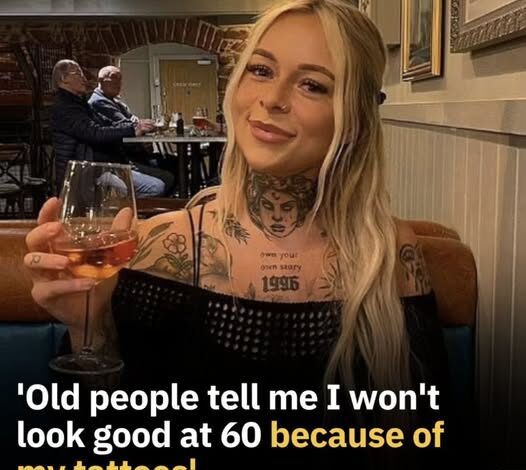
A young British woman has sparked widespread discussion online after publicly responding to criticism from members of the “older generation” who insist that she will one day regret covering much of her body with tattoos.
Rather than backing down, she has chosen to speak openly about her experiences, her self-image, and her belief in personal freedom.
Using social media as a platform to challenge long-standing beauty expectations and social judgments. Taylor Paige Courtenay, a 27-year-old woman from South Devon, England, has become well known online for her heavily tattooed appearance and her willingness to address the criticism that often comes with it.
With visible body art covering her neck, arms, stomach, and legs, Courtenay describes her skin as a living record of her life—something deeply personal that reflects memories, emotions, and moments of self-expression. For her, tattoos are not simply decoration but a way of telling her story in her own terms.

Despite her confidence, Courtenay has been candid about the social challenges she faces as a visibly tattooed woman.
In several social media posts, she has acknowledged that her appearance does not align with traditional expectations of femininity or conventional beauty standards, particularly those still held by older generations.
These expectations, she says, often shape how people judge her worth, her relationships, and even her future.
In one widely shared TikTok video, Courtenay speaks openly about coming to terms with what she believes society sees her as.
She states that she has accepted the idea that she may never be “that girl”—the woman who is proudly introduced to parents, spoken about with admiration among friends, or invited to formal family dinners.
In her words, she believes she will often be seen as temporary or hidden, rather than publicly celebrated, because of how her appearance is perceived.
She goes on to describe how this realization, while painful at first, no longer defines her sense of self. Rather than trying to change herself to fit others’ expectations, Courtenay emphasizes that her tattoos make her happy and comfortable in her own skin.
For her, that sense of authenticity outweighs the approval of strangers or adherence to traditional norms.
Courtenay’s openness has resonated with many people, but it has also made her a frequent target of online criticism.

One of the most common remarks she receives is the suggestion that she will regret her tattoos later in life, particularly as she ages. This criticism often comes framed as concern, but Courtenay sees it as another form of unsolicited judgment.
In response, she posted a video with the caption, “Your tattoos are not going to look good when you hit 60.” Addressing those comments directly, she added a blunt and defiant response, suggesting that aging affects everyone and that physical appearance naturally changes over time, with or without tattoos.
Her message was clear: aging is inevitable, and fear of it should not dictate how someone chooses to live or express themselves in the present.
The clip quickly drew attention and triggered a wave of reactions in the comments. Some viewers supported her stance, applauding her honesty and confidence.
Others, however, doubled down on their criticism. Several commenters argued that by sharing images of her body online, she was inviting opinions and judgment.
Some went as far as to criticize her clothing choices, suggesting that modesty would shield her from public scrutiny.
One commenter questioned whether she worried at all about how her tattoos would look decades from now, framing the question as genuine curiosity.
Another claimed that tattoos take away from natural beauty and described body art as “graffiti,” expressing disbelief that someone they considered physically attractive would choose to cover their skin with ink.
These reactions reflect a broader cultural debate around tattoos, particularly when it comes to women. While tattoos have become increasingly mainstream, visible body art—especially extensive coverage—still challenges traditional ideas of femininity, professionalism, and respectability in some circles.
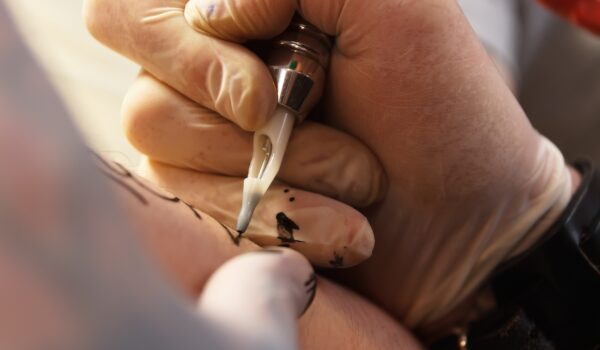
For many critics, tattoos symbolize rebellion or permanence in a way that feels uncomfortable or unfamiliar.
Courtenay’s supporters, however, see things very differently. Many people shared their own experiences in defense of her, explaining that they had been tattooed for years and felt no regret.
Some pointed out that tattoos age alongside the body and become part of a person’s life story rather than something to be feared.
Others emphasized bodily autonomy, stating that everyone has the right to decide how they present themselves, regardless of outside opinions.
One supporter commented that they received their first tattoo as a teenager and, years later, had full sleeves and large pieces on their body, adding that they still loved their tattoos and expected to feel the same way in later life.
Another highlighted that personal expression does not require universal approval and that disliking someone else’s appearance does not give anyone the authority to police it.
Despite receiving both praise and criticism, Courtenay has taken steps to protect her mental well-being online. At times, she has disabled comments on her posts, limiting the ability of strangers to project their judgments onto her social media spaces.
This decision reflects a growing awareness among content creators of the emotional toll that constant public scrutiny can take.
Beyond the online debate, Courtenay’s personal life also challenges some of the assumptions made about her. According to a post from December 2024, she is now very much “that girl” to her partner—the father of her child.
The couple welcomed their baby in the summer of 2023, a milestone that adds depth and context to her story. It serves as a reminder that real relationships are built on connection, respect, and shared values rather than conformity to appearance-based expectations.
Her experience highlights a broader shift in how younger generations approach identity and self-expression. Tattoos, once associated with counterculture, have become a common form of art and storytelling.
For many people, they represent resilience, growth, and self-ownership. While older generations may view them through a lens shaped by different social norms, younger individuals often see tattoos as an extension of individuality rather than a mark of defiance.
The generational divide around tattoos is not simply about aesthetics. It reflects deeper differences in values, communication styles, and attitudes toward personal freedom.
Older critics may genuinely believe they are offering wisdom based on life experience, while younger individuals may interpret those comments as intrusive or dismissive.
Courtenay’s response sits at the intersection of these perspectives, asserting her right to choose without invalidating the reality of aging or change.
Importantly, Courtenay does not claim that tattoos define her entire identity. Instead, she frames them as one part of who she is—a visual representation of experiences that matter to her.
By sharing her story publicly, she invites conversation about autonomy, respect, and the limits of unsolicited advice.
Her story also underscores how social media amplifies personal narratives. Platforms like TikTok allow individuals to speak directly to large audiences, bypassing traditional gatekeepers.
This visibility can be empowering, but it also exposes people to intense scrutiny. Courtenay’s willingness to speak openly about both her confidence and her vulnerabilities has made her relatable to many who face similar judgments, whether about tattoos, appearance, or lifestyle choices.
At its core, this debate is not just about tattoos or aging. It is about who gets to decide how a person lives in their own body.
Courtenay’s message is not that everyone should get tattoos, but that everyone deserves the freedom to make personal choices without being shamed for them.
Aging, she suggests, should not be used as a threat or a tool to control self-expression.
As society continues to evolve, stories like Courtenay’s illustrate the ongoing negotiation between tradition and change. Beauty standards are not fixed; they shift with culture, time, and lived experience.
What remains constant, however, is the human desire to be accepted as one truly is.
In the end, Taylor Paige Courtenay’s story is less about defiance and more about authenticity. By standing firm in her choices, she challenges others to reconsider why certain appearances provoke discomfort or judgment.
Whether admired or criticized, her visibility contributes to a broader conversation about acceptance, autonomy, and the freedom to define oneself on one’s own terms.
Rather than focusing on whether tattoos will “age well,” her story invites a more meaningful question: how do we choose to live fully and honestly in the present, knowing that time will change all of us regardless?
For Courtenay, the answer is clear—she chooses happiness, self-expression, and ownership of her story, ink and all.