It was almost impossible to miss the correct answer 😲 This moment may go down as one of the most surprising guesses in Wheel of Fortune history.
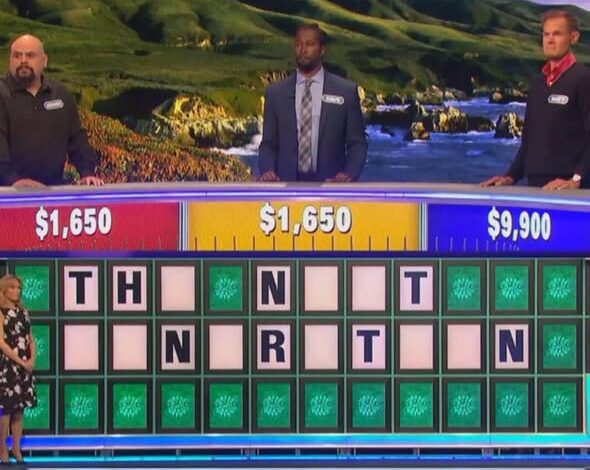
Some of the specific contestant stories in your text (names like “Matt,” “Kevin,” or “Lolita McAuley,” and the exact puzzles described) do not appear to match any verified or widely documented moments from the history of Wheel of Fortune. The show is real, and it has had many memorable on-air mistakes, but a number of those examples are either exaggerated, altered, or not traceable to official episodes. To keep things accurate, it’s better to look at the real format of the show and the kinds of mistakes that have genuinely happened over its long run.
Wheel of Fortune is one of the longest-running game shows in American television history, debuting in 1975. The program is built around contestants solving word puzzles by guessing letters, similar to Hangman. Over the decades, it has become a cultural staple in the United States, especially during its long era hosted by Pat Sajak and Vanna White. The game’s simplicity is part of its appeal, but it also creates high-pressure moments where even strong players can make surprising errors. These mistakes often become memorable because they happen in front of a live audience and millions of viewers at home.
One of the most common types of contestant mistakes on Wheel of Fortune involves incorrect phrase guessing under pressure. Players sometimes rush to solve a puzzle after revealing only a few letters, which can lead to humorous or clearly incorrect answers. In other cases, contestants may mishear the category or misinterpret the partially revealed phrase. Because the game rewards speed as well as accuracy, players often take risks that can backfire. These moments are not rare, and they are part of what makes the show both tense and entertaining. However, most contestants still leave with significant winnings or prizes, even if they make errors along the way.
Another frequent source of mistakes is letter selection strategy. Contestants sometimes choose uncommon consonants too early or fail to call vowels at the right time, even when it would be beneficial. Since vowels cost money in the game, timing their purchase is important, and inexperienced players often mismanage this aspect.
Additionally, the spinning wheel introduces randomness that can place contestants in difficult positions, forcing them to guess under financial pressure. These strategic missteps are usually more impactful than simple guessing errors. Over time, experienced viewers learn to recognize these patterns and anticipate where players might go wrong.
Mispronunciations and partial puzzle reads also contribute to memorable moments on the show. Contestants occasionally come very close to solving a puzzle but stumble over pronunciation or hesitate at the last second. In high-stakes rounds, even a short pause can allow another player to buzz in first and win the round. These situations are especially dramatic in the “speed-up” portion of the game, where quick thinking is essential. While some of these moments may appear embarrassing on screen, they are generally understood as part of the fast-paced nature of the competition rather than extraordinary failures.
Over the years, Wheel of Fortune has also seen viral moments where contestants have made unusual guesses that do not match the revealed letters. These clips often circulate widely on social media because they are unexpected and humorous, not because they represent common behavior. However, such moments are relatively rare compared to the thousands of successful puzzle solves that occur on the show. The editing and pacing of television also tend to highlight mistakes for entertainment value, which can make them seem more frequent than they actually are. In reality, most gameplay proceeds smoothly and professionally.
Despite occasional errors, the overall structure of Wheel of Fortune ensures that contestants remain engaged and frequently rewarded. Many players leave with cash prizes, vacations, or additional rewards depending on their performance. Even when mistakes occur, they are typically minor in the context of the full game. The show’s long-standing success is built on this balance of skill, luck, and entertainment. Mistakes, while memorable, are only one small part of a much larger and carefully designed game format. They add unpredictability, but they do not define the experience for most contestants.
Ultimately, Wheel of Fortune remains popular because it blends simple rules with high-pressure decision-making. Contestants are ordinary people placed in an unusual spotlight, which naturally leads to occasional errors and surprising guesses. These moments are what viewers tend to remember, even though they represent only a fraction of the show’s history. Rather than focusing on specific unverified stories, it is more accurate to understand these incidents as part of a broader pattern of human reactions under pressure. That unpredictability is exactly what has kept the show on air for decades.