Donald Trump’s Ex-Lawyer Raises Questions With New Health Claims
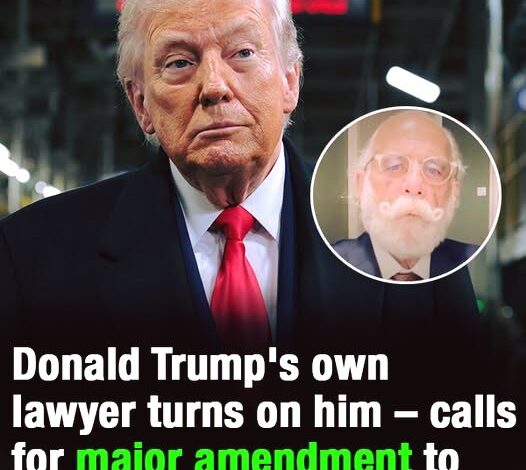
In recent months, discussions surrounding the mental and physical fitness of U.S. President Donald Trump have become increasingly visible in political commentary and media reporting. These discussions are largely driven by political opponents, commentators, and some former officials who have expressed concerns about his behavior and leadership style. At the same time, supporters of the president strongly reject these claims, arguing that they are politically motivated and not supported by verified evidence.
The debate has unfolded across news outlets, social media platforms, and political forums, reflecting the highly polarized nature of American politics. While some critics have raised questions about decision-making and communication style, there has been no official medical confirmation supporting claims of cognitive decline. The White House and administration representatives have consistently stated that the president remains in good health.
Comments from Former Legal Associate Ty Cobb
A key figure referenced in recent discussions is Ty Cobb, a former attorney who previously served on Donald Trump’s legal team during part of his first term. Cobb worked with the administration from mid-2017 to 2018 before leaving his role. His departure was publicly described at the time as a planned professional transition.
In recent commentary reported by media outlets, Cobb has made critical observations regarding Trump’s leadership environment and decision-making structure. He suggested that during Trump’s earlier presidency, there were internal figures within the administration who would occasionally challenge or question certain proposals. According to Cobb, such internal resistance played a role in shaping policy discussions during that period.
Claims About Internal Administration Dynamics
Cobb has also expressed the view that the structure of Trump’s current political environment differs from his first term. He suggested that, in his opinion, the individuals surrounding the president today may be less likely to challenge or oppose his decisions. These remarks reflect a broader concern raised by some political analysts about advisory influence within the executive branch.
However, these statements remain personal opinions and interpretations rather than verified institutional findings. The structure of presidential advisory teams often changes between administrations and terms, and such changes are commonly discussed in political analysis. No official investigation has confirmed claims that decision-making processes have been fundamentally compromised.
Controversial Commentary and Public Reaction
Some of Cobb’s remarks, as reported in interviews and media coverage, have been widely circulated and debated. Critics of the president have used these statements to support arguments that raise questions about leadership stability, while supporters argue that such commentary is politically biased and speculative in nature.
The broader public reaction reflects a deeply divided political landscape in the United States. On one side, critics express concern about communication style, public behavior, and policy decisions. On the other, supporters emphasize economic policies, judicial appointments, and international relations achievements as evidence of effective leadership.
Medical and Cognitive Claims Remain Unverified
Although some commentators have suggested concerns about cognitive ability or mental decline, there is no publicly released medical diagnosis confirming such conditions. Medical evaluations of sitting presidents are typically private unless voluntarily disclosed by the individual or made public through official channels.
The White House has previously released general statements about presidential health, and Trump himself has repeatedly stated that he has undergone cognitive testing and remains in strong physical and mental condition. Without verified medical documentation, claims about specific neurological conditions remain unproven allegations rather than established facts.
The Role of the 25th Amendment in Political Discussion
Some political commentators have referenced the 25th Amendment to the U.S. Constitution in discussions about presidential fitness. This amendment outlines procedures for presidential succession and incapacity in cases where a president is unable to fulfill their duties. However, it has rarely been invoked and remains a highly sensitive constitutional mechanism.
Calls for invoking the amendment are generally political in nature and require substantial agreement within the executive branch and Congress. In past discussions, such proposals have been introduced by political opponents during periods of heightened disagreement, but no formal process has been initiated regarding the current president.
Statements from Political Figures and Critics
Some members of Congress and political commentators have also contributed to the ongoing debate. Representative Jamie Raskin, for example, has previously spoken about the importance of evaluating presidential fitness through constitutional mechanisms. His remarks have been interpreted by supporters as part of broader political opposition, while critics view them as legitimate constitutional concern.
These statements reflect ongoing disagreements within American political institutions about leadership evaluation, transparency, and accountability. However, they remain part of political discourse rather than formal legal or medical determinations.
Supporters Push Back Against Claims
Supporters of Donald Trump strongly reject claims questioning his cognitive fitness, arguing that such narratives are politically motivated. They point to public appearances, speeches, and policy actions as evidence of active leadership. They also emphasize that Trump continues to participate in political events, campaign activities, and public communications.
From this perspective, critics are accused of using psychological or medical terminology as political tools rather than relying on verified data. This disagreement highlights the broader polarization in how different groups interpret the same events and behaviors.
Media Amplification and Public Perception
Media coverage plays a significant role in shaping public perception of these debates. Statements made by political figures or former officials are often widely circulated and interpreted in different ways depending on the audience. Social media platforms further amplify these narratives, sometimes removing context or presenting selective excerpts.
As a result, discussions about presidential fitness often become intertwined with broader political identity rather than objective analysis. This makes it difficult to separate verified information from opinion-based commentary in public discourse.
The ongoing discussion surrounding Donald Trump’s leadership and fitness reflects a broader pattern of political polarization in the United States. While some former officials and critics have raised concerns, these remain unverified claims and personal interpretations rather than confirmed medical or institutional findings.
At the same time, supporters strongly defend the president’s performance and reject suggestions of impairment. The absence of official medical evidence means that much of the debate continues to exist in the realm of political opinion rather than established fact.
Ultimately, the situation highlights how modern political discourse is often shaped by competing narratives, where interpretation and perception play as large a role as verified information.