Laura San Giacomo is now 63 – grab tissues before you see her today!
Laura San Giacomo has never been the kind of actress who fades quietly into the background. From the moment she appeared on screen in the late 1980s, she carried a presence that was impossible to ignore—sharp, grounded, and completely authentic. In an era crowded with rising stars, she stood apart. There was something unpolished and magnetic about her performances, a sense that she wasn’t trying to fit Hollywood’s mold but reshape it.
Now 63, she may not dominate entertainment headlines the way she once did, but her story is not one of disappearance. It’s a story of evolution—of choosing a life that balanced artistry, family, and purpose.
To understand where she is today, it helps to go back to where it all began.
Born to Italian-American parents in West Orange, New Jersey, and raised in nearby Denville Township, San Giacomo discovered early that storytelling felt like home. Acting wasn’t a passing interest; it was a calling. That passion led her to the prestigious Carnegie Mellon School of Drama, where she earned a fine arts degree in 1984. Before Hollywood came calling, she immersed herself in theater—performing Shakespeare, Tennessee Williams, and a range of stage productions that sharpened her emotional depth and technical precision.
Her breakthrough came in 1989 with Sex, Lies, and Videotape, directed by Steven Soderbergh. The film stunned audiences and critics alike, winning the Palme d’Or at Cannes and launching Soderbergh into international acclaim. San Giacomo’s performance as Cynthia was fearless and layered—vulnerable yet sharp-edged. It earned her a Golden Globe nomination and instantly marked her as a talent to watch.
She wasn’t flashy. She was real.
When asked in interviews why she became an actor, her answer was simple: she loved telling stories. That clarity showed in her work. She never seemed interested in celebrity for its own sake; she was drawn to characters who felt complicated, flawed, and deeply human.
Then came Pretty Woman in 1990. While Julia Roberts carried the fairy-tale romance at the film’s center, San Giacomo nearly stole the spotlight as Kit De Luca, Vivian’s street-smart, fiercely loyal best friend. Kit brought grit and humor to the glossy romantic fantasy. She wasn’t just comic relief—she was heart. It was a performance that cemented San Giacomo’s place in mainstream Hollywood without sacrificing the authenticity that defined her earlier roles.
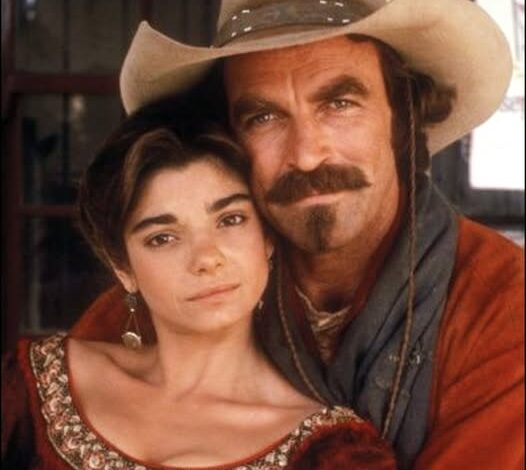
Throughout the early 1990s, she balanced independent projects with studio films, building a reputation for portraying complex women. She appeared in Quigley Down Under alongside Tom Selleck, delivering a raw and unpredictable performance as Crazy Cora. Even in a Western anchored by a traditional leading man, San Giacomo’s intensity lingered long after the credits rolled. She later joined the television adaptation of Stephen King’s The Stand, continuing to demonstrate her range across genres.
At that point, her trajectory seemed unstoppable.
But life shifted in ways that reshaped her priorities.
At the height of her film career, she became a mother. Her son, Mason, was born with cerebral palsy. Parenthood altered her perspective profoundly. Instead of chasing every high-profile role, she chose stability—choosing projects that allowed her to be present and engaged at home.
Rather than retreat from public life, she channeled her energy into advocacy. She spoke openly about disability as a natural part of life, not something to be hidden or whispered about. Inclusive education became one of her driving causes. She partnered with organizations, attended conferences, and advocated for systemic change in how schools and communities support children with disabilities.
Her efforts earned recognition from respected groups such as the American Academy for Cerebral Palsy and Developmental Medicine and Media Access. Advocacy was no longer a side note in her identity; it became central.
Professionally, she made a strategic shift to television, a move that offered both creative fulfillment and a more predictable schedule. In 1997, she took on the lead role of Maya Gallo in the NBC sitcom Just Shoot Me! The show ran for seven seasons and showcased a different side of her talent—her sharp comedic timing and natural wit. Alongside George Segal and David Spade, she demonstrated that she could be effortlessly funny without losing the edge that made her compelling in drama.
After the sitcom ended, she continued working steadily rather than chasing blockbuster headlines. She appeared in Veronica Mars, Saving Grace, NCIS, and Barry, among others. On NCIS, she portrayed Dr. Grace Confalone, bringing calm authority and emotional intelligence to the role. These performances reinforced what had always been true: she was a working actor committed to craft, not spectacle.
In her personal life, she married actor Matt Adler in 2000, following her earlier marriage to Cameron Dye. She settled in California’s San Fernando Valley, building a life that felt grounded and intentional. She did not vanish from Hollywood; she simply recalibrated her relationship with it.
In early 2023, reports indicated she had signed with new representation, signaling that she remains creatively active and open to new opportunities. Whether through smaller film projects, television appearances, or continued advocacy work, she remains engaged.
Looking at her journey now, what stands out isn’t a dramatic fall or triumphant comeback. It’s steadiness. She didn’t burn out or implode. She didn’t chase every spotlight or cling to past glory. She adjusted.
For someone who once nearly stole every scene she entered, it’s fitting that her most meaningful role unfolded off-camera. Motherhood, advocacy, and a career shaped by intention rather than industry pressure define this chapter of her life.
There is something quietly powerful about that choice.
Laura San Giacomo’s story reminds us that success is not always measured by red carpets or magazine covers. Sometimes it is measured by the freedom to step back, reassess, and build a life that aligns with what matters most.
She didn’t walk away from acting. She redefined what it meant to be an actor on her own terms.
And at 63, she stands not as a relic of 1990s Hollywood, but as proof that reinvention does not require reinvention at all—just clarity, courage, and the willingness to let your life grow alongside your career.
The spotlight may shift, but authenticity never fades.