Ex-LA County worker arrested in Nancy Guthrie case!
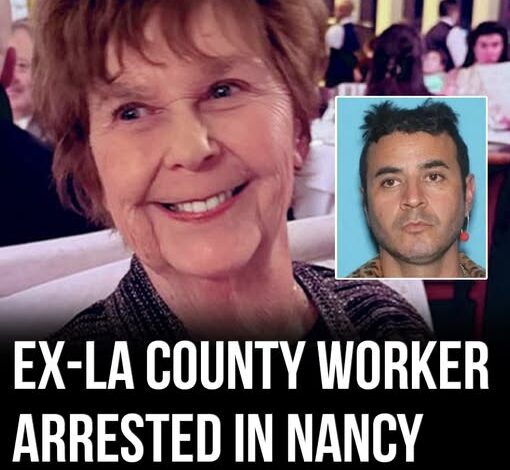
Federal agents have made an arrest in the Nancy Guthrie kidnapping investigation, but officials say it is not the breakthrough the public has been waiting for.
Authorities confirm they have taken a man into custody in connection with messages sent to the Guthrie family about bitcoin. Investigators believe the communication was an opportunistic hoax—an attempt to exploit a family’s fear—rather than evidence of involvement in Nancy Guthrie’s disappearance.
Nancy Guthrie, 84, the mother of TODAY co-anchor Savannah Guthrie, was reported missing from her Tucson-area home on Sunday, February 1. From the beginning, officials have treated the case as a criminal matter. Ransom demands and public appeals followed, turning what began as a local emergency into a high-profile national story. As the days passed with no verified proof of life, the pressure intensified—on investigators, on the family, and on anyone watching from the outside.
According to the U.S. Attorney’s Office for the District of Arizona, the man arrested is Derrick Callella, a Southern California resident. He was taken into custody on February 5 in Hawthorne, California, not far from Los Angeles International Airport. Prosecutors say Callella is facing two federal charges: one for allegedly sending a message demanding ransom for the release of a kidnapped person, and another for placing a phone call without identifying himself “with the intent to abuse, threaten or harass.”
Investigators allege Callella inserted himself into the case shortly after the Guthrie family made a public, emotional plea for help. In that video, they urged anyone holding Nancy to communicate and provide proof that she was alive. That appeal, meant to move the right person to act, also created an opening for the wrong kind of attention—people who see a crisis as a chance to test boundaries or provoke a reaction.
Federal authorities say Callella sent text messages referencing bitcoin payments. One message cited in reporting allegedly asked whether the family had sent the cryptocurrency and indicated the sender was waiting on their end for the transaction. Officials say they do not believe he was actually in possession of Nancy Guthrie, nor part of an organized kidnapping team. Instead, they characterize the communication as an “impostor” ransom demand—an attempt to mimic what kidnappers might say, in hopes the family would respond.
Court documents described by investigators outline a tight timeline. FBI Special Agent Kerry Witherspoon stated in a complaint that the texts were sent on February 4, not long after the family’s public appeal. Authorities allege that roughly three minutes after the texts were sent, Callella placed a phone call to a family member that lasted only nine seconds. Investigators interpret that brief call as another attempt to see whether he could pull the family into a back-and-forth—any engagement that might give him leverage, attention, or a path to further manipulation.
Prosecutors also say Callella later admitted he sent the messages using a voice-over-Internet-Protocol (VOIP) application, a method commonly used to disguise a caller’s location or identity. Investigators claim he told them he was trying to see if the family would respond. If true, it suggests a motive rooted less in money and more in impulse—someone poking at a live wire because they could.
Authorities have been careful to separate Callella’s alleged hoax from the broader ransom component of the case. Officials clarified that the two text messages attributed to him have not been linked to an earlier ransom demand sent on February 2 to a Tucson news outlet. That earlier message, submitted through an online tip portal, reportedly included a bitcoin wallet address intended to receive a payment. Investigators have not publicly confirmed whether that ransom note is legitimate, but they have made clear they are treating it seriously and following that thread as part of the ongoing inquiry.
At a briefing on February 5, Jon Edwards, assistant special agent in charge of the FBI’s Tucson field office, emphasized that ransom information—whether received directly, through media outlets, or via other channels—is being investigated and evaluated. The public may want a simple answer—real or fake—but law enforcement tends to approach these communications as data points. Even a hoax can reveal patterns, methods, or vulnerabilities. At minimum, it forces investigators to spend time and resources ruling it out.
The arrest also came with an unmistakable warning: opportunists will be pursued. FBI Phoenix Special Agent in Charge Heith Janke addressed the problem directly, saying the bureau will investigate anyone trying to profit from or exploit the situation. His message was blunt for a reason. When a case involves an elderly missing person, a desperate family, and public attention, impostors often crawl out of the dark. They send messages, demand money, and pretend they know more than they do. Sometimes they are reckless. Sometimes they are calculating. Either way, they can derail an investigation and inflict additional trauma on people already in crisis.
Adding to the scrutiny around Callella is his reported prior legal trouble. Previous reporting has identified him as a former Los Angeles County employee connected to an alleged unemployment benefits scheme. In October 2025, the Los Angeles County District Attorney’s Office announced charges against multiple county employees accused of stealing hundreds of thousands of dollars in benefits. Callella was named among those accused, with allegations tied to unemployment benefit theft over a period spanning 2020 through 2023. That history does not prove anything about his role in the Guthrie case, but it helps explain why investigators and prosecutors are treating the alleged hoax with zero patience.
For the Guthrie family, the arrest is not closure—just confirmation that strangers are attempting to insert themselves into their nightmare. In public messages posted February 4 and February 5, the family emphasized a point that investigators have also repeated: they need proof of life, not vague demands. Savannah Guthrie said the family is prepared to communicate, but in a world where voices and images can be manipulated, they need certainty that Nancy is alive and that whoever is communicating truly has her.
That detail matters. Real kidnappers often offer a controlled proof-of-life sign to keep negotiations moving. Hoaxers typically cannot, and they rely on fear, urgency, and confusion. The family’s public insistence on verification is not just emotional—it’s practical. It forces anyone claiming involvement to either produce something credible or disappear.
Officials have stated that no one has been arrested for Nancy Guthrie’s suspected abduction itself. The investigation remains active. The FBI has announced a $50,000 reward for information that leads to Nancy’s recovery or the arrest of those responsible for her disappearance. Authorities continue to review tips, analyze evidence, and piece together the timeline surrounding the morning she vanished.
In the background of every update—real or fake—is the central question: where is Nancy Guthrie? An arrest for an alleged impersonation scheme may remove one parasite from the situation, but it does not answer the question that matters.
For now, the case continues on two tracks: identifying and dismantling false leads that prey on a family’s pain, and pursuing any credible path that could bring Nancy home.