Hidden Spiritual and Cultural Secrets Families Face When Keeping a Loved Ones Ashes Inside the Home
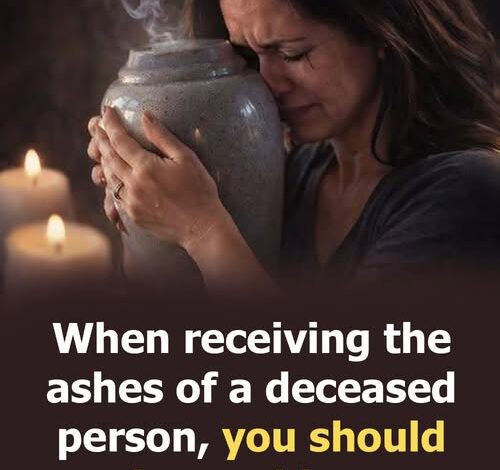
The arrival of a loved one’s ashes after cremation is a moment of profound emotional gravity, introducing a physical container of memory into the quiet spaces of daily life. For some individuals, keeping a family member’s ashes at home offers a deep, comforting sense of ongoing connection, providing a physical anchor for a relationship they are not yet ready to release. For others, however, housing the physical remains of the deceased in a living space feels deeply unsettling, evoking a sense of unresolved grief or spiritual stagnation. Around the world, beliefs regarding cremation and human remains are shaped by a complex tapestry of religion, culture, family traditions, and personal experiences with loss. What one household views as a beautiful act of devotion, another may perceive as spiritually inappropriate or emotionally damaging, raising the global question of whether it is truly healthy to keep ashes at home.
In many Western societies, particularly across the United States and parts of Europe, keeping cremation urns in the home has become increasingly common and socially normalized. Urns are frequently displayed on living room mantels, bookshelves, nightstands, or in dedicated memorial corners surrounded by burning candles, hand-selected flowers, and cherished photographs. For grieving survivors, these remains do not feel like cold ash but rather like a comforting extension of the deceased’s presence. Grieving family members often talk to the urn during quiet moments, include the container in family holiday dinners, and mark birthdays around it because, emotionally, the bond remains active. Modern Western funeral trends place a heavy emphasis on individual choice and highly personalized grieving paths over rigid, traditional funeral rules, leading many families to divide ashes among relatives, press them into memorial jewelry, or incorporate them into custom glass art.
However, even within the same household, opinions regarding this practice can clash dramatically. One sibling might find immense peace in keeping their parent’s remains nearby, while another may feel strongly that the deceased cannot find eternal peace until their ashes are buried in the earth or scattered into nature. These varying emotional responses are frequently guided by deeply rooted religious doctrines. Within the Catholic Church, while cremation has been officially permitted for decades, the theological instruction regarding the treatment of remains is highly specific. The Catholic Church teaches that human remains deserve absolute dignity, reverence, and unity even after death, meaning that ashes should ideally be placed in sacred communal grounds such as cemeteries, mausoleums, or columbariums rather than kept indefinitely at home. For traditional Catholic families, scattering ashes or dividing them among surviving relatives is discouraged because keeping remains in a bedroom or closet can feel spiritually incomplete.
In various Buddhist traditions, cremation is widely practiced, yet the subsequent treatment of the ashes varies significantly by region and cultural custom. In countries like Japan, families frequently maintain ancestral altars inside the household, where deceased relatives are honored daily with incense, prayers, and food offerings, allowing the ashes to reside temporarily at home before being transitioned to a permanent family grave or temple memorial. At the same time, core Buddhist teachings emphasize the concept of impermanence, warning against excessive attachment to the physical remains of the dead. Some spiritual guides suggest that holding onto ashes too tightly can hinder the natural process of emotional healing, suggesting that true peace lies in finding a balance between honoring the memory and letting go of the physical vessel.
In Hinduism, cremation is a vital, sacred sacrament designed to assist the soul in untethering from the physical body and transitioning smoothly into its next existence. Consequently, keeping a loved one’s ashes inside a residence is traditionally discouraged, as it is believed that retaining the remains can tie the soul to the earthly plane and delay its spiritual progression. Instead, Hindu custom dictates that the ashes should be immersed in a sacred body of water, most notably the Ganges River, where the flowing currents symbolize purification, spiritual release, and the eternal cycle of life and death.
Similarly, traditional Chinese culture links the treatment of ashes to deep concepts of ancestor reverence and the spatial harmony of feng shui. While some families might keep the ashes at home temporarily before a formal burial, others believe that storing an urn in a living space can disrupt the home’s energy flow and invite an atmosphere of heavy, stagnant sorrow. For this reason, many families prefer to place the remains in public columbariums or ancestral temples, keeping the home as a space dedicated to the living while visiting designated sacred sites to honor the ancestors.
In contrast, cultures that celebrate traditions like Día de los Muertos in Mexico approach the boundary between life and death with a striking, joyful openness. Within these vibrant traditions, deceased loved ones are viewed as active, beloved members of the family who return to visit once a year. Households construct elaborate altars decorated with bright marigolds, sugar skulls, candles, and the favorite foods of the departed to celebrate their lives rather than mourn their absence. Whether the physical ashes are kept in the home or placed in a cemetery, the emphasis remains on visible, celebratory remembrance, transforming grief into a shared family holiday.
Ultimately, as global cremation rates continue to rise due to shifting social values, economic factors, and increased geographical mobility, modern families are increasingly creating their own highly personalized memorial rituals. Some people choose to keep a loved one’s ashes close for decades because they simply cannot face the finality of a permanent burial, while others find that seeing the urn on a daily basis serves as a painful, constant reminder of their loss and choose to scatter them immediately. Grief is an entirely individual experience that refuses to follow a universal rulebook, and what serves as a symbol of comfort for one person may feel like frozen sorrow for another. At its absolute core, the global debate over whether to keep or release ashes is not about the physical remains at all, but about how human beings navigate the painful reality of losing someone who once filled their lives with love and laughter.