The Secret Gift My Dying Teen Daughter Hid in Her School Locker Completely Shattered Everything I Thought I Knew About Her
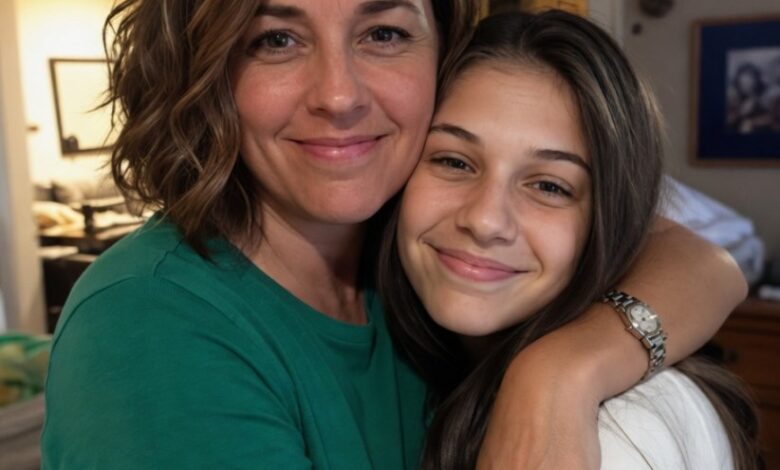
Losing a child is the kind of pain that rearranges your entire existence. Every morning feels wrong, every quiet room echoes with absence, and you find yourself moving through life like a shadow of the person you used to be. That’s exactly where I was after my 14-year-old daughter Emily passed away following a long battle with leukemia. I thought I knew her completely — her favorite books, the way she laughed at silly memes, how she pretended to hate hugs but always lingered a few seconds longer. But months after saying goodbye, a single phone call from her high school revealed a side of Emily I never could have imagined, and it changed how I understood love, strength, and motherhood forever.
The call came on a gray Tuesday afternoon from Emily’s guidance counselor. Her voice was gentle but urgent. They had finally gotten around to clearing out the lockers at the end of the school year, and there was something in Emily’s that had my name on it. My heart raced as I drove to the school, memories flooding back of dropping her off on her good days, watching her walk those halls with quiet determination even when she felt terrible. I wasn’t prepared for what waited for me in that metal locker.
Inside was a plain white envelope with “For Mom – Open When You’re Ready” written in Emily’s careful handwriting. My hands trembled as I opened it. A short note explained that she had been planning this for months, during hospital stays and sleepless nights when the pain kept her awake. She knew she might not make it, and she wanted to leave me something that would help carry me through the darkness. Tucked inside was a small key and directions to a storage unit she had somehow arranged with help from a family friend.
Driving to that storage facility felt surreal, like stepping into a dream my daughter had scripted. When I rolled up the door, the space wasn’t filled with old furniture or random junk. Instead, there were neatly stacked boxes, each one labeled with messages that broke me open instantly: “For Mom on Days When Getting Out of Bed Feels Impossible,” “Open This When You Miss My Voice,” “For When You Forget You’re Still Her Hero,” and several more that showed just how deeply she had thought about my future grief.
What Emily had created wasn’t just a collection of keepsakes — it was a complete survival guide crafted with the wisdom and love of someone far beyond her years. One box contained dozens of handwritten letters, each dated for different milestones: my first birthday without her, the anniversary of her diagnosis, even holidays she knew would be brutal. In them, she reminded me of funny stories from our life together, encouraged me to keep cooking her favorite pasta even if I ate it alone, and urged me not to shut out friends who wanted to help.
Another box held a small digital recorder with voice messages she had recorded over several weeks. Hearing her voice again — soft but steady, sometimes interrupted by a cough — was both devastating and healing. She talked about how proud she was of me for being strong when she was scared, how she noticed every time I stayed up late researching treatments or held her hand during treatments. She told me it was okay to cry, okay to feel angry, and okay to eventually find joy again without feeling guilty.
Perhaps the most surprising discovery was how much Emily had observed about my own hidden struggles. I thought I had protected her from seeing my fear and exhaustion, but her notes proved she saw everything. She wrote about wanting me to find purpose again, not to replace her, but to honor the love we shared. One video message on a USB drive showed her sitting in her hospital bed, looking frail yet determined. She asked me to start volunteering at the children’s hospital or the school library — places where kids might feel as alone as she sometimes did. “You always knew exactly what to say to make me feel less scared,” she said on the screen. “Other kids need that too.”
As I worked through each box over the following weeks, something inside me began to shift. The crushing weight of grief didn’t disappear — it never fully does — but it started to feel less like an ending and more like a continuation of our bond. Emily hadn’t just accepted her fate; she had used her limited time to care for me in the most thoughtful way possible. This revelation forced me to see her not just as my fragile child who needed protection, but as a remarkably mature young woman who was looking after her mother even as her own life was slipping away.
This experience taught me profound lessons about the hidden depths teenagers often possess. We sometimes underestimate what our kids are capable of understanding and feeling, especially during serious illness. Emily’s secret project showed incredible emotional intelligence and selflessness that I wish I had recognized more fully while she was here. It made me reflect on all the times I focused on shielding her instead of truly seeing her strength and insight.
For other parents walking through grief or supporting a child with serious health challenges, stories like this highlight the importance of open conversations and cherishing every moment. Emily’s gift also inspired practical steps I now share with others: creating memory boxes together, recording voices while you can, and planning for difficult tomorrows with love instead of fear. These actions don’t prevent pain, but they build bridges across it.
Volunteering at the hospital, just as Emily requested, became my turning point. Sitting with scared kids and their worried parents gave me purpose and connection. I saw echoes of Emily in their brave smiles and felt her presence guiding me to offer comfort. Some days were still incredibly hard, but knowing she had prepared me for them made me feel less alone.
The secret in that locker didn’t just change my view of Emily — it transformed how I approach life entirely. I became more present with loved ones, more willing to express appreciation, and more aware that everyone carries unseen battles and strengths. Her final act of love reminded me that our relationships don’t end with death; they evolve and continue influencing us in beautiful ways.
If you’re a parent, take time to really listen to your teens. They notice more than we realize, and their capacity for empathy can surprise us. And if you’re grieving, know that signs of love from those we’ve lost can appear when we least expect them, offering guidance and comfort exactly when we need it most.
Emily’s hidden gift in her school locker proved that even in her shortest life, she managed to give me one of the greatest treasures imaginable — the knowledge that our bond was deeper and more enduring than I ever understood. She didn’t just leave memories behind; she left a roadmap for healing, wrapped in the incredible love of a daughter who knew her mom better than I gave her credit for. That discovery didn’t erase the pain of losing her, but it ensured her light would keep shining through me, one careful, loving step at a time.