My girlfriend came home after a walk with the dog.
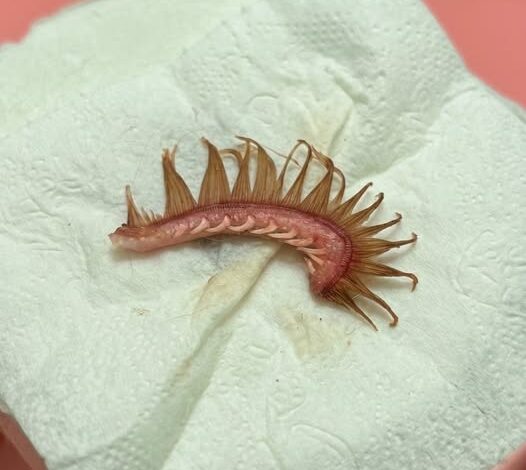
At first, we were convinced something was horribly wrong. Clinging to our dog’s fur was this strange translucent thing that looked disturbingly alive — pale, spiky, curled in on itself like some tiny alien creature pulled from the bottom of the ocean. The shape alone triggered instant panic. My stomach dropped the second I saw it.
We both froze.
Then the theories started.
Parasite. Larvae. Some kind of insect egg sac. A skin infection. Every terrifying possibility arrived at once, fueled by half-remembered internet horror stories and the simple fact that fear moves faster than logic. My girlfriend backed away immediately, refusing to touch it while staring at our dog like he might suddenly collapse in front of us.
Meanwhile, our dog stood there completely relaxed and confused, wagging his tail while we spiraled emotionally around him.
That somehow made it worse.
We crouched beside him inspecting every inch of fur, pulling hair apart carefully while trying not to sound as alarmed as we felt. The strange object looked even more disturbing up close. Wet. Stringy. Slightly translucent under the light. One part curved upward in a way that genuinely looked biological. The more we examined it, the more our imaginations fed themselves.
Within minutes we had mentally prepared for everything:
an emergency vet visit, expensive treatment, terrifying diagnoses, hidden infestations spreading through the house.
Fear has a strange way of turning uncertainty into certainty almost instantly.
The object itself never actually moved, but our brains kept treating it like it might. Every shadow and texture became evidence supporting the worst-case scenario we had already emotionally accepted. It stopped being “a weird thing stuck in fur” and became a full psychological horror story unfolding in our living room.
Finally, trying to stay calm, I grabbed a damp cloth and started gently cleaning it.
And almost immediately, the monster dissolved.
Not literally — emotionally.
As the fur loosened and the object unfolded under water and light, the horrifying shape suddenly transformed into something absurdly ordinary.
Fake eyelashes.
That was it.
A soggy, warped strip of fake eyelashes somehow stuck to our dog during the walk, twisted together with moisture and loose fur until it resembled a tiny nightmare creature. The translucent spikes were synthetic fibers. The “body” was glue and makeup residue softened by water.
For a second neither of us said anything.
Then relief hit so hard we both started laughing almost uncontrollably.
The emotional whiplash was ridiculous. We had gone from genuine dread to complete embarrassment in under ten minutes. Our dog, meanwhile, remained completely unaffected through the entire crisis, blissfully unaware that he had temporarily become the center of a fake biological emergency.
And honestly, the whole moment became strangely memorable afterward.
Not because of the eyelashes themselves, but because of how quickly the human mind fills empty space with fear. When we do not understand something immediately, especially involving people or animals we love, our brains instinctively reach toward danger first. We prepare emotionally for disaster long before evidence actually exists.
Sometimes that instinct protects us.
And sometimes it turns fake eyelashes into sea monsters.
By the end of the night, the terrifying “creature” sat in the trash looking completely harmless and ridiculous under normal light. But the feeling lingered: that strange realization of how fragile certainty really is, and how often the monsters we fear are simply ordinary things distorted by panic, shadows, and imagination.