Remember Meggie Cleary from ‘The Thorn Birds’? Here’s what she looks like today at 68
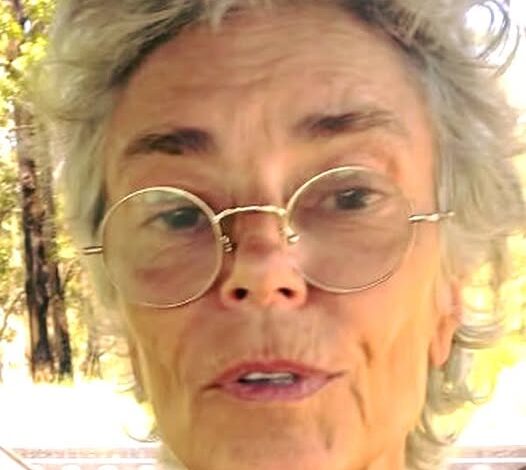
Rachel Ward’s rise to international fame was not something carefully planned or guaranteed. When she was cast as Meggie Cleary in the landmark 1983 miniseries The Thorn Birds, it was far from certain she would become the defining face of the production. The role required a rare combination of emotional range, vulnerability, and strength across decades of a character’s life, and casting directors struggled to find someone who could convincingly carry that transformation.
What followed, however, turned Ward into a globally recognized actress and made the miniseries one of television’s most enduring classics. Born on September 12, 1957, in Cornwell, Oxfordshire, England, Ward grew up in a family environment that exposed her early to both discipline and creativity. Her father worked in business, and her mother had a background connected to education and care services. Although she attended Hatherop Castle School and later studied at the Byam Shaw School of Art in London, she left formal education at 16 to pursue a career in fashion modeling, a decision that would shape her early public identity.
In her teenage years and early twenties, Ward quickly established herself in the fashion world. She appeared in prominent magazines such as Vogue, Cosmopolitan, and Harper’s & Queen, becoming part of the competitive British modeling scene of the late 1970s. Her striking appearance and natural camera presence allowed her to transition into commercial work, which eventually opened doors into acting opportunities in television productions.
Ward’s first notable screen appearances came in the late 1970s and early 1980s, including roles in television films such as Christmas Lilies of the Field in 1979. While these early performances did not yet establish her as a leading actress, they demonstrated her potential and helped her build experience in front of the camera. At this stage, she was still balancing modeling work with acting auditions, slowly building momentum in the entertainment industry.
The turning point in her career arrived when casting began for The Thorn Birds, a television adaptation of Colleen McCullough’s bestselling novel. The production was ambitious, spanning multiple decades of storytelling and requiring actors capable of portraying significant emotional and physical transformation. Producers reportedly auditioned dozens of actresses, with over 200 considered and around 40 formally tested for the role of Meggie Cleary.
Ward later described her audition process as relatively natural and unforced. She did not approach it with overly theatrical intensity, instead relying on instinct and emotional authenticity. Casting director Stan Margulies and the production team ultimately saw in her a rare combination of innocence, resilience, and emotional depth that matched their vision for Meggie’s journey from youth to maturity.
Preparing for the role required extensive physical and emotional adjustments. Ward underwent makeup and costuming changes to depict Meggie across different stages of life, from teenage innocence to adulthood and later emotional hardship. She later recalled that the transformation process was sometimes unsettling, particularly when aging makeup was applied to her face, but it helped her understand the character’s long-term arc.
When The Thorn Birds premiered in 1983, it quickly became a cultural phenomenon. The miniseries attracted tens of millions of viewers in the United States alone and achieved extraordinary international success. Its broadcast format, spread across multiple nights, kept audiences deeply engaged with its dramatic storytelling, romantic tension, and emotional complexity.
Ward starred opposite Richard Chamberlain, who played Father Ralph de Bricassart, and Bryan Brown, who portrayed Luke O’Neill. The dynamic between these characters became one of the central emotional drivers of the series. Critics praised the production’s scale, cinematography, and dramatic storytelling, while audiences were captivated by its tragic romantic themes.
The success of the series brought Ward immediate international recognition. She received a nomination for a Golden Globe Award for Best Actress in a Miniseries or Television Film, while Chamberlain won in his category. The production itself earned multiple Golden Globes and Emmy Awards, solidifying its place as one of the most successful television miniseries of its era.
Despite the success, Ward’s experience was not without personal doubt. In later interviews, she admitted that she sometimes felt uncertain about her performance, especially after receiving mixed reviews from critics. Some commentary even suggested she was miscast, which affected her confidence in the years following the series.
However, audience response over time helped reshape that perception. Many viewers connected deeply with her portrayal of Meggie, and her performance has since been re-evaluated more positively. Ward herself has reflected that acting styles evolve, and that The Thorn Birds belonged to a more heightened emotional era of television storytelling.
Beyond professional achievement, the production also had a profound personal impact on Ward’s life. While filming, she developed a close relationship with Australian actor Bryan Brown, who played her on-screen husband. Their connection gradually grew off-screen as well, evolving into a genuine romantic relationship.
Ward and Brown’s chemistry became widely recognized among the cast and crew. According to those involved in the production, their off-screen bond strengthened the authenticity of their on-screen performances. Ward later acknowledged that their relationship developed naturally during filming, shaped by long working hours and shared creative experiences.
After production concluded, their relationship continued to grow, and the couple married a few months later. They eventually relocated to Australia, where they built a family together, raising three children: Rose, Matilda, and Joseph. Their marriage became one of the more enduring relationships to emerge from the entertainment industry of that era.
Following The Thorn Birds, Ward continued to work steadily in film and television, particularly in Australia. She appeared in productions such as The Big House, Martha’s New Coat, The Straits, Devil’s Playground, and the legal drama Rake. Her career evolved toward more mature and complex roles, reflecting both her experience and personal growth as an actress.
In addition to acting, Ward expanded into directing and producing, taking greater creative control over her projects. Her work behind the camera allowed her to explore storytelling from a different perspective, often focusing on character-driven narratives and socially relevant themes.
In 2005, she was appointed a Member of the Order of Australia (AM) in recognition of her contributions to the arts and her advocacy work. This honor highlighted not only her achievements in entertainment but also her involvement in social causes, particularly those related to youth support and community development.
Ward also collaborated professionally with her daughter Matilda Brown, who followed her parents into the film industry. Their joint work included the 2016 film The Death and Life of Otto Bloom, where they portrayed the same character at different stages of life, creating a unique intergenerational performance dynamic.
In recent years, Ward has also embraced her role as a grandmother and continues to maintain a close family life in Australia. Despite her early international fame, she has often expressed that her personal fulfillment now comes more from family and creative balance than from global celebrity status.
Reflecting on her career, Ward’s journey from British model to internationally recognized actress demonstrates both the unpredictability of the entertainment industry and the lasting impact of a single defining role. The Thorn Birds remains a cultural milestone, and her performance continues to be associated with one of television’s most memorable romantic dramas.
Today, Rachel Ward is remembered not only for her breakthrough role but also for her evolution as an artist, filmmaker, and family-oriented creative figure. Her story remains closely tied to one of television’s most iconic productions, yet it also stands as an example of long-term adaptability and personal reinvention across decades in the entertainment world.